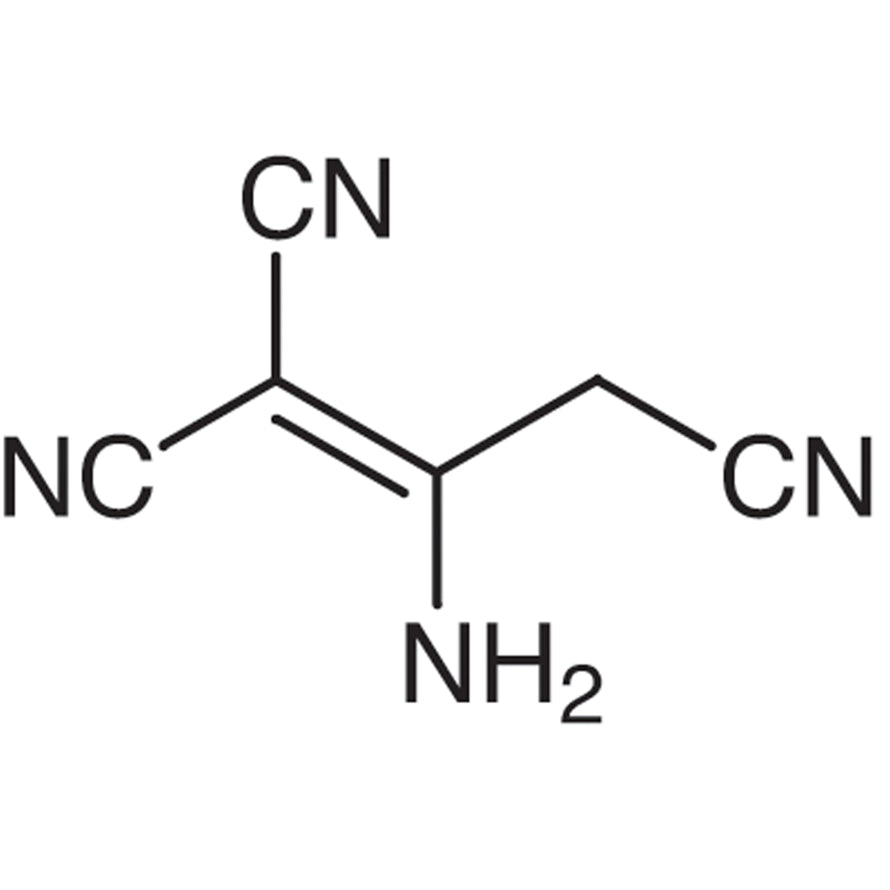
2-Amino-1,1,3-tricyano-1-propene is a chemical compound widely used in organic reactions for the synthesis of complex molecules. This compound serves as a fundamental building block in both heterocyclic and non-heterocyclic chemistry due to its unique structure, which includes an amino group and three cyanide groups. Its versatility makes it a valuable resource for researchers aiming to develop new compounds or optimize synthetic pathways. In laboratory settings, it is commonly employed as a starting material for substitution, addition, and cyclization reactions.
The compound's reactivity and structural complexity make it a preferred choice for advanced chemical research. Its ability to interact with various reagents and participate in multiple reaction types enhances its utility in synthetic chemistry. The compound’s stability under specific conditions ensures reliable performance in experimental protocols. These properties make it an essential tool for chemists working on complex molecular designs and functional group transformations.
In Indonesian laboratories, 2-Amino-1,1,3-tricyano-1-propene is frequently used in chemical research, including the synthesis of new compounds and the development of reaction methodologies. Its availability and high quality make it a go-to material for both academic and industrial research. Researchers and students rely on this compound for its consistent performance and adaptability in diverse chemical applications.
Related TCI products
- TCI A0287 88-53-9 5-Amino-2-chlorotoluene-4-sulfonic Acid
- TCI A0291 22525-43-5 4-Amino-4'-(N,N-dimethylamino)stilbene
- TCI A0315 117-77-1 2-Amino-3-hydroxyanthraquinone
- TCI B3411 771-14-2 1-Amino-2-bromonaphthalene
- TCI A3750 26961-27-3 2-Amino-4,5-dimethoxybenzonitrile
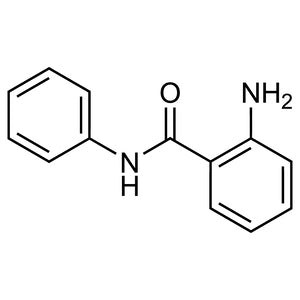
- TCI A3723 4424-17-3 2-Amino-N-phenylbenzamide
- Organic synthesis for the creation of complex molecules and functional group modifications.
- Development of new chemical compounds through substitution and addition reactions.
- Cyclization reactions to form ring structures in heterocyclic and non-heterocyclic compounds.
- Research into reactivity patterns and interaction with various reagents in synthetic pathways.
- Exploration of chemical transformations in both academic and industrial research settings.
| Brand | TCI |
|---|---|
| CAS number | 868-54-2 |
| Molecular formula | — |
| Purity | — |
| Category | Chemistry > Building Blocks > Non-Heterocyclic Building Blocks |
| Pack sizes | Available in various quantities as per standard laboratory supply formats |
| Physical form | Liquid |
| Storage | Store in a cool, dry place away from direct sunlight and incompatible materials |
This compound should be stored in a cool, dry environment, away from direct sunlight and sources of heat. It is recommended to use airtight containers made of materials that are chemically inert to prevent degradation or contamination. Due to its reactivity, it should be handled with care, using appropriate personal protective equipment such as gloves and goggles. It is important to keep it away from incompatible substances like strong oxidizers or bases. Proper ventilation should be maintained in the workspace to minimize exposure. Regular monitoring of storage conditions ensures the compound remains stable and suitable for use in laboratory applications.
—
Produk Terkait
-
5-Amino-2-chlorotoluene-4-sulfonicAcid TCI A0287
Regular price From Rp 637.350,00Regular price -
4-Amino-4'-(N,N-dimethylamino)stilbene TCI A0291
Regular price From Rp 1.936.200,00Regular price -
2-Amino-3-hydroxyanthraquinone TCI A0315
Regular price From Rp 903.000,00Regular price -
1-Amino-2-bromonaphthalene TCI B3411
Regular price Rp 8.453.550,00Regular price -
2-Amino-4,5-dimethoxybenzonitrile TCI A3750
Regular price Rp 2.359.350,00Regular price -
2-Amino-N-phenylbenzamide TCI A3723
Regular price From Rp 2.518.950,00Regular price -
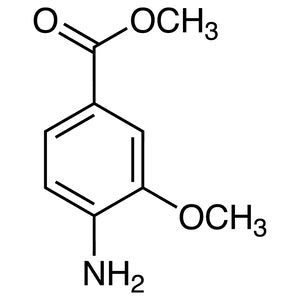
Methyl4-Amino-3-methoxybenzoate TCI A3716
Regular price From Rp 2.094.750,00Regular price -
Methyl4-Amino-3-hydroxybenzoate TCI A3639
Regular price From Rp 2.041.200,00Regular price