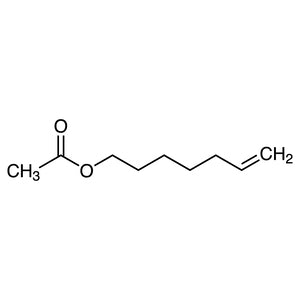
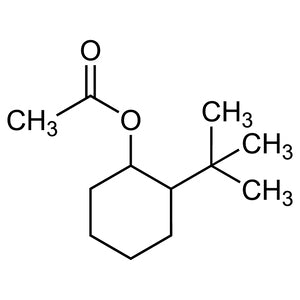
Trans-2-Heptenyl Acetate is a chemical compound widely used in synthetic applications within laboratory settings. As a building block in organic chemistry, it serves as a fundamental component for the synthesis of more complex molecules. This compound is particularly valued for its versatility in chemical reactions, allowing researchers to manipulate molecular structures with precision. Its role in laboratory processes is crucial, especially in applications requiring controlled chemical transformations and functional group modifications.
The unique molecular structure of Trans-2-Heptenyl Acetate, featuring a hydrocarbon chain with an ester group at the end, contributes to its chemical stability under certain conditions. However, it is sensitive to temperature and humidity, which necessitates careful handling. Its distinct aroma can influence specific reaction pathways, making it a preferred choice in applications where controlled reactivity is essential. The compound's ability to participate in substitution and addition reactions further enhances its utility in synthetic chemistry.
In Indonesian laboratories, Trans-2-Heptenyl Acetate is commonly used in chemical research, particularly in the development of aromatic compounds and alkylated derivatives. Its application spans various research fields, including organic synthesis and material science. Researchers in Indonesia rely on this compound for its reliability and effectiveness in achieving precise chemical outcomes. Its presence in laboratory workflows underscores its importance in advancing scientific studies and innovation.
Related TCI products
- TCI H0849 5048-30-6 6-Heptenyl Acetate
- TCI A0877 2497-18-9 trans-2-Hexenyl Acetate
- TCI A0723 32210-23-4 4-tert-Butylcyclohexyl Acetate (cis- and trans- mixture)
- TCI E1387 946598-34-1 Ethyl 2-[trans-4-[(tert-Butoxycarbonyl)amino]cyclohexyl]acetate
- TCI B6830 88-41-5 2-tert-Butylcyclohexyl Acetate (cis- and trans- mixture)
- TCI A0228 123-86-4 Butyl Acetate [for Spectrophotometry]
- Synthetic Organic Chemistry - Trans-2-Heptenyl Acetate is ideal for creating complex organic molecules due to its reactivity and structural versatility.
- Aromatic Compound Synthesis - Its ester group enables efficient functional group modifications, making it suitable for producing aromatic derivatives.
- Alkylation Reactions - The compound’s hydrocarbon chain allows for effective alkyl group introduction in various synthetic pathways.
- Functional Group Manipulation - Its ability to participate in substitution and addition reactions makes it a key reagent in targeted molecular transformations.
- Material Science Research - It is used in the development of new materials, where controlled chemical structures are essential for desired properties.
| Brand | TCI |
|---|---|
| CAS number | 16939-73-4 |
| Molecular formula | — |
| Purity | — |
| Category | Chemistry > Building Blocks > Non-Heterocyclic Building Blocks |
| Pack sizes | Available in various quantities as per supplier specifications |
| Physical form | Liquid |
| Storage | Store in a cool, dry place away from direct sunlight and moisture |
Trans-2-Heptenyl Acetate should be stored in a cool, dry environment to maintain its chemical stability. It is recommended to keep the compound in a tightly sealed container to prevent exposure to moisture and air. Due to its sensitivity to temperature and humidity, it should be stored away from heat sources and direct sunlight. Suitable containers for storage include glass or high-density polyethylene bottles. In laboratory settings, proper ventilation is essential to manage any potential vapors. Always handle the compound with care, using appropriate personal protective equipment to ensure safety during use and storage.
—
Produk Terkait
-
6-HeptenylAcetate TCI H0849
Regular price Rp 2.571.450,00Regular priceRp 1.797.600,00Sale price Rp 2.571.450,00 -
trans-2-HexenylAcetate TCI A0877
Regular price Rp 980.700,00Regular priceRp 685.650,00Sale price Rp 980.700,00 -
4-tert-ButylcyclohexylAcetate(cis-andtrans-mixture) TCI A0723
Regular price From Rp 505.050,00Regular priceRp 352.800,00Sale price From Rp 505.050,00 -
Ethyl2-[trans-4-[(tert-Butoxycarbonyl)amino]cyclohexyl]acetate TCI E1387
Regular price From Rp 1.246.350,00Regular priceRp 887.250,00Sale price From Rp 1.246.350,00 -
2-tert-ButylcyclohexylAcetate(cis-andtrans-mixture) TCI B6830
Regular price From Rp 769.650,00Regular priceRp 537.600,00Sale price From Rp 769.650,00 -
ButylAcetate[forSpectrophotometry] TCI A0228
Regular price Rp 1.538.250,00Regular priceRp 1.075.200,00Sale price Rp 1.538.250,00 -
VinylAcetateMonomer(stabilizedwithHQ) TCI A0045
Regular price Rp 477.750,00Regular priceRp 333.900,00Sale price Rp 477.750,00 -
PropylAcetate TCI A0044
Regular price From Rp 477.750,00Regular priceRp 333.900,00Sale price From Rp 477.750,00