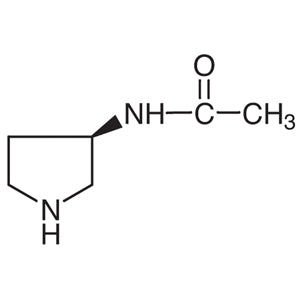
(3R)-(+)-3-Acetamidopyrrolidine is a chiral building block widely used in asymmetric synthesis to construct complex molecular structures. This compound plays a critical role in laboratories where precise stereochemical control is essential for producing molecules with specific biological activities. Its importance lies in its ability to influence the stereochemistry of the final product, making it a key component in the development of pharmaceuticals and industrial chemicals. The compound is particularly valuable for researchers aiming to create enantiomerically pure substances, which are crucial in drug development and advanced chemical synthesis.
As a chiral compound, (3R)-(+)-3-Acetamidopyrrolidine exhibits high reactivity and stability, making it a preferred choice for various chemical reactions. Its molecular structure allows it to participate effectively in asymmetric catalysis and other synthetic pathways that require controlled stereochemistry. The compound’s versatility and reliability in maintaining the desired configuration during synthesis make it a trusted material for both academic and industrial research. Its consistent performance ensures accurate and reproducible results, which are vital for scientific investigations.
In Indonesian laboratories, (3R)-(+)-3-Acetamidopyrrolidine is commonly used in pharmaceutical research and development. It supports the creation of bioactive compounds and is integral to studies focused on drug synthesis and organic chemistry. Its availability in solid form and ease of handling make it a practical choice for laboratories requiring precision and consistency in their experiments. This compound is essential for advancing scientific knowledge and innovation in the chemical sciences.
TCI brochures (PDF)
- Chiral Building Blocks 2025-04-14 · p. 2
Related TCI products
- TCI A1170 114636-31-6 (3S)-(-)-3-Acetamidopyrrolidine
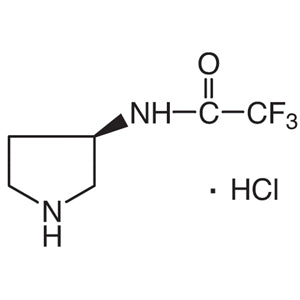
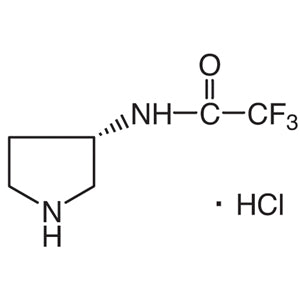
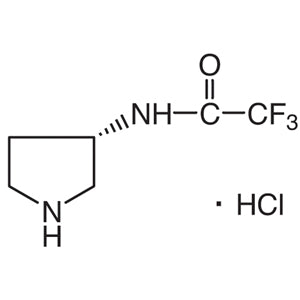
- TCI T1369 141043-16-5 (3R)-(+)-3-(Trifluoroacetamido)pyrrolidine Hydrochloride
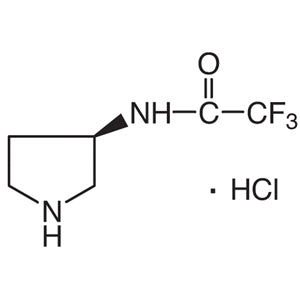
- TCI T1366 132883-43-3 (3S)-(-)-3-(Trifluoroacetamido)pyrrolidine Hydrochloride
- TCI B1355 28506-01-6 1-Benzyl-3-acetamidopyrrolidine
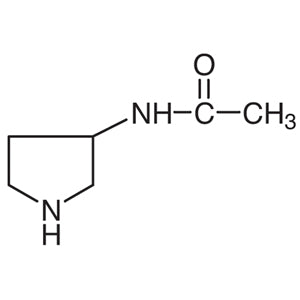
- TCI A1108 79286-74-1 3-Acetamidopyrrolidine
- TCI T2902 97538-67-5 (2R,5S)-2-Trichloromethyl-3-oxa-1-azabicyclo[3.3.0]octan-4-one
- Asymmetric synthesis is a key application where this compound is used to produce enantiomerically pure compounds, ensuring precise stereochemical control in complex molecule construction.
- Pharmaceutical research benefits from its role in the development of bioactive molecules, supporting the creation of drugs with specific therapeutic effects and reduced side effects.
- Organic chemistry experiments rely on its reactivity and stability, enabling efficient and reproducible synthesis of various chiral compounds with desired properties.
- Academic research utilizes it for studying stereochemistry and catalytic mechanisms, providing insights into molecular behavior and reaction pathways.
- Industrial chemical production leverages its versatility, allowing for the synthesis of specialized compounds used in diverse applications across multiple industries.
| Brand | TCI |
|---|---|
| CAS number | 131900-62-4 |
| Molecular formula | — |
| Purity | — |
| Category | Chemistry > Asymmetric Synthesis > Chiral Building Blocks |
| Pack sizes | Available in various sizes as per supplier specifications |
| Physical form | Solid |
| Storage | Store in a cool, dry place away from light and moisture |
This compound should be stored in a cool, dry environment, away from direct sunlight and moisture to maintain its stability and integrity. It is recommended to use airtight containers to prevent exposure to air and humidity, which could affect its chemical properties. In a laboratory setting, it should be handled with appropriate personal protective equipment, such as gloves and safety goggles, to ensure safety during use and storage. Proper labeling of containers is essential to avoid confusion and ensure safe handling. Due to its chiral nature, it is important to maintain strict control over its storage conditions to preserve its stereochemical properties. Regular monitoring of storage conditions is advised to ensure the compound remains in optimal condition for experimental use.
—
Produk Terkait
-
(3S)-(-)-3-Acetamidopyrrolidine TCI A1170
Regular price Rp 6.545.700,00Regular priceRp 4.592.700,00Sale price Rp 6.545.700,00 -
(3R)-(+)-3-(Trifluoroacetamido)pyrrolidineHydrochloride TCI T1369
Regular price Rp 2.439.150,00Regular priceRp 1.720.950,00Sale price Rp 2.439.150,00 -
(3S)-(-)-3-(Trifluoroacetamido)pyrrolidineHydrochloride TCI T1366
Regular price Rp 1.351.350,00Regular priceRp 960.750,00Sale price Rp 1.351.350,00 -
1-Benzyl-3-acetamidopyrrolidine TCI B1355
Regular price Rp 1.431.150,00Regular priceRp 1.016.400,00Sale price Rp 1.431.150,00 -
3-Acetamidopyrrolidine TCI A1108
Regular price Rp 1.881.600,00Regular priceRp 1.331.400,00Sale price Rp 1.881.600,00 -
(2R,5S)-2-Trichloromethyl-3-oxa-1-azabicyclo[3.3.0]octan-4-one TCI T2902
Regular price Rp 1.696.800,00Regular priceRp 1.202.250,00Sale price Rp 1.696.800,00 -
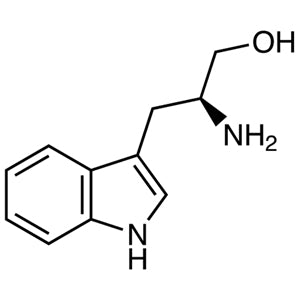
L-TryptophanamideHydrochloride TCI T2312
Regular price Rp 2.068.500,00Regular priceRp 1.461.600,00Sale price Rp 2.068.500,00 -
L-(-)-Tryptophanol TCI T1537
Regular price Rp 2.173.500,00Regular priceRp 1.535.100,00Sale price Rp 2.173.500,00


![97538-67-5 (2R,5S)-2-Trichloromethyl-3-oxa-1-azabicyclo[3.3.0]octan-4-one - AMI Scientific](http://amiscientific.com/cdn/shop/files/TCI2510T2902.jpg?v=1767143504&width=533)