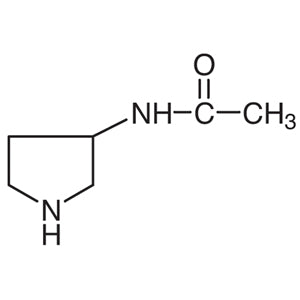
(3S)-(-)-3-Acetamidopyrrolidine is a chiral compound widely used in asymmetric synthesis to construct molecular structures with specific biological activities. As a key component in organic chemistry and pharmacology research, it plays a vital role in the development of bioactive compounds, including pharmaceuticals and other pharmacological agents. This compound is essential for chemists and researchers aiming to create enantiomerically pure substances, which are critical in drug development and advanced chemical synthesis. Its unique stereochemistry allows for the formation of different isomers, each with distinct reactivity and biological properties.
The compound’s structural features, such as its chiral center and amide group, make it a preferred choice for synthetic chemists. The amide functionality provides reactivity, enabling substitution reactions and other chemical transformations. Additionally, its solubility in organic solvents simplifies handling and purification processes in the laboratory. These characteristics make it a versatile building block for creating complex molecules with precise stereochemical control.
In Indonesian laboratories, (3S)-(-)-3-Acetamidopyrrolidine is commonly used in organic chemistry and pharmacology research. It is a fundamental reagent for synthesizing bioactive compounds and is frequently utilized in academic and industrial research settings. Its availability and reliability make it a valuable resource for scientists working on drug discovery and chemical synthesis projects in Indonesia.
TCI brochures (PDF)
- Chiral Building Blocks 2025-04-14 · p. 2
Related TCI products
- TCI A1169 131900-62-4 (3R)-(+)-3-Acetamidopyrrolidine
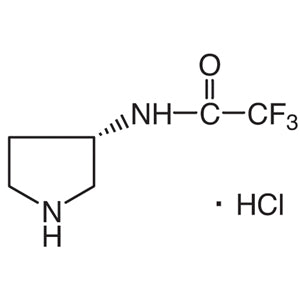
- TCI T1369 141043-16-5 (3R)-(+)-3-(Trifluoroacetamido)pyrrolidine Hydrochloride
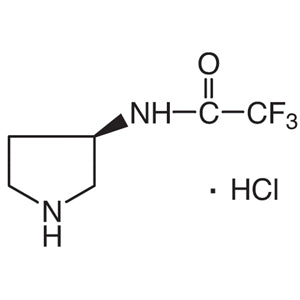
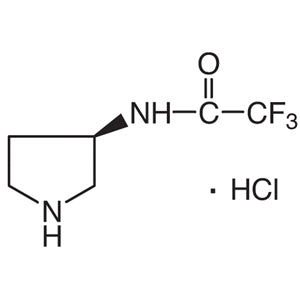
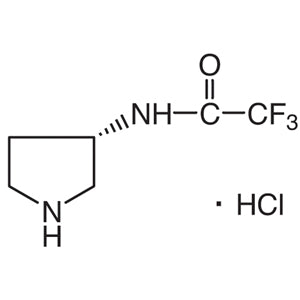
- TCI T1366 132883-43-3 (3S)-(-)-3-(Trifluoroacetamido)pyrrolidine Hydrochloride
- TCI B1355 28506-01-6 1-Benzyl-3-acetamidopyrrolidine
- TCI A1108 79286-74-1 3-Acetamidopyrrolidine
- TCI T2902 97538-67-5 (2R,5S)-2-Trichloromethyl-3-oxa-1-azabicyclo[3.3.0]octan-4-one
- Asymmetric synthesis is a key application where this compound is used to create enantiomerically pure molecules, which are essential in pharmaceutical development.
- Organic chemistry research benefits from its chiral structure, enabling the synthesis of complex molecules with precise stereochemical control.
- Pharmacological studies utilize this compound to develop and test new drugs, leveraging its ability to form bioactive isomers.
- Chemical synthesis projects rely on its reactivity and solubility, making it ideal for creating a wide range of functional derivatives.
- Academic research in Indonesian universities frequently incorporates this compound in teaching and experimental studies on stereochemistry and synthetic methods.
| Brand | TCI |
|---|---|
| CAS number | 114636-31-6 |
| Molecular formula | — |
| Purity | — |
| Category | Chemistry > Asymmetric Synthesis > Chiral Building Blocks |
| Pack sizes | — |
| Physical form | — |
| Storage | Store in a cool, dry place away from light |
This compound should be stored in a cool, dry environment, away from direct light and sources of heat. It is recommended to use airtight containers to prevent moisture absorption and contamination. Due to its chemical nature, it should be handled in a well-ventilated area, with appropriate personal protective equipment such as gloves and safety goggles. While no specific storage conditions beyond standard chemical handling are required, it is important to ensure that it is kept separate from incompatible substances. Proper labeling and storage practices help maintain the integrity and safety of the compound in the laboratory setting.
—
Produk Terkait
-
(3R)-(+)-3-Acetamidopyrrolidine TCI A1169
Regular price Rp 8.904.000,00Regular price -
(3R)-(+)-3-(Trifluoroacetamido)pyrrolidineHydrochloride TCI T1369
Regular price From Rp 2.386.650,00Regular price -
(3S)-(-)-3-(Trifluoroacetamido)pyrrolidineHydrochloride TCI T1366
Regular price From Rp 1.298.850,00Regular price -
1-Benzyl-3-acetamidopyrrolidine TCI B1355
Regular price From Rp 1.378.650,00Regular price -
3-Acetamidopyrrolidine TCI A1108
Regular price From Rp 1.829.100,00Regular price -
(2R,5S)-2-Trichloromethyl-3-oxa-1-azabicyclo[3.3.0]octan-4-one TCI T2902
Regular price Rp 1.644.300,00Regular price -
L-TryptophanamideHydrochloride TCI T2312
Regular price From Rp 2.016.000,00Regular price -
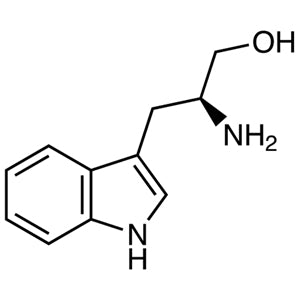
L-(-)-Tryptophanol TCI T1537
Regular price Rp 2.121.000,00Regular price


![97538-67-5 (2R,5S)-2-Trichloromethyl-3-oxa-1-azabicyclo[3.3.0]octan-4-one - AMI Scientific](http://amiscientific.com/cdn/shop/files/TCI2510T2902.jpg?v=1767143504&width=533)