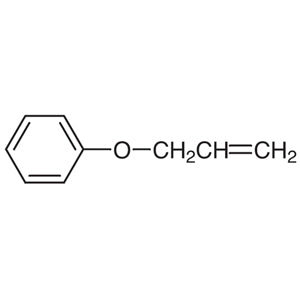
Allyl p-Tolyl Ether is a chemical compound widely used as a building block in organic synthesis. It serves as a versatile intermediate in the creation of complex molecular structures, enabling chemists to design and synthesize a variety of organic compounds. Its unique chemical structure allows for participation in multiple types of reactions, including substitution, addition, and cross-coupling reactions. In laboratory settings, this compound plays a crucial role in advancing research in organic chemistry, particularly in the development of new materials and pharmaceuticals. Its adaptability makes it an essential tool for researchers working on diverse chemical projects.
Allyl p-Tolyl Ether is valued for its chemical stability under controlled conditions, making it suitable for reactions that require temporary stability. However, it is sensitive to oxidation and can react with other chemicals, which necessitates careful handling. Its solubility in organic solvents such as ethyl acetate and acetone further enhances its utility in laboratory applications. These properties make it a preferred choice for chemists seeking a reliable and controllable reagent in various synthetic processes.
In Indonesian laboratories, Allyl p-Tolyl Ether is commonly used in the synthesis of heterocyclic and aromatic compounds. It is a key component in research related to pharmacology, chemical materials, and environmental chemistry. Its application extends to the development of new drugs and the study of chemical reactions that contribute to scientific innovation. The compound's reliability and versatility make it an important resource for chemical research in Indonesia.
TCI brochures (PDF)
- Monomers 2025-05-28 · p. 16
- Synthesis of heterocyclic compounds for the development of new pharmaceuticals due to its reactivity and structural versatility.
- Addition reactions for the formation of complex organic molecules requiring controlled chemical transformations.
- Organic synthesis in material science research to create novel chemical structures with specific functional properties.
- Environmental chemistry studies to explore the behavior of organic compounds in different reaction conditions.
- Drug development projects where Allyl p-Tolyl Ether is used as a key intermediate in the synthesis of bioactive molecules.
| Brand | TCI |
|---|---|
| CAS number | 23431-48-3 |
| Molecular formula | — |
| Purity | — |
| Category | Chemistry > Building Blocks > Non-Heterocyclic Building Blocks |
| Pack sizes | Available in various quantities as per supplier specifications |
| Physical form | Liquid |
| Storage | Store in a cool, dry place away from light and incompatible materials |
Allyl p-Tolyl Ether should be stored in a cool, dry environment, away from direct sunlight and sources of heat. It is recommended to keep the compound in a tightly sealed container to prevent exposure to air and moisture. Due to its sensitivity to oxidation, it should be stored separately from strong oxidizing agents. Appropriate personal protective equipment, such as gloves and safety goggles, should be worn when handling the compound. In laboratory settings, it is important to ensure proper ventilation and to follow standard chemical safety protocols to minimize risks associated with its reactivity. The compound should not be stored in containers that are incompatible with its chemical nature, and all handling should be conducted in a well-ventilated fume hood if necessary.
—
Produk Terkait
-
AllylPhenylEther TCI A0234
Regular price From Rp 1.140.300,00Regular priceRp 796.950,00Sale price From Rp 1.140.300,00 -
AllylGlycidylEther TCI A0221
Regular price From Rp 477.750,00Regular priceRp 333.900,00Sale price From Rp 477.750,00 -
Allylo-TolylEther TCI A1286
Regular price Rp 9.778.650,00Regular priceRp 6.837.600,00Sale price Rp 9.778.650,00 -
AllylBenzylEther TCI A1427
Regular price From Rp 2.332.050,00Regular priceRp 1.630.650,00Sale price From Rp 2.332.050,00 -
o-Tolyl3,5-XylylEther TCI T2213
Regular price From Rp 3.683.400,00Regular priceRp 2.575.650,00Sale price From Rp 3.683.400,00 -
EthyleneGlycolDi(m-tolyl)Ether TCI E1335
Regular price From Rp 1.856.400,00Regular priceRp 1.297.800,00Sale price From Rp 1.856.400,00 -
EthyleneGlycolMono-p-tolylEther TCI E0303
Regular price From Rp 1.326.150,00Regular priceRp 942.900,00Sale price From Rp 1.326.150,00 -
EthyleneGlycolMono-m-tolylEther TCI E0302
Regular price From Rp 2.677.500,00Regular priceRp 1.887.900,00Sale price From Rp 2.677.500,00