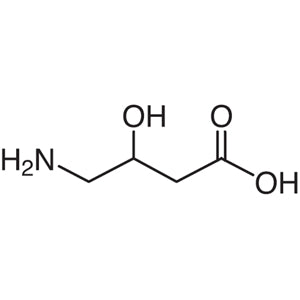
(S)-(-)-4-Amino-2-hydroxybutyric Acid is a chemical compound widely used in laboratory settings for its versatility in chemical and biochemical experiments. This compound plays a crucial role in the synthesis of bioactive molecules, particularly in the field of peptide chemistry. Its unique molecular structure makes it an essential reagent for researchers working on neurochemical and pharmacological studies. Due to its stability and controlled reactivity, it is a reliable choice for various scientific applications. The compound is commonly found in research laboratories across Indonesia, where it supports a wide range of experimental needs in both academic and industrial settings.
One of the key properties that make this compound a preferred choice is its solubility in organic solvents such as ethyl acetate and ethanol. This solubility profile allows for easy handling and integration into complex reaction systems. Additionally, its high melting point facilitates precise temperature control during experimental procedures. The compound’s ability to interact with various reagents under specific conditions enhances its utility in chemical synthesis and molecular characterization. These characteristics contribute to its widespread use in both basic and applied research.
In Indonesian laboratories, (S)-(-)-4-Amino-2-hydroxybutyric Acid is commonly used in chemical and biological research. It supports studies in peptide chemistry, neurochemistry, and drug development. Researchers in universities and research institutions rely on this compound for experiments involving molecular characterization, synthesis of active compounds, and development of new pharmaceutical products. Its availability and reliability make it a standard component in many laboratory workflows.
TCI brochures (PDF)
- Colloidal Quantum Dot (QD) Research Reagents 2026-05-21 · p. 11
- Peptide Chemistry: This compound is ideal for synthesizing peptides due to its amino and hydroxyl functional groups, enabling efficient coupling reactions in peptide synthesis.
- Neurochemical Research: It is used to study neurotransmitter-related compounds and their interactions, supporting investigations into brain function and neurological disorders.
- Pharmacological Studies: Its role in drug development makes it valuable for testing the efficacy and mechanism of action of new therapeutic agents.
- Molecular Characterization: The compound’s well-defined structure allows for accurate identification and analysis in spectroscopic and chromatographic techniques.
- Bioactive Compound Synthesis: It serves as a building block for creating bioactive molecules with potential applications in medicine and biotechnology.
| Brand | TCI |
|---|---|
| CAS number | 40371-51-5 |
| Molecular formula | — |
| Purity | — |
| Category | Chemistry > Chemical Biology > Peptide Chemistry |
| Pack sizes | Available in various quantities as per supplier specifications |
| Physical form | Solid |
| Storage | Store in a cool, dry place away from direct light |
This compound should be stored in a cool, dry environment, away from direct sunlight and sources of heat. It is recommended to keep it in a tightly sealed container to prevent moisture absorption and contamination. For optimal stability, it should be stored at a temperature below 25°C. When handling, it is advisable to use appropriate personal protective equipment such as gloves and safety goggles to ensure safety. Due to its chemical nature, it should be stored separately from incompatible substances to avoid any potential reactions. Proper labeling of containers is essential for safe handling and storage in a laboratory setting.
—
Product Categories
Produk Terkait
-
4-Amino-3-hydroxybutyricAcid TCI A0318
Regular price From Rp 1.167.600,00Regular priceRp 831.600,00Sale price From Rp 1.167.600,00 -
4-AminobutyricAcid TCI A0282
Regular price From Rp 505.050,00Regular priceRp 352.800,00Sale price From Rp 505.050,00 -
L-Isoserine TCI I0828
Regular price From Rp 1.351.350,00Regular priceRp 960.750,00Sale price From Rp 1.351.350,00 -
beta-Alanine TCI A0180
Regular price From Rp 477.750,00Regular priceRp 333.900,00Sale price From Rp 477.750,00 -
DL-Isoserine TCI I0309
Regular price From Rp 928.200,00Regular priceRp 664.650,00Sale price From Rp 928.200,00 -
2-Amino-3-hydroxybenzoicAcid TCI A0316
Regular price From Rp 3.312.750,00Regular priceRp 2.332.050,00Sale price From Rp 3.312.750,00 -
DL-2-Amino-n-octanoicAcid TCI A0382
Regular price From Rp 2.332.050,00Regular priceRp 1.646.400,00Sale price From Rp 2.332.050,00 -
(1R,2S)-1-[(tert-Butoxycarbonyl)amino]-2-vinylcyclopropanecarboxylicAcid TCI B5322
Regular price From Rp 689.850,00Regular priceRp 497.700,00Sale price From Rp 689.850,00