3-Amino-9-ethylcarbazole is a chemical compound widely used in research applications within the fields of materials science and chemistry. As a key component in the synthesis of complex compounds, it plays a vital role in electrochemical and semiconductor material development. Its aromatic structure provides stability, making it a valuable building block for creating compounds with specific electronic properties. This compound is particularly useful in laboratories where controlled reactivity and chemical stability are essential for successful experimentation.
The compound’s chemical stability and controlled reactivity make it a preferred choice for researchers working on advanced material development. Its ability to participate in substitution and redox reactions allows it to be tailored for various experimental needs. The molecular complexity of 3-Amino-9-ethylcarbazole also enables it to be used in a wide range of chemical processes, offering versatility in both synthetic and analytical applications. These properties make it an ideal material for laboratories requiring precise chemical behavior in their experiments.
In Indonesian laboratories, 3-Amino-9-ethylcarbazole is commonly used in semiconductor material development and electrochemical technology research. It is a key reagent in experiments that require specific chemical properties, such as conductivity or optical response. Many research institutions and universities in Indonesia rely on this compound for experiments involving the synthesis of complex organic molecules and the development of new materials for advanced applications. Its consistent performance and reliability make it a trusted choice in both academic and industrial research settings.
TCI brochures (PDF)
- Carbazoles 2025-06-27 · p. 3
- Building Blocks for Organic Semiconductor 2026-03-24 · p. 18
Related TCI products
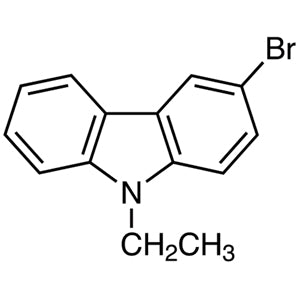
- TCI B3459 57102-97-3 3-Bromo-9-ethylcarbazole
- TCI E1153 669072-93-9 9-Ethylcarbazole-3-boronic Acid (contains varying amounts of Anhydride)
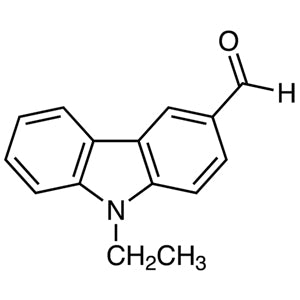
- TCI E0359 7570-45-8 N-Ethylcarbazole-3-carboxaldehyde
- TCI D4512 5599-50-8 3,6-Dimethylcarbazole
- TCI D2982 33255-13-9 3,6-Dibromo-9-ethylcarbazole
- TCI A2167 132-32-1 3-Amino-9-ethylcarbazole [for Biochemical Research]
- Semiconductor material development for electrooptical applications due to its stable aromatic structure and electronic properties.
- Electrochemical research for redox reactions and substitution processes that require controlled reactivity.
- Organic synthesis of complex compounds where precise chemical behavior is essential for successful outcomes.
- Development of advanced materials with tailored electronic and optical characteristics.
- Research in material science for the creation of new compounds with specific functional properties.
| Brand | TCI |
|---|---|
| CAS number | 132-32-1 |
| Molecular formula | — |
| Purity | — |
| Category | Materials Science > Material Building Blocks > Small Molecule Semiconductor Building Blocks |
| Pack sizes | As per supplier specifications |
| Physical form | Solid (as per standard product description) |
| Storage | Store in a cool, dry place away from light and incompatible substances. |
This compound should be stored in a cool, dry environment, away from direct sunlight and sources of heat. It is recommended to use airtight containers to prevent moisture absorption and contamination. Due to its chemical stability, it does not require refrigeration but should be kept in a secure location to avoid exposure to incompatible materials. In laboratory settings, proper personal protective equipment should be worn when handling to ensure safety. The compound is non-hazardous under normal conditions but should be handled with care to maintain its integrity and effectiveness in research applications.
—
Produk Terkait
-
3-Bromo-9-ethylcarbazole TCI B3459
Regular price Rp 2.544.150,00Regular priceRp 1.794.450,00Sale price Rp 2.544.150,00 -
9-Ethylcarbazole-3-boronicAcid(containsvaryingamountsofAnhydride) TCI E1153
Regular price Rp 2.173.500,00Regular priceRp 1.535.100,00Sale price Rp 2.173.500,00 -
N-Ethylcarbazole-3-carboxaldehyde TCI E0359
Regular price Rp 1.192.800,00Regular priceRp 849.450,00Sale price Rp 1.192.800,00 -
3,6-Dimethylcarbazole TCI D4512
Regular price Rp 6.227.550,00Regular priceRp 4.370.100,00Sale price Rp 6.227.550,00 -
3,6-Dibromo-9-ethylcarbazole TCI D2982
Regular price Rp 1.723.050,00Regular priceRp 1.220.100,00Sale price Rp 1.723.050,00 -
3-Amino-9-ethylcarbazole[forBiochemicalResearch] TCI A2167
Regular price Rp 689.850,00Regular priceRp 497.700,00Sale price Rp 689.850,00 -
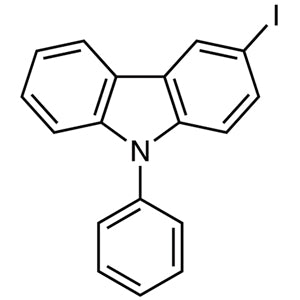
3-Iodo-9-phenylcarbazole TCI I0913
Regular price Rp 1.008.000,00Regular priceRp 720.300,00Sale price Rp 1.008.000,00 -
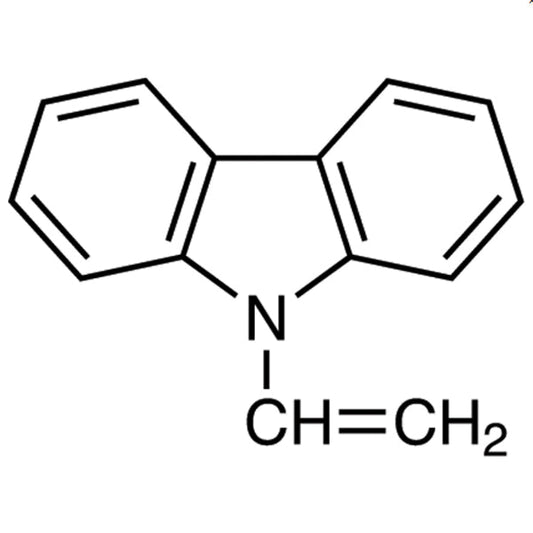
9-Vinylcarbazole TCI V0021
Regular price Rp 2.439.150,00Regular priceRp 1.720.950,00Sale price Rp 2.439.150,00



![132-32-1 3-Amino-9-ethylcarbazole [for Biochemical Research] - AMI Scientific](http://amiscientific.com/cdn/shop/files/TCI2510A2167.jpg?v=1767082439&width=533)