TCI A1515 2-Allyloxybenzaldehyde (CAS 28752-82-1) is a benzaldehyde derivative with an allyloxy group in the ortho position relative to the aldehyde group. The two neighbouring functional groups are a reactive aldehyde and an allyl ether that contains a carbon-carbon double bond. Together they make this compound a very useful building block for intramolecular synthesis. In the laboratory it is widely used as a starting material for benzopyran and chroman frameworks, and for other cyclic compounds fused to a benzene ring. Frameworks of this type are common in natural products and in molecules of interest to medicinal chemistry.
Researchers choose this compound because its two functional groups can react one after the other, or in a single step, to close a ring. The aldehyde group can be converted into an oxime, nitrone, imine, or alkene. That new group can then react with the nearby allyl group through intramolecular cycloaddition or ring-closing metathesis. The allyl ether group can also undergo Claisen rearrangement to give allyl-substituted phenols. Because both groups sit in the ortho position, intramolecular reactions tend to proceed efficiently. TCI's consistent quality helps researchers get reproducible results from batch to batch.
In Indonesian laboratories, 2-Allyloxybenzaldehyde is typically used in university organic chemistry research groups, natural product synthesis laboratories, and medicinal chemistry programmes that build fused-ring heterocyclic scaffolds. Graduate students and researchers use it to study intramolecular cyclisation strategies, to prepare chroman and benzopyran intermediates for further derivatisation, and to teach reaction mechanisms such as the Claisen rearrangement. It suits both small-scale exploratory work and methodology development, where a dependable, well-defined starting material is essential for interpreting results.
TCI brochures (PDF)
- Biomaterials Research Reagents 2025-02-19 · p. 15
- Monomers 2025-05-28 · p. 16
- Synthesis of benzopyran frameworks: the ortho aldehyde and allyl ether groups can take part in ring closure, giving benzopyran skeletons fused to the benzene ring.
- Preparation of chroman derivatives: the adjacent functional groups allow efficient intramolecular cyclisation, making this compound a practical starting point for chroman-type scaffolds in natural product research.
- Intramolecular cycloaddition studies: the aldehyde can be converted into an oxime, nitrone, or imine, which then reacts with the neighbouring allyl double bond to build fused ring systems.
- Ring-closing metathesis: after the aldehyde is converted into an alkene, the existing allyl group provides a second olefin partner, enabling metathesis to form benzene-fused cyclic structures.
- Claisen rearrangement experiments: the allyl aryl ether group can undergo Claisen rearrangement to yield allyl-substituted phenols, which is useful for mechanistic studies and for preparing further intermediates.
| Brand | TCI (product code A1515) |
|---|---|
| CAS number | 28752-82-1 |
| Molecular formula | — |
| Purity | — |
| Category | Chemistry > Building Blocks > Non-Heterocyclic Building Blocks |
| Pack sizes | as listed on the product page |
| Physical form | refer to the TCI product specification and certificate of analysis |
| Storage | follow the storage conditions stated on the TCI label and Safety Data Sheet |
Keep 2-Allyloxybenzaldehyde in its original tightly closed container in a cool, dry, well-ventilated place, away from direct sunlight, heat sources, and strong oxidising agents. Aldehydes can slowly oxidise when exposed to air, so reseal the container promptly after each use. Store it according to the conditions on the TCI label. Handle the compound in a fume hood and wear suitable personal protective equipment, including chemical-resistant gloves, safety glasses, and a laboratory coat. Avoid inhaling vapours and avoid contact with skin and eyes. Before use, read the Safety Data Sheet for hazard information, first-aid measures, and disposal requirements. Dispose of waste according to local regulations.
—
Product Categories
Produk Terkait
-
AllylBenzoate TCI B2041
Regular price Rp 2.702.700,00Regular priceRp 1.905.750,00Sale price Rp 2.702.700,00 -
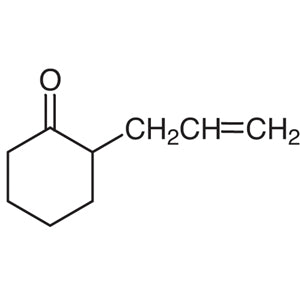
2-Allylcyclohexanone TCI A2230
Regular price From Rp 2.835.000,00Regular priceRp 1.998.150,00Sale price From Rp 2.835.000,00 -
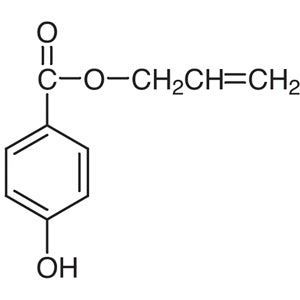
Allyl4-Hydroxybenzoate TCI A1846
Regular price Rp 3.895.500,00Regular priceRp 2.739.450,00Sale price Rp 3.895.500,00 -
3-AllyloxypropionicAcid TCI A0657
Regular price Rp 6.413.400,00Regular priceRp 4.500.300,00Sale price Rp 6.413.400,00 -
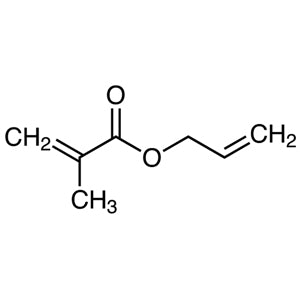
AllylMethacrylate(stabilizedwithMEHQ) TCI M0075
Regular price From Rp 477.750,00Regular priceRp 333.900,00Sale price From Rp 477.750,00 -
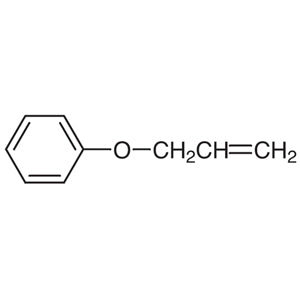
AllylPhenylEther TCI A0234
Regular price From Rp 1.140.300,00Regular priceRp 796.950,00Sale price From Rp 1.140.300,00 -
2-Allylphenol TCI A0233
Regular price From Rp 769.650,00Regular priceRp 553.350,00Sale price From Rp 769.650,00