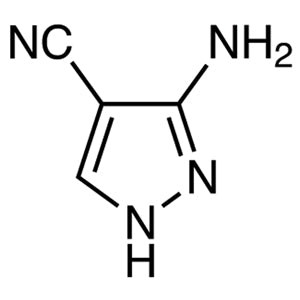
3-Amino-4-pyrazolecarbonitrile is a chemical compound classified under the category of heterocyclic building blocks. It plays a crucial role in laboratory settings, particularly in the synthesis of complex molecules with heterocyclic structures. This compound is widely used in the development of pharmaceuticals and industrial chemicals due to its structural versatility and reactivity. Its ability to participate in various chemical reactions makes it an essential tool for chemists and researchers working on the creation of new compounds with specific biological activities.
The compound's unique molecular structure, which includes two nitrogen atoms in a heterocyclic ring, along with an amino group and a nitrile group, contributes to its chemical versatility. These functional groups allow it to engage in substitution, condensation, and other types of reactions, making it highly suitable for synthetic applications. Its stability and reactivity are key factors that make it a preferred choice for researchers aiming to design compounds with targeted properties.
In Indonesian laboratories, 3-Amino-4-pyrazolecarbonitrile is commonly used in pharmacological, organic chemistry, and materials science research. It supports the development of new drugs and materials by serving as a foundational building block. Local and international researchers rely on this compound for its reliability and effectiveness in various experimental contexts. Its widespread use underscores its importance in both academic and industrial research environments.
Related TCI products
- TCI A3039 103646-82-8 5-Amino-1-(p-tolyl)pyrazole-4-carbonitrile
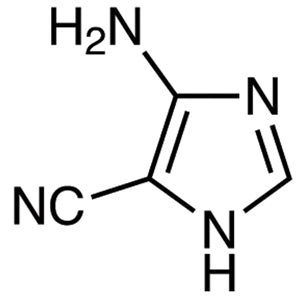
- TCI A1282 5098-11-3 4-Amino-1H-imidazole-5-carbonitrile
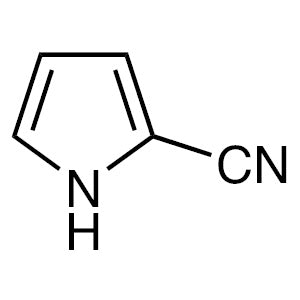
- TCI P1926 4513-94-4 1H-Pyrrole-2-carbonitrile
- TCI C3075 50743-17-4 Chromone-3-carbonitrile
- TCI C1909 5457-28-3 1H-indole-3-carbonitrile
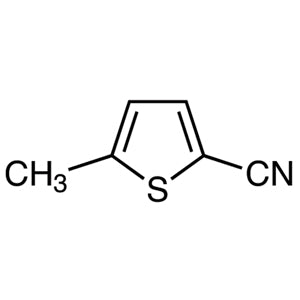
- TCI M2959 72835-25-7 5-Methylthiophene-2-carbonitrile
- Pharmacological research utilizes this compound for the synthesis of bioactive molecules due to its reactive functional groups and structural flexibility.
- Organic chemistry experiments benefit from its ability to participate in substitution and condensation reactions, enabling the creation of complex heterocyclic structures.
- Materials science applications leverage its chemical versatility to develop new compounds with specific physical and chemical properties.
- Drug discovery projects often incorporate this compound as a key intermediate in the design of pharmaceutical compounds with targeted biological activities.
- Analytical chemistry laboratories use it as a reference standard for the identification and quantification of similar heterocyclic compounds in complex mixtures.
| Brand | TCI |
|---|---|
| CAS number | 16617-46-2 |
| Molecular formula | — |
| Purity | — |
| Category | Chemistry > Building Blocks > Heterocyclic Building Blocks |
| Pack sizes | Available in various quantities as per standard supplier offerings |
| Physical form | Solid, typically in crystalline or powder form |
| Storage | Store in a cool, dry place away from moisture and direct sunlight |
This compound should be stored in a cool, dry environment to maintain its chemical integrity and prevent degradation. It is recommended to use airtight containers to minimize exposure to moisture and air, which can affect its stability. When handling, it is important to use appropriate personal protective equipment, such as gloves and safety goggles, to ensure safety. Due to its chemical nature, it should be kept away from incompatible substances, including strong oxidizers and acids. Proper ventilation is essential in laboratory settings to avoid inhalation of vapors. Regular monitoring of storage conditions will help ensure the compound remains suitable for use in research applications.
—
Produk Terkait
-
5-Amino-1-(p-tolyl)pyrazole-4-carbonitrile TCI A3039
Regular price Rp 3.312.750,00Regular price -
4-Amino-1H-imidazole-5-carbonitrile TCI A1282
Regular price From Rp 6.970.950,00Regular price -
1H-Pyrrole-2-carbonitrile TCI P1926
Regular price From Rp 1.353.450,00Regular price -
Chromone-3-carbonitrile TCI C3075
Regular price Rp 1.485.750,00Regular price -
1H-indole-3-carbonitrile TCI C1909
Regular price From Rp 1.167.600,00Regular price -
5-Methylthiophene-2-carbonitrile TCI M2959
Regular price Rp 1.749.300,00Regular price -
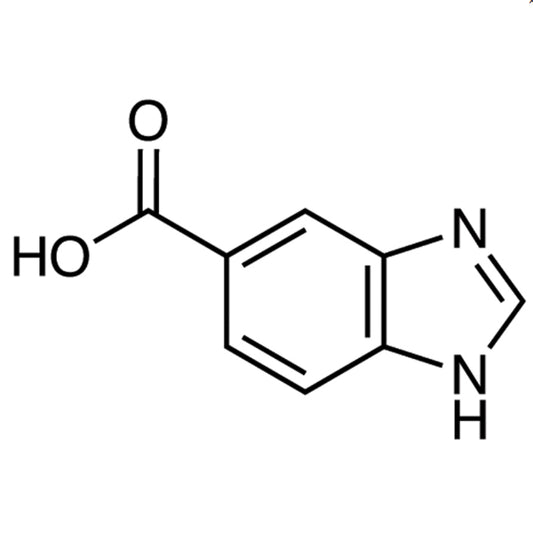
5-BenzimidazolecarboxylicAcid TCI B1763
Regular price From Rp 1.829.100,00Regular price -
Ethyl4-Oxazolecarboxylate TCI O0289
Regular price From Rp 1.060.500,00Regular price