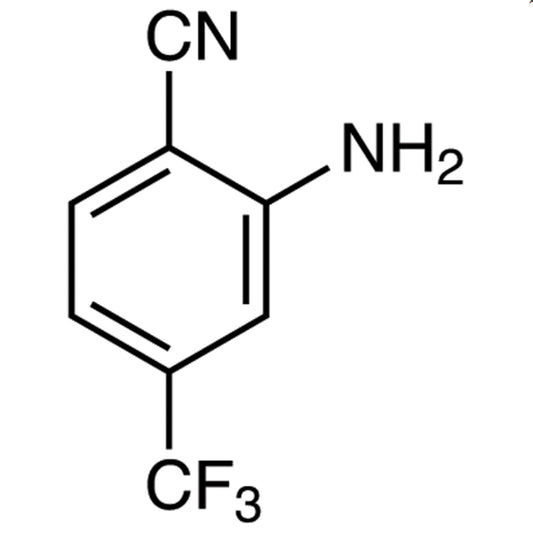
4'-Amino-3'-(trifluoromethyl)acetanilide is a chemical compound widely used as a building block in the synthesis of complex organic molecules. This compound plays a crucial role in laboratory settings where functional group manipulation and structural modification are required. Its unique molecular structure makes it a versatile reagent for various synthetic pathways, particularly in the development of pharmaceutical compounds and advanced organic chemistry research. Due to its chemical stability and reactivity, it is a valuable tool for scientists working on drug discovery and chemical innovation.
The compound's key features include the presence of both an amino group and a trifluoromethyl group, which contribute to its reactivity and specificity in chemical reactions. These functional groups enable it to participate in substitution, coupling, and reduction reactions, making it ideal for the synthesis of fluorinated compounds. Its ability to maintain stability under controlled conditions ensures reliable performance in laboratory experiments, enhancing both safety and efficiency in chemical processes.
In Indonesian laboratories, 4'-Amino-3'-(trifluoromethyl)acetanilide is commonly used in scientific research and pharmaceutical development. Its application is particularly relevant in the study of fluorinated structures, which are essential in modern drug design. Researchers in academic and industrial settings rely on this compound to advance their work in organic chemistry and medicinal chemistry, contributing to the growth of scientific innovation in Indonesia.
TCI brochures (PDF)
- Fluorination Reagents, Fluorinated Building Blocks 2026-03-18 · p. 40
Related TCI products
- TCI N0548 393-12-4 4'-Nitro-3'-(trifluoromethyl)acetanilide
- TCI A2648 1483-54-1 2-Amino-4-(trifluoromethyl)benzonitrile
- TCI A2644 327-74-2 4-Amino-3-(trifluoromethyl)benzonitrile
- TCI B2721 1009-22-9 2'-Bromo-4'-fluoroacetanilide
- TCI F0524 399-31-5 2'-Fluoroacetanilide
- TCI F0521 351-83-7 4'-Fluoroacetanilide
- Pharmaceutical synthesis of fluorinated compounds due to its reactive amino and trifluoromethyl groups
- Organic chemistry research involving substitution and coupling reactions for complex molecule development
- Drug discovery projects requiring precise structural modifications and functional group transformations
- Academic studies focused on fluorinated building blocks for advanced chemical synthesis
- Industrial applications in the production of specialized chemical intermediates for pharmaceutical manufacturing
| Brand | TCI |
|---|---|
| CAS number | 1579-89-1 |
| Molecular formula | — |
| Purity | — |
| Category | Chemistry > Building Blocks > Fluorinated Building Blocks |
| Pack sizes | Available in standard laboratory quantities |
| Physical form | Solid powder |
| Storage | Store in a cool, dry place away from moisture and direct light |
This compound should be stored in a cool, dry environment to maintain its chemical stability. It is recommended to keep it in a sealed container to prevent exposure to moisture and air, which could affect its reactivity. Laboratory personnel should handle it with appropriate personal protective equipment, such as gloves and safety goggles, to ensure safe handling. Due to its chemical nature, it should be stored away from incompatible substances to avoid any potential reactions. Proper ventilation is essential when working with this compound to minimize inhalation risks. Regular monitoring of storage conditions ensures the compound remains effective for its intended applications.
—
Produk Terkait
-
4'-Nitro-3'-(trifluoromethyl)acetanilide TCI N0548
Regular price From Rp 1.643.250,00Regular priceRp 1.164.450,00Sale price From Rp 1.643.250,00 -
2-Amino-4-(trifluoromethyl)benzonitrile TCI A2648
Regular price From Rp 1.272.600,00Regular priceRp 905.100,00Sale price From Rp 1.272.600,00 -
4-Amino-3-(trifluoromethyl)benzonitrile TCI A2644
Regular price From Rp 875.700,00Regular priceRp 627.900,00Sale price From Rp 875.700,00 -
2'-Bromo-4'-fluoroacetanilide TCI B2721
Regular price Rp 1.670.550,00Regular priceRp 1.183.350,00Sale price Rp 1.670.550,00 -
2'-Fluoroacetanilide TCI F0524
Regular price Rp 1.590.750,00Regular priceRp 1.127.700,00Sale price Rp 1.590.750,00 -
4'-Fluoroacetanilide TCI F0521
Regular price Rp 3.472.350,00Regular priceRp 2.443.350,00Sale price Rp 3.472.350,00 -
3'-Fluoroacetanilide TCI F0302
Regular price Rp 2.252.250,00Regular priceRp 1.590.750,00Sale price Rp 2.252.250,00 -
2',4'-Difluoroacetanilide TCI D3578
Regular price Rp 1.696.800,00Regular priceRp 1.202.250,00Sale price Rp 1.696.800,00