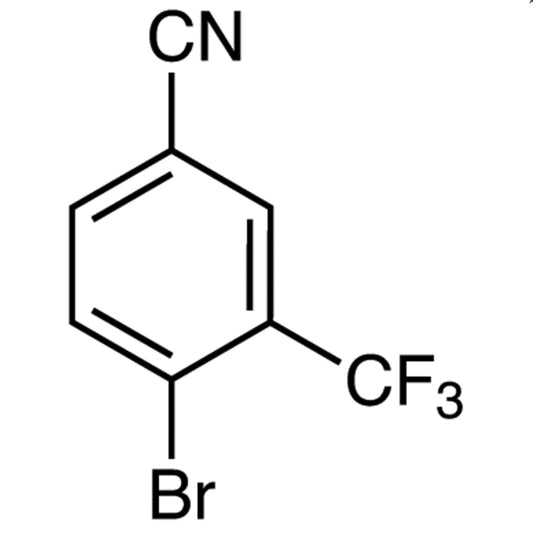
2-Amino-4-(trifluoromethyl)benzonitrile is a chemical compound widely used as a building block in the synthesis of complex organic molecules. It plays a crucial role in laboratory settings where researchers aim to modify molecular structures through substitution reactions. This compound is particularly valuable in the field of fluorinated chemistry due to its unique reactivity and stability. Its presence in various chemical reactions allows scientists to create new compounds with tailored properties, making it an essential tool in modern synthetic chemistry.
The compound’s fluorinated group contributes to its distinct electronic characteristics, enhancing its reactivity in a wide range of chemical transformations. Its stability under certain conditions ensures reliable performance during synthesis processes, reducing the risk of unwanted side reactions. These properties make it a preferred choice for chemists seeking precision and consistency in their experiments. Additionally, its compatibility with various reaction conditions allows for greater flexibility in experimental design.
In Indonesian laboratories, 2-Amino-4-(trifluoromethyl)benzonitrile is commonly used in research focused on organic chemistry and pharmacology. Its ability to participate in diverse synthetic pathways supports the development of new compounds with potential applications in drug discovery and material science. Researchers in Indonesia rely on this compound to advance their studies and achieve reliable results in complex chemical syntheses.
TCI brochures (PDF)
- Fluorination Reagents, Fluorinated Building Blocks 2026-03-18 · p. 40
Related TCI products
- TCI B4691 1735-53-1 4-Bromo-3-(trifluoromethyl)benzonitrile
- TCI B1896 27126-93-8 3,5-Bis(trifluoromethyl)benzonitrile
- TCI A2644 327-74-2 4-Amino-3-(trifluoromethyl)benzonitrile
- TCI N1068 320-47-8 4-Nitro-2-(trifluoromethyl)benzonitrile
- TCI I1018 101066-87-9 4-Iodo-2-(trifluoromethyl)benzonitrile
- TCI F1125 146070-35-1 2-Fluoro-3-(trifluoromethyl)benzonitrile
- Organic synthesis: This compound is ideal for constructing complex organic molecules due to its reactive functional groups and fluorinated substituents.
- Pharmacological research: Its unique structure makes it suitable for developing pharmaceutical compounds with enhanced biological activity.
- Fluorinated compound development: It serves as a key building block in the synthesis of fluorinated derivatives with specialized properties.
- Structural modification studies: Its reactivity allows for the creation of new molecular frameworks through substitution and functional group transformations.
- Material science applications: It is used in the synthesis of advanced materials with tailored electronic and chemical properties.
| Brand | TCI |
|---|---|
| CAS number | 1483-54-1 |
| Molecular formula | — |
| Purity | — |
| Category | Chemistry > Building Blocks > Fluorinated Building Blocks |
| Pack sizes | Available in various quantities as per supplier specifications |
| Physical form | Solid, crystalline |
| Storage | Store in a cool, dry place away from light and moisture |
This compound should be stored in a cool, dry environment, away from direct light and moisture to maintain its stability and reactivity. It is recommended to use airtight containers made of materials such as glass or high-density polyethylene to prevent contamination and degradation. Due to its chemical nature, it should be handled with appropriate personal protective equipment, including gloves and safety goggles, to ensure laboratory safety. Proper ventilation is essential when working with this compound to minimize exposure. Regular monitoring of storage conditions is advised to ensure optimal performance and safety in laboratory settings.
—
Produk Terkait
-
4-Bromo-3-(trifluoromethyl)benzonitrile TCI B4691
Regular price From Rp 2.153.000,00Regular priceRp 1.480.000,00Sale price From Rp 2.153.000,00 -
3,5-Bis(trifluoromethyl)benzonitrile TCI B1896
Regular price From Rp 2.048.000,00Regular priceRp 1.409.000,00Sale price From Rp 2.048.000,00 -
4-Amino-3-(trifluoromethyl)benzonitrile TCI A2644
Regular price From Rp 856.000,00Regular priceRp 598.000,00Sale price From Rp 856.000,00 -
4-Nitro-2-(trifluoromethyl)benzonitrile TCI N1068
Regular price Rp 1.089.000,00Regular priceRp 756.000,00Sale price Rp 1.089.000,00 -
4-Iodo-2-(trifluoromethyl)benzonitrile TCI I1018
Regular price From Rp 1.634.000,00Regular priceRp 1.127.000,00Sale price From Rp 1.634.000,00 -
2-Fluoro-3-(trifluoromethyl)benzonitrile TCI F1125
Regular price From Rp 674.000,00Regular priceRp 474.000,00Sale price From Rp 674.000,00 -
3-Fluoro-4-(trifluoromethyl)benzonitrile TCI F1019
Regular price From Rp 622.000,00Regular priceRp 439.000,00Sale price From Rp 622.000,00 -
3-Fluoro-5-(trifluoromethyl)benzonitrile TCI F0994
Regular price From Rp 2.411.000,00Regular priceRp 1.656.000,00Sale price From Rp 2.411.000,00