4-Nitro-2-(trifluoromethyl)benzonitrile is a chemical compound widely used in organic synthesis reactions within laboratory settings. This compound serves as a key building block in the development of fluorinated organic compounds, offering versatility in chemical reactions due to its unique molecular structure. It contains a nitro group, a trifluoromethyl group, and a nitrile group, which together contribute to its functional versatility in synthetic chemistry. Its presence in laboratory workflows supports the creation of complex molecules with specific chemical properties, making it essential for researchers in various scientific disciplines.
The compound’s fluorinated structure provides chemical stability and controlled reactivity, making it a preferred choice for synthetic chemists. The presence of fluorine atoms enhances its ability to participate in substitution and condensation reactions, allowing for the synthesis of a wide range of derivatives. Its stability under various reaction conditions ensures reliable results, while its reactivity allows for precise control over reaction outcomes. These properties make it a valuable tool in the development of new materials and pharmaceutical compounds.
In Indonesian laboratories, this compound is commonly used in organic chemistry research, particularly in the synthesis of novel compounds with specific functional properties. It is also utilized in pharmaceutical and materials science research, where its ability to interact with various reagents enables the creation of complex chemical structures. Its role in advancing research in these fields underscores its importance in the scientific community.
Related TCI products
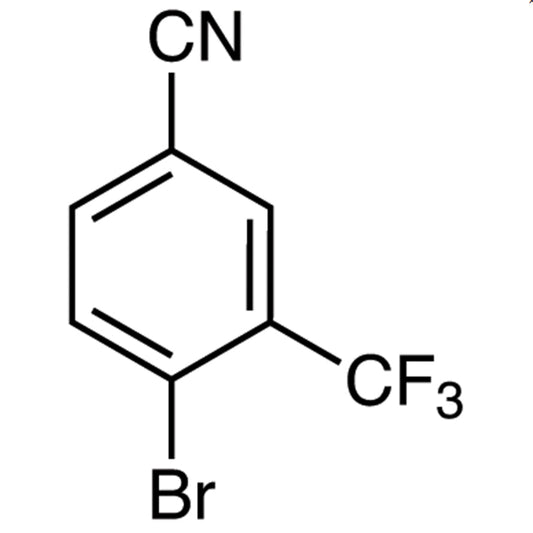
- TCI B4691 1735-53-1 4-Bromo-3-(trifluoromethyl)benzonitrile
- TCI B1896 27126-93-8 3,5-Bis(trifluoromethyl)benzonitrile
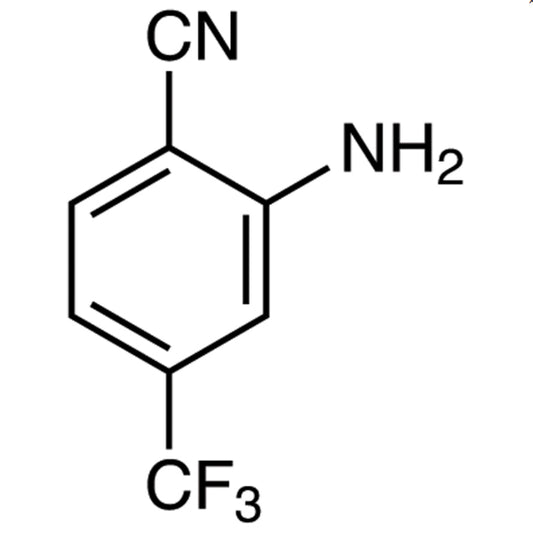
- TCI A2648 1483-54-1 2-Amino-4-(trifluoromethyl)benzonitrile
- TCI A2644 327-74-2 4-Amino-3-(trifluoromethyl)benzonitrile
- TCI I1018 101066-87-9 4-Iodo-2-(trifluoromethyl)benzonitrile
- TCI F1125 146070-35-1 2-Fluoro-3-(trifluoromethyl)benzonitrile
- Organic synthesis applications benefit from this compound's fluorinated structure, enabling the creation of complex molecules with tailored properties.
- Pharmaceutical research utilizes it to develop new drug candidates with enhanced stability and bioavailability due to its fluorinated groups.
- Materials science applications leverage its chemical stability and reactivity for the synthesis of advanced polymers and functional materials.
- Fluorinated compound synthesis relies on its unique molecular structure to produce derivatives with specific chemical behaviors.
- Chemical research in Indonesia uses it as a building block for the development of novel compounds with targeted chemical functionalities.
| Brand | TCI |
|---|---|
| CAS number | 320-47-8 |
| Molecular formula | — |
| Purity | — |
| Category | Chemistry > Building Blocks > Fluorinated Building Blocks |
| Pack sizes | Available in various sizes as per supplier specifications |
| Physical form | Solid, crystalline appearance |
| Storage | Store in a cool, dry place away from light and moisture |
This compound should be stored in a cool, dry environment, away from direct light and moisture to maintain its chemical integrity. It is recommended to use airtight containers made of materials such as glass or polyethylene to prevent contamination and degradation. Due to its fluorinated nature, it is important to handle it with appropriate personal protective equipment, including gloves and safety goggles. In laboratory settings, it should be kept in a well-ventilated area to minimize exposure. Proper labeling of storage containers is essential to ensure safe handling and prevent accidental use. General laboratory precautions should always be followed, including adherence to safety protocols and proper disposal procedures.
—
Produk Terkait
-
4-Bromo-3-(trifluoromethyl)benzonitrile TCI B4691
Regular price From Rp 2.147.250,00Regular price -
3,5-Bis(trifluoromethyl)benzonitrile TCI B1896
Regular price From Rp 2.041.200,00Regular price -
2-Amino-4-(trifluoromethyl)benzonitrile TCI A2648
Regular price From Rp 1.220.100,00Regular price -
4-Amino-3-(trifluoromethyl)benzonitrile TCI A2644
Regular price From Rp 823.200,00Regular price -
4-Iodo-2-(trifluoromethyl)benzonitrile TCI I1018
Regular price From Rp 1.618.050,00Regular price -
2-Fluoro-3-(trifluoromethyl)benzonitrile TCI F1125
Regular price From Rp 637.350,00Regular price -
3-Fluoro-4-(trifluoromethyl)benzonitrile TCI F1019
Regular price From Rp 584.850,00Regular price -
3-Fluoro-5-(trifluoromethyl)benzonitrile TCI F0994
Regular price From Rp 2.411.850,00Regular price