3,5-Bis(trifluoromethyl)benzonitrile is a chemical compound widely used as a building block in the synthesis of complex molecules. This compound features a benzene ring with two trifluoromethyl groups attached at the 3 and 5 positions, making it a valuable reagent in organic chemistry. Its unique structure allows it to participate in various chemical reactions, enhancing its utility in the laboratory. As a fluorinated building block, it plays a crucial role in the development of new materials and pharmaceutical compounds.
The compound is preferred due to its chemical stability and controlled reactivity, which make it suitable for a wide range of synthetic applications. Its fluorinated structure provides enhanced physical and chemical properties, such as increased hydrophobicity and thermal stability. These characteristics make it ideal for use in advanced organic synthesis where precise control over reaction conditions is essential. Its versatility in reacting with nucleophilic and electrophilic species further expands its applicability in laboratory settings.
In Indonesian laboratories, 3,5-Bis(trifluoromethyl)benzonitrile is commonly used in research focused on organic chemistry, pharmaceutical development, and material science. Its role in creating fluorinated compounds aligns with the growing interest in functional materials and drug discovery. Researchers rely on this compound to explore new chemical pathways and develop compounds with specific biological or electronic properties.
Related TCI products
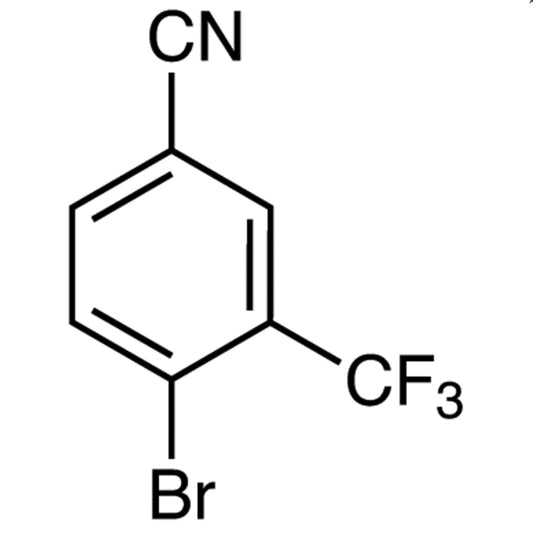
- TCI B4691 1735-53-1 4-Bromo-3-(trifluoromethyl)benzonitrile
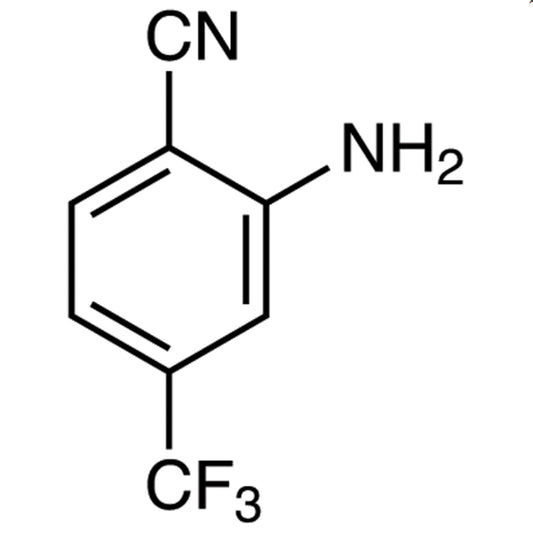
- TCI A2648 1483-54-1 2-Amino-4-(trifluoromethyl)benzonitrile
- TCI A2644 327-74-2 4-Amino-3-(trifluoromethyl)benzonitrile
- TCI N1068 320-47-8 4-Nitro-2-(trifluoromethyl)benzonitrile
- TCI I1018 101066-87-9 4-Iodo-2-(trifluoromethyl)benzonitrile
- TCI F1125 146070-35-1 2-Fluoro-3-(trifluoromethyl)benzonitrile
- Organic synthesis applications benefit from this compound’s fluorinated structure, enabling the creation of complex molecules with tailored properties.
- Pharmaceutical research utilizes it to develop compounds with enhanced bioavailability and stability, supporting drug discovery efforts.
- Material science applications leverage its chemical stability and reactivity for the production of advanced polymers and coatings.
- Fluorinated compound development relies on its unique molecular framework to design new materials with specialized functionalities.
- Analytical chemistry uses it as a reference standard for testing and characterizing fluorinated compounds in various chemical processes.
| Brand | TCI |
|---|---|
| CAS number | 27126-93-8 |
| Molecular formula | — |
| Purity | — |
| Category | Chemistry > Building Blocks > Fluorinated Building Blocks |
| Pack sizes | Available in standard laboratory quantities |
| Physical form | Solid, crystalline |
| Storage | Store in a cool, dry place away from light and moisture |
This compound should be stored in a cool, dry environment, away from direct light and moisture to maintain its chemical integrity. It is recommended to use airtight containers made of materials such as glass or high-density polyethylene to prevent contamination and degradation. Due to its fluorinated nature, it is important to handle the compound with appropriate personal protective equipment, including gloves and safety goggles. In laboratory settings, it should be kept in a well-ventilated area to minimize exposure. Proper labeling and storage conditions are essential to ensure safe handling and long-term stability of the compound.
—
Produk Terkait
-
4-Bromo-3-(trifluoromethyl)benzonitrile TCI B4691
Regular price From Rp 2.199.750,00Regular priceRp 1.554.000,00Sale price From Rp 2.199.750,00 -
2-Amino-4-(trifluoromethyl)benzonitrile TCI A2648
Regular price From Rp 1.272.600,00Regular priceRp 905.100,00Sale price From Rp 1.272.600,00 -
4-Amino-3-(trifluoromethyl)benzonitrile TCI A2644
Regular price From Rp 875.700,00Regular priceRp 627.900,00Sale price From Rp 875.700,00 -
4-Nitro-2-(trifluoromethyl)benzonitrile TCI N1068
Regular price Rp 1.113.000,00Regular priceRp 793.800,00Sale price Rp 1.113.000,00 -
4-Iodo-2-(trifluoromethyl)benzonitrile TCI I1018
Regular price From Rp 1.670.550,00Regular priceRp 1.183.350,00Sale price From Rp 1.670.550,00 -
2-Fluoro-3-(trifluoromethyl)benzonitrile TCI F1125
Regular price From Rp 689.850,00Regular priceRp 497.700,00Sale price From Rp 689.850,00 -
3-Fluoro-4-(trifluoromethyl)benzonitrile TCI F1019
Regular price From Rp 637.350,00Regular priceRp 460.950,00Sale price From Rp 637.350,00 -
3-Fluoro-5-(trifluoromethyl)benzonitrile TCI F0994
Regular price From Rp 2.464.350,00Regular priceRp 1.738.800,00Sale price From Rp 2.464.350,00