


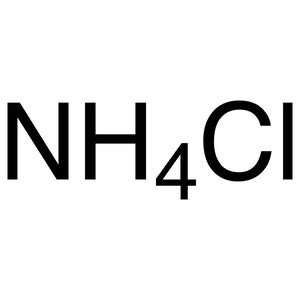
Ammonium chloride (NH₄Cl), with the CAS number 12125-02-9, is a widely used inorganic salt in laboratory settings. It is a key synthetic reagent that plays a crucial role in various chemical reactions and analytical processes. As a common reagent, ammonium chloride is often employed in the preparation of solutions, synthesis of other compounds, and as a source of ammonium or chloride ions. Its versatility makes it an essential component in both qualitative and quantitative chemical analysis.
The properties of ammonium chloride make it a preferred choice for laboratory use. It is highly soluble in water, which facilitates its use in solution-based experiments. Its stability under normal laboratory conditions ensures consistent performance without degradation. Additionally, ammonium chloride is non-hygroscopic, making it easy to store and handle. These characteristics contribute to its reliability and safety in both small-scale and larger laboratory operations.
In Indonesian laboratories, ammonium chloride is commonly used across multiple scientific disciplines. It is a staple in analytical chemistry, organic chemistry, and materials science. Its applications range from basic chemical synthesis to more complex analytical procedures. Its availability and cost-effectiveness also make it a popular choice for educational and research institutions in Indonesia.
- Ammonium chloride is widely used in analytical chemistry for its ability to provide chloride ions in solution, aiding in qualitative and quantitative analysis.
- In organic chemistry, it serves as a source of ammonium ions, which are essential in various synthetic reactions and catalyst systems.
- It is commonly employed in the preparation of buffer solutions due to its solubility and pH stability, making it ideal for biochemical experiments.
- In materials science, ammonium chloride is used in the synthesis of certain inorganic compounds and as a flux in metal processing.
- It plays a role in the preparation of standard solutions for titration and other analytical procedures due to its consistent chemical properties.
| Brand | TCI |
|---|---|
| CAS number | 12125-02-9 |
| Molecular formula | — |
| Purity | — |
| Category | Chemistry > Synthetic Reagents > Inorganic Salts |
| Pack sizes | Available in various quantities as per standard laboratory requirements |
| Physical form | White crystalline powder |
| Storage | Store in a cool, dry place away from moisture and direct sunlight |
Ammonium chloride should be stored in a cool, dry place to maintain its chemical integrity and prevent moisture absorption. It is best kept in airtight containers to avoid contamination and maintain purity. While it is non-hygroscopic, it is advisable to store it in a location that is protected from extreme temperature fluctuations. Proper labeling of containers is essential for safe handling and identification. In laboratory settings, it is important to handle the material with care, using appropriate personal protective equipment when necessary. Its stability under normal conditions makes it safe for routine use, but it should always be treated with the standard safety precautions applicable to chemical reagents.
—