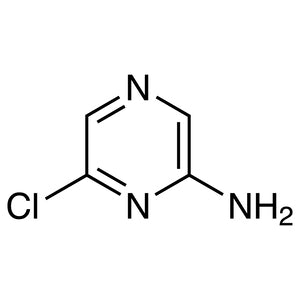
2-Amino-6-chloropyrazine is a chemical compound widely used as a building block in the synthesis of complex heterocyclic compounds. Its core structure is based on pyrazine, with an amino group and a chloro substituent positioned at specific sites, making it a versatile intermediate in organic chemistry. In laboratory settings, this compound plays a crucial role in the development of new molecules, particularly in pharmaceutical and medicinal chemistry research. Its unique chemical profile allows it to participate in various synthetic pathways, enabling the creation of more complex structures with tailored properties.
The compound is known for its reactivity and ability to engage in nucleophilic substitution and coupling reactions. These properties make it a preferred choice for chemists seeking to build intricate molecular frameworks. Its reactivity with acids, bases, and organic solvents enhances its utility in a wide range of synthetic processes. However, due to its chemical stability under controlled conditions, it remains a reliable material for use in laboratory experiments that require precise chemical transformations.
In Indonesian laboratories, 2-Amino-6-chloropyrazine is commonly used in research focused on drug development and organic synthesis. Its role in creating complex heterocyclic structures is essential for advancing chemical innovation in both academic and industrial settings. Researchers rely on its predictable behavior and compatibility with various reagents to achieve desired outcomes in their experiments.
Related TCI products
- Pharmaceutical research utilizes 2-Amino-6-chloropyrazine for the synthesis of bioactive compounds due to its reactivity and structural versatility.
- Organic synthesis experiments benefit from this compound’s ability to participate in nucleophilic substitution and coupling reactions, enabling the creation of complex molecules.
- Drug discovery programs incorporate this material as a building block for developing new therapeutic agents with targeted biological activities.
- Academic research in chemical engineering relies on its use in the development of new synthetic methodologies for heterocyclic compounds.
- Industrial chemical processes use this compound to produce intermediate chemicals that are essential for the manufacture of pharmaceuticals and agrochemicals.
| Brand | TCI |
|---|---|
| CAS number | 33332-28-4 |
| Molecular formula | — |
| Purity | — |
| Category | Chemistry > Building Blocks > Heterocyclic Building Blocks |
| Pack sizes | Available in various quantities to suit different laboratory needs |
| Physical form | Solid |
| Storage | Store in a cool, dry place away from moisture and direct sunlight |
This compound should be stored in a cool, dry environment to maintain its chemical stability. It is recommended to use airtight containers to prevent exposure to moisture and air, which may affect its reactivity. Due to its chemical nature, it should be handled with care, using appropriate personal protective equipment such as gloves and safety goggles. It is advisable to store it away from incompatible substances like strong acids and bases to avoid unwanted reactions. In laboratory settings, proper ventilation should be ensured to minimize any potential exposure to vapors. Regular monitoring of storage conditions ensures the compound remains suitable for use in chemical experiments.
—
Produk Terkait
-
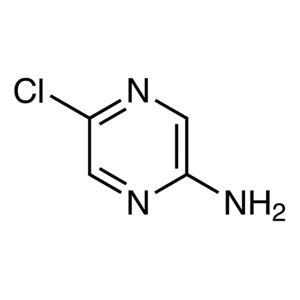
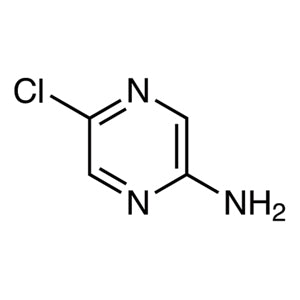
2-Amino-5-chloropyrazine TCI A2790
Regular price Rp 1.140.300,00Regular priceRp 812.700,00Sale price Rp 1.140.300,00 -
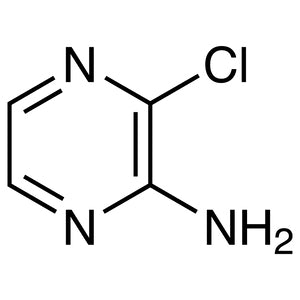
2-Amino-3-chloropyrazine TCI A2143
Regular price Rp 530.250,00Regular priceRp 386.400,00Sale price Rp 530.250,00 -
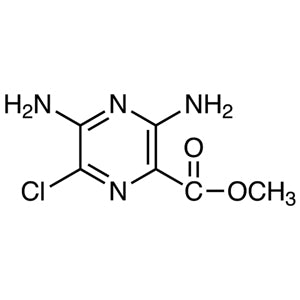
Methyl3,5-Diamino-6-chloropyrazine-2-carboxylate TCI M2322
Regular price Rp 1.167.600,00Regular priceRp 831.600,00Sale price Rp 1.167.600,00 -
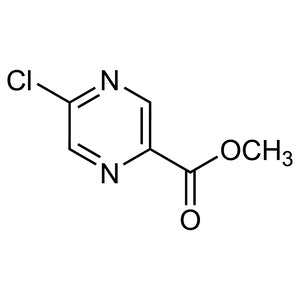
Methyl5-Chloropyrazine-2-carboxylate TCI M2126
Regular price Rp 1.590.750,00Regular priceRp 1.127.700,00Sale price Rp 1.590.750,00 -
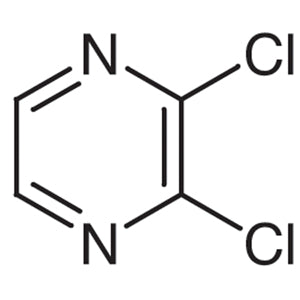
2,3-Dichloropyrazine TCI D3061
Regular price Rp 822.150,00Regular priceRp 590.100,00Sale price Rp 822.150,00 -
2,6-Dichloropyrazine TCI D1867
Regular price Rp 1.510.950,00Regular priceRp 1.072.050,00Sale price Rp 1.510.950,00 -
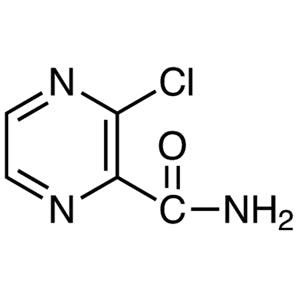
3-Chloropyrazine-2-carboxamide TCI C3376
Regular price Rp 769.650,00Regular priceRp 553.350,00Sale price Rp 769.650,00 -
5-Chloropyrazine-2-carboxylicAcid TCI C3002
Regular price Rp 1.749.300,00Regular priceRp 1.239.000,00Sale price Rp 1.749.300,00