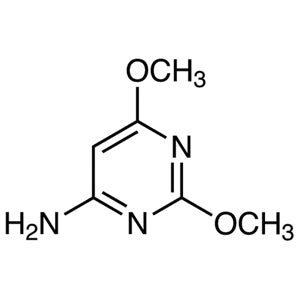
6-Amino-2,4-dimethoxypyrimidine is a chemical compound widely used as a building block in the synthesis of heterocyclic compounds. This versatile molecule plays a crucial role in organic chemistry laboratories, where it serves as a foundational element for creating complex molecular structures. Its presence in various chemical reactions highlights its importance in the development of new compounds, especially in pharmaceutical and organic chemistry research. As a key intermediate, it enables the formation of pyrimidine-based molecules, which are essential in the design of bioactive substances and industrial chemicals.
The compound’s chemical stability and reactivity make it a preferred choice for researchers. It can interact with a range of reagents, including acids, bases, and organic solvents, allowing for diverse chemical transformations. Its ability to undergo substitution, condensation, and reduction reactions provides flexibility in synthetic pathways. These properties make it an ideal candidate for laboratories seeking to explore new chemical structures and functional groups. The compound’s adaptability supports innovation in drug discovery and material science applications.
In Indonesian laboratories, 6-Amino-2,4-dimethoxypyrimidine is extensively used in organic chemistry research, particularly in academic and research institutions. It is commonly employed in projects focused on the synthesis of bioactive compounds, including pharmaceuticals and industrial chemicals. Its presence in laboratory workflows underscores its importance in advancing scientific research and development in the region.
Related TCI products
- Organic synthesis projects benefit from this compound’s ability to form complex heterocyclic structures, making it ideal for drug development and chemical innovation.
- Bioactive compound research utilizes its reactivity to create molecules with potential pharmaceutical applications, supporting medicinal chemistry efforts.
- Heterocyclic compound development relies on its stability and versatility, enabling the creation of diverse molecular frameworks for industrial and academic use.
- Chemical reaction optimization benefits from its compatibility with various reagents, allowing for controlled and efficient synthetic processes.
- Research into new chemical structures leverages its adaptability, supporting the exploration of novel functional groups and molecular configurations.
| Brand | TCI |
|---|---|
| CAS number | 3289-50-7 |
| Molecular formula | — |
| Purity | — |
| Category | Chemistry > Building Blocks > Heterocyclic Building Blocks |
| Pack sizes | Available in standard laboratory quantities |
| Physical form | Solid |
| Storage | Store in a cool, dry place away from direct sunlight |
This compound should be stored in a cool, dry environment, away from direct sunlight and sources of heat. It is recommended to use airtight containers to prevent moisture absorption and maintain chemical integrity. Due to its reactivity, it should be handled with appropriate personal protective equipment, such as gloves and safety goggles. Storage conditions should ensure that the compound remains stable and safe for use in laboratory settings. Proper labeling and secure storage are essential to prevent accidental exposure and ensure compliance with laboratory safety standards.
—
Produk Terkait
-
2-Amino-4,6-dimethoxypyrimidine TCI A1165
Regular price Rp 1.298.850,00Regular priceRp 924.000,00Sale price Rp 1.298.850,00 -
2,4,6-Trimethoxypyrimidine TCI T2039
Regular price Rp 1.008.000,00Regular priceRp 720.300,00Sale price Rp 1.008.000,00 -
4-Methoxypyrimidine TCI M2362
Regular price Rp 4.716.600,00Regular priceRp 3.313.800,00Sale price Rp 4.716.600,00 -
2,4-Diamino-6-methoxypyrimidine TCI D5088
Regular price Rp 3.074.400,00Regular priceRp 2.165.100,00Sale price Rp 3.074.400,00 -
2,4-Dihydroxy-5-methoxypyrimidine TCI D4599
Regular price Rp 505.050,00Regular priceRp 368.550,00Sale price Rp 505.050,00 -
4,6-Dimethoxypyrimidine TCI D2959
Regular price Rp 2.464.350,00Regular priceRp 1.738.800,00Sale price Rp 2.464.350,00 -
2,4-Dimethoxypyrimidine TCI D2327
Regular price Rp 980.700,00Regular priceRp 701.400,00Sale price Rp 980.700,00 -
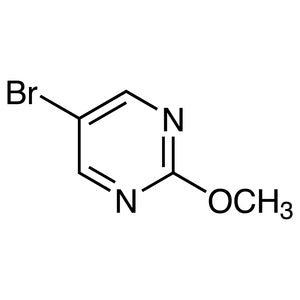
5-Bromo-2-methoxypyrimidine TCI B3521
Regular price Rp 689.850,00Regular priceRp 497.700,00Sale price Rp 689.850,00