4-Methoxypyrimidine is a chemical compound widely used as a building block in the synthesis of heterocyclic compounds. It serves as a fundamental component in organic chemistry, enabling the creation of complex molecules with diverse biological activities. Its structure consists of a pyrimidine ring with a methoxy group attached at a specific position, making it a versatile intermediate in chemical reactions. In laboratory settings, this compound is essential for researchers aiming to develop new pharmaceuticals, agrochemicals, and industrial chemicals. Its role in synthetic pathways is critical due to its ability to participate in various reaction mechanisms, such as nucleophilic substitution and electrophilic aromatic substitution.
The compound is valued for its chemical stability and controlled reactivity, which make it suitable for a wide range of chemical transformations. It exhibits resistance to degradation under certain conditions, ensuring consistency in experimental outcomes. Its ability to react with acids, bases, and metals allows it to be used in multiple synthetic strategies. These properties make it a reliable and efficient reagent for both academic and industrial research. The predictable behavior of 4-Methoxypyrimidine under different reaction conditions enhances its utility in laboratory environments.
In Indonesian laboratories, 4-Methoxypyrimidine is extensively used in chemical and pharmaceutical research. It is a common reagent in the development of new compounds with potential medical or industrial applications. Many research institutions and universities in Indonesia rely on this compound for their synthetic work. Its availability in the local market ensures that scientists can access it for their experiments, supporting ongoing research and innovation in the field.
Related TCI products
- Synthetic chemistry research - 4-Methoxypyrimidine is ideal for creating complex heterocyclic structures due to its stable and predictable reactivity.
- Pharmaceutical development - This compound is frequently used in the synthesis of bioactive molecules with potential therapeutic applications.
- Agrochemical formulation - Its chemical versatility makes it a valuable component in the production of pesticides and herbicides.
- Industrial chemical synthesis - It serves as a key intermediate in the manufacturing of various chemical products used in different industries.
- Academic research - It is widely used in university laboratories for teaching and experimental studies in organic chemistry.
| Brand | TCI |
|---|---|
| CAS number | 6104-41-2 |
| Molecular formula | — |
| Purity | — |
| Category | Chemistry > Building Blocks > Heterocyclic Building Blocks |
| Pack sizes | Available in various quantities as per supplier specifications |
| Physical form | Solid or liquid, depending on the specific product variant |
| Storage | Store in a cool, dry place away from direct sunlight |
4-Methoxypyrimidine should be stored in a cool, dry environment to maintain its chemical stability. It is recommended to keep it in a sealed container to prevent exposure to moisture and air. Suitable storage containers include glass or high-density polyethylene (HDPE) bottles, which provide protection against chemical interactions. In laboratory settings, it is important to handle this compound with care, using appropriate personal protective equipment such as gloves and safety goggles. Avoid contact with incompatible substances like strong acids or bases to prevent unwanted reactions. Proper labeling and storage conditions ensure the safety and effectiveness of the compound during experimental use.
—
Produk Terkait
-
2,4,6-Trimethoxypyrimidine TCI T2039
Regular price From Rp 955.500,00Regular price -
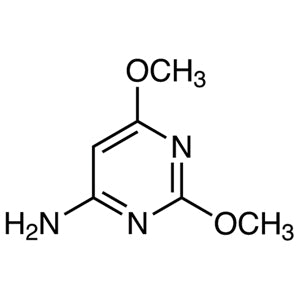
6-Amino-2,4-dimethoxypyrimidine TCI A2264
Regular price Rp 848.400,00Regular price -
2-Amino-4,6-dimethoxypyrimidine TCI A1165
Regular price Rp 1.246.350,00Regular price -
2,4-Diamino-6-methoxypyrimidine TCI D5088
Regular price From Rp 3.021.900,00Regular price -
2,4-Dihydroxy-5-methoxypyrimidine TCI D4599
Regular price From Rp 452.550,00Regular price -
4,6-Dimethoxypyrimidine TCI D2959
Regular price Rp 2.411.850,00Regular price -
2,4-Dimethoxypyrimidine TCI D2327
Regular price From Rp 928.200,00Regular price -
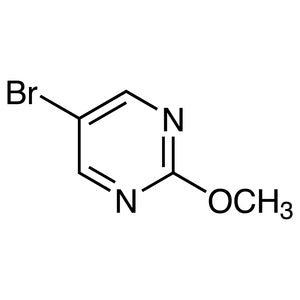
5-Bromo-2-methoxypyrimidine TCI B3521
Regular price From Rp 637.350,00Regular price