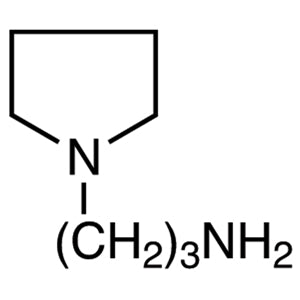
1-(3-Aminopropyl)pyrrolidine is a chemical compound widely used as a building block in the synthesis of heterocyclic compounds. Its molecular structure consists of a pyrrolidine ring connected to a 3-aminopropyl chain, making it a versatile intermediate in organic chemistry. In laboratory settings, this compound plays a crucial role in the development of new chemical entities, particularly those with biological activity. It is commonly employed in the creation of pharmaceuticals, agrochemicals, and other industrial chemicals due to its functional group versatility.
The compound’s reactivity and chemical stability under controlled conditions make it a preferred choice for synthetic chemists. Its ability to participate in various chemical reactions, such as amine coupling and functional group substitution, enhances its utility in complex synthesis pathways. The presence of both the pyrrolidine ring and the amino group allows for multiple reaction sites, enabling the formation of diverse molecular structures. This flexibility is highly valued in both academic and industrial research environments.
In Indonesian laboratories, 1-(3-Aminopropyl)pyrrolidine is frequently used in organic chemistry, pharmacology, and biochemical research. Local researchers rely on this compound to develop new compounds with potential therapeutic applications. Its role in drug discovery and chemical innovation underscores its importance in the scientific community. The compound’s availability through suppliers like AMI Scientific ensures that Indonesian scientists have access to this essential reagent for their research needs.
Related TCI products
- TCI A0409 123-00-2 N-(3-Aminopropyl)morpholine
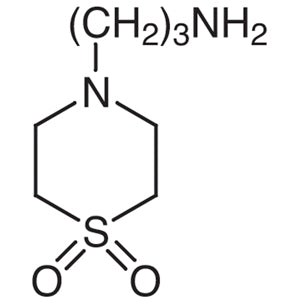
- TCI A1804 90000-25-2 4-(3-Aminopropyl)thiomorpholine 1,1-Dioxide
- TCI A1185 5036-48-6 1-(3-Aminopropyl)imidazole
- TCI T4405 1239488-58-4 Tetrahydrofuran-2-yl Pyrrolidine-1-carbodithioate
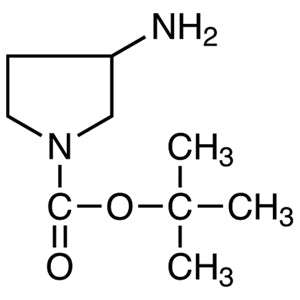
- TCI B3890 186550-13-0 3-Amino-1-(tert-butoxycarbonyl)pyrrolidine
- TCI B1560 115445-21-1 1-Benzyl-3-(ethylamino)pyrrolidine
- Organic synthesis of heterocyclic compounds due to its pyrrolidine ring and amino group functionality.
- Development of pharmaceuticals and agrochemicals through amine coupling and functional group modification.
- Research in pharmacology for the synthesis of bioactive molecules with therapeutic potential.
- Use in biochemical studies to create derivatives with specific biological activities.
- Support for industrial chemical manufacturing processes requiring versatile intermediates.
| Brand | TCI |
|---|---|
| CAS number | 23159-07-1 |
| Molecular formula | — |
| Purity | — |
| Category | Chemistry > Building Blocks > Heterocyclic Building Blocks |
| Pack sizes | Available in various sizes as per supplier specifications |
| Physical form | Liquid or solid, depending on the specific product variant |
| Storage | Store in a cool, dry place away from light and incompatible materials |
This compound should be stored in a cool, dry environment, away from direct sunlight and sources of heat. It is recommended to keep it in a sealed container to prevent exposure to air and moisture. Due to its reactivity, it should be handled with appropriate personal protective equipment, including gloves and safety goggles. Storage should be in a location that is inaccessible to children and unauthorized personnel. Avoid contact with strong acids, bases, and organic solvents to prevent unwanted chemical reactions. Always ensure proper ventilation when working with this material to minimize inhalation risks.
—
Produk Terkait
-
N-(3-Aminopropyl)morpholine TCI A0409
Regular price From Rp 610.050,00Regular price -
4-(3-Aminopropyl)thiomorpholine1,1-Dioxide TCI A1804
Regular price From Rp 2.306.850,00Regular price -
1-(3-Aminopropyl)imidazole TCI A1185
Regular price From Rp 1.220.100,00Regular price -
Tetrahydrofuran-2-ylPyrrolidine-1-carbodithioate TCI T4405
Regular price From Rp 1.988.700,00Regular price -
3-Amino-1-(tert-butoxycarbonyl)pyrrolidine TCI B3890
Regular price From Rp 2.094.750,00Regular price -
1-Benzyl-3-(ethylamino)pyrrolidine TCI B1560
Regular price Rp 2.016.000,00Regular price -
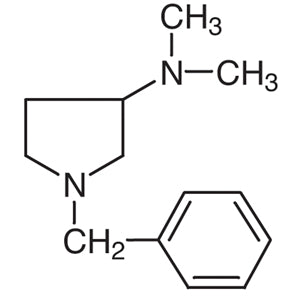
1-Benzyl-3-(dimethylamino)pyrrolidine TCI B1559
Regular price Rp 1.776.600,00Regular price -
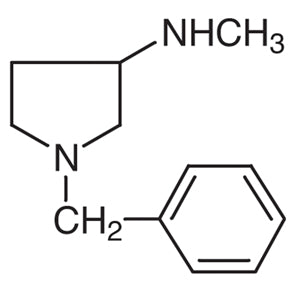
1-Benzyl-3-(methylamino)pyrrolidine TCI B1558
Regular price From Rp 1.590.750,00Regular price