3-Amino-1-(tert-butoxycarbonyl)pyrrolidine is a chemical compound widely used as a building block in the synthesis of heterocyclic compounds. Its unique molecular structure, containing both an amino group and a tert-butoxycarbonyl (Boc) group, makes it a versatile reagent in organic chemistry. This compound plays a crucial role in laboratories where the modification of functional groups is required, especially in the development of pharmaceuticals and complex chemical structures. Its ability to participate in various chemical reactions makes it an essential tool for synthetic chemists.
The properties of 3-Amino-1-(tert-butoxycarbonyl)pyrrolidine, such as its stability under specific conditions and reactivity with a wide range of reagents, make it a preferred choice for researchers. The Boc group provides chemical stability, protecting the amino function during synthetic processes. This characteristic is particularly valuable in reactions where the amino group needs to be selectively modified or protected. Its reliability and predictable behavior in laboratory settings ensure consistent results, making it a trusted material for advanced chemical synthesis.
In Indonesian laboratories, this compound is commonly used in organic chemistry research, especially in pharmaceutical development and the synthesis of complex molecules. Its relevance extends to fields such as health sciences and chemical technology, where the ability to construct and modify molecular structures is critical. Researchers in Indonesia rely on this compound for its effectiveness and adaptability in various synthetic applications.
Related TCI products
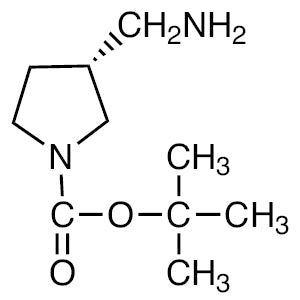
- TCI A3285 199174-29-3 (R)-3-(Aminomethyl)-1-(tert-butoxycarbonyl)pyrrolidine
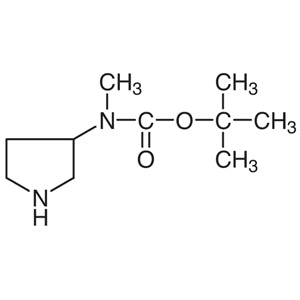
- TCI M1096 172478-00-1 3-(N-tert-Butoxycarbonyl-N-methylamino)pyrrolidine
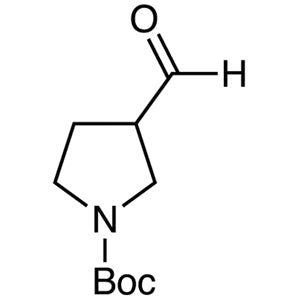
- TCI B6091 59379-02-1 (+/-)-1-(tert-Butoxycarbonyl)pyrrolidine-3-carboxaldehyde
- TCI B6173 89336-46-9 2-[2-[(tert-Butoxycarbonyl)amino]thiazol-4-yl]acetic Acid
- TCI B6144 83673-98-7 2-[(tert-Butoxycarbonyl)amino]thiazole-4-carboxylic Acid
- TCI T4405 1239488-58-4 Tetrahydrofuran-2-yl Pyrrolidine-1-carbodithioate
- Organic synthesis of pharmaceutical compounds due to its ability to participate in diverse chemical reactions.
- Protection of amino groups in complex molecule synthesis, thanks to the Boc group's stability.
- Development of heterocyclic compounds as a key building block in chemical research.
- Research in medicinal chemistry for the creation of bioactive molecules and drug candidates.
- Use in industrial chemical production for the synthesis of specialty chemicals and intermediates.
| Brand | TCI |
|---|---|
| CAS number | 186550-13-0 |
| Molecular formula | — |
| Purity | — |
| Category | Chemistry > Building Blocks > Heterocyclic Building Blocks |
| Pack sizes | Available in various quantities as per standard laboratory supply |
| Physical form | Solid or liquid, depending on the specific product variant |
| Storage | Store in a cool, dry place away from direct sunlight and moisture |
This compound should be stored in a cool, dry environment, away from direct sunlight and sources of heat. It is recommended to use airtight containers to prevent moisture absorption, which can affect its stability. Proper labeling of storage containers is essential to ensure safe handling and prevent accidental exposure. In laboratory settings, personal protective equipment such as gloves and safety goggles should be worn when handling the compound. It is important to maintain good ventilation in the workspace to minimize inhalation risks. The compound should not be stored near incompatible materials, such as strong acids or bases, to avoid potential chemical interactions. Regular monitoring of storage conditions ensures the compound remains in optimal condition for use in research applications.
—
Produk Terkait
-
(R)-3-(Aminomethyl)-1-(tert-butoxycarbonyl)pyrrolidine TCI A3285
Regular price From Rp 2.279.550,00Regular priceRp 1.609.650,00Sale price From Rp 2.279.550,00 -
3-(N-tert-Butoxycarbonyl-N-methylamino)pyrrolidine TCI M1096
Regular price From Rp 2.041.200,00Regular priceRp 1.442.700,00Sale price From Rp 2.041.200,00 -
(+/-)-1-(tert-Butoxycarbonyl)pyrrolidine-3-carboxaldehyde TCI B6091
Regular price From Rp 2.359.350,00Regular priceRp 1.665.300,00Sale price From Rp 2.359.350,00 -
2-[2-[(tert-Butoxycarbonyl)amino]thiazol-4-yl]aceticAcid TCI B6173
Regular price From Rp 822.150,00Regular priceRp 590.100,00Sale price From Rp 822.150,00 -
2-[(tert-Butoxycarbonyl)amino]thiazole-4-carboxylicAcid TCI B6144
Regular price From Rp 1.510.950,00Regular priceRp 1.072.050,00Sale price From Rp 1.510.950,00 -
Tetrahydrofuran-2-ylPyrrolidine-1-carbodithioate TCI T4405
Regular price From Rp 2.041.200,00Regular priceRp 1.442.700,00Sale price From Rp 2.041.200,00 -
1-Benzyl-3-(ethylamino)pyrrolidine TCI B1560
Regular price Rp 2.068.500,00Regular priceRp 1.461.600,00Sale price Rp 2.068.500,00 -
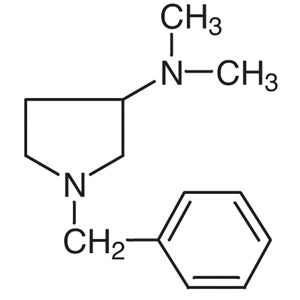
1-Benzyl-3-(dimethylamino)pyrrolidine TCI B1559
Regular price Rp 1.829.100,00Regular priceRp 1.294.650,00Sale price Rp 1.829.100,00