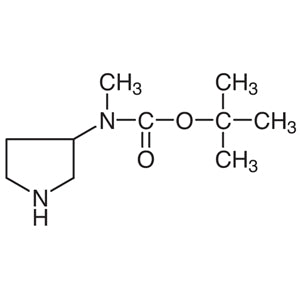
TCI M1096 3-(N-tert-Butoxycarbonyl-N-methylamino)pyrrolidine is a heterocyclic building block consisting of a pyrrolidine ring that carries a Boc-protected methylamino group at the 3-position. The compound is designed for stepwise synthesis: the tert-butoxycarbonyl protecting group caps the reactive secondary amine, while the pyrrolidine ring nitrogen remains free and ready to react. This pattern of selective protection is a foundational strategy in medicinal chemistry, because it allows researchers to assemble complex molecules in a controlled manner without two amine groups competing in the same reaction.
The property that makes this compound valuable is the ease with which its reactivity can be controlled. The pyrrolidine nitrogen can be directly alkylated, acylated, arylated through nucleophilic aromatic substitution, or joined through metal-catalysed cross-coupling reactions. Once the main scaffold has been built, the Boc group can be removed under relatively mild acidic conditions such as trifluoroacetic acid or hydrogen chloride in dioxane, unmasking the secondary methylamine for the following step. The Boc group also improves solubility in organic solvents and frequently improves the crystallisation behaviour of intermediates, which simplifies purification.
In Indonesian laboratories, this building block is typically used by university and institutional research groups working on medicinal chemistry and the synthesis of bioactive compounds, as well as by pharmaceutical development laboratories preparing analogue series. Because protected amine intermediates of this type are not easily prepared in-house, they are generally sourced as ready-to-use reagents so that small research teams can move directly into their intended coupling and deprotection sequences without adding extra preparative steps.
Related TCI products
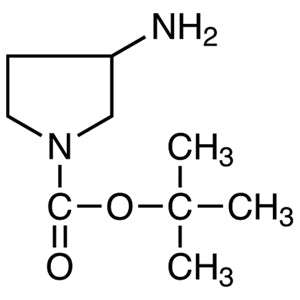
- TCI B3890 186550-13-0 3-Amino-1-(tert-butoxycarbonyl)pyrrolidine
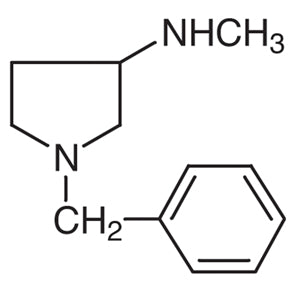
- TCI B1558 96568-35-3 1-Benzyl-3-(methylamino)pyrrolidine
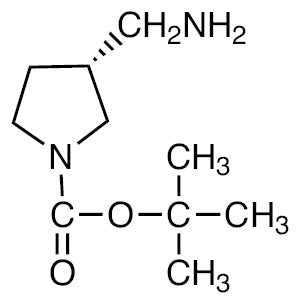
- TCI A3285 199174-29-3 (R)-3-(Aminomethyl)-1-(tert-butoxycarbonyl)pyrrolidine
- TCI D6494 454712-26-6 tert-Butyl 3-(Methylamino)pyrrolidine-1-carboxylate
- TCI B6091 59379-02-1 (+/-)-1-(tert-Butoxycarbonyl)pyrrolidine-3-carboxaldehyde
- TCI M1865 5248-39-5 2-Methoxy-4-methyl-6-(methylamino)-1,3,5-triazine
- Medicinal chemistry scaffold construction: the free pyrrolidine nitrogen gives a single, unambiguous point of attachment, so analogue libraries can be built without side reactions from a second competing amine.
- Nucleophilic aromatic substitution with heteroaryl halides: the ring nitrogen acts as the nucleophile while the Boc-protected methylamino group stays inert under the basic conditions these couplings normally require.
- Metal-catalysed cross-coupling chemistry: the secondary ring amine participates cleanly in amination couplings, and the carbamate protecting group tolerates the catalyst and ligand systems typically employed.
- Stepwise amide and sulfonamide formation: acylation or sulfonylation at the pyrrolidine nitrogen proceeds selectively, allowing chemists to install the first substituent before revealing the second amine.
- Late-stage deprotection and functionalisation: mild acidic treatment liberates the secondary methylamine, opening a second, independently addressable site for further derivatisation of the assembled scaffold.
| Brand | TCI (Tokyo Chemical Industry) |
|---|---|
| CAS number | 172478-00-1 |
| Molecular formula | — |
| Purity | — |
| Category | Chemistry > Building Blocks > Heterocyclic Building Blocks |
| Pack sizes | available in standard research-scale packaging; please refer to the current TCI packaging options |
| Physical form | — |
| Storage | keep in a tightly closed original container under the conditions stated on the manufacturer's label |
- Product code: M1096
Store the container tightly closed in a cool, dry and well-ventilated area, away from strong acids, strong oxidising agents and sources of heat or ignition, and follow the specific storage conditions printed on the manufacturer's label. Keep the material in its original supplier container, or in a chemically compatible sealed glass vessel if transferred, and protect it from moisture and prolonged exposure to air. Handle in a fume hood using safety glasses, chemically resistant gloves and a laboratory coat. Avoid inhalation of vapours and contact with skin and eyes, and allow cold containers to warm to room temperature before opening to prevent condensation. Consult the manufacturer's Safety Data Sheet before use, and dispose of residues and contaminated materials through approved chemical waste channels.
—
Produk Terkait
-
3-Amino-1-(tert-butoxycarbonyl)pyrrolidine TCI B3890
Regular price From Rp 2.094.750,00Regular price -
1-Benzyl-3-(methylamino)pyrrolidine TCI B1558
Regular price From Rp 1.590.750,00Regular price -
(R)-3-(Aminomethyl)-1-(tert-butoxycarbonyl)pyrrolidine TCI A3285
Regular price From Rp 2.227.050,00Regular price -
tert-Butyl3-(Methylamino)pyrrolidine-1-carboxylate TCI D6494
Regular price From Rp 955.500,00Regular price -
(+/-)-1-(tert-Butoxycarbonyl)pyrrolidine-3-carboxaldehyde TCI B6091
Regular price From Rp 2.306.850,00Regular price -
2-Methoxy-4-methyl-6-(methylamino)-1,3,5-triazine TCI M1865
Regular price Rp 1.538.250,00Regular price -
tert-Butyl3-(Methylamino)azetidine-1-carboxylate TCI D6487
Regular price From Rp 1.167.600,00Regular price -
Tetrahydrofuran-2-ylPyrrolidine-1-carbodithioate TCI T4405
Regular price From Rp 1.988.700,00Regular price