TCI D6494 tert-Butyl 3-(Methylamino)pyrrolidine-1-carboxylate is a heterocyclic building block based on a five-membered pyrrolidine ring that carries a methylamino group at the three position, with the ring nitrogen protected as a Boc carbamate. The compound ranks among the amine scaffolds most frequently encountered in medicinal chemistry synthesis, since the pyrrolidine ring is a common motif found in a great many bioactive compounds. In the laboratory, its role is to supply a ready-to-use secondary amine on a saturated framework, so that synthetic routes toward target molecules can be shortened appreciably.
The characteristics that make it a preferred choice are its directed reactivity and its controlled conformational flexibility. The pyrrolidine ring is rigid enough to give a well-defined orientation of functional groups, yet it retains the ring flexibility that allows the shape to adjust when binding to a target protein. The methylamino group behaves as a secondary nucleophile that performs well in acylation, sulfonylation, nucleophilic aromatic substitution, and reductive amination, while the Boc group guarantees that the ring nitrogen does not take part in the reaction. The presence of the methyl substituent on the exocyclic nitrogen further shapes the steric and electronic profile of the resulting bond.
In Indonesian laboratories, this building block is typically used by university research groups, pharmaceutical development units, and contract synthesis laboratories working on small-molecule preparation. It is drawn on when a route calls for a saturated nitrogen scaffold that can be elaborated selectively and then deprotected at a later stage. Because the material arrives already protected, working groups can begin coupling steps directly without setting up their own protection sequence, which suits laboratories running multi-step routes on limited timelines.
Related TCI products
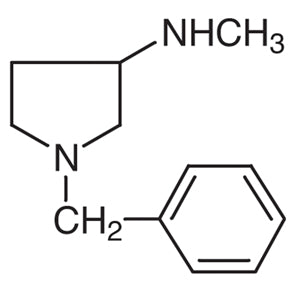
- TCI B1558 96568-35-3 1-Benzyl-3-(methylamino)pyrrolidine
- TCI M1096 172478-00-1 3-(N-tert-Butoxycarbonyl-N-methylamino)pyrrolidine
- TCI D6487 454703-20-9 tert-Butyl 3-(Methylamino)azetidine-1-carboxylate
- TCI M1865 5248-39-5 2-Methoxy-4-methyl-6-(methylamino)-1,3,5-triazine
- TCI T4405 1239488-58-4 Tetrahydrofuran-2-yl Pyrrolidine-1-carbodithioate
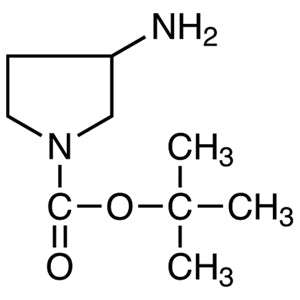
- TCI B3890 186550-13-0 3-Amino-1-(tert-butoxycarbonyl)pyrrolidine
- Medicinal chemistry scaffold construction, where the pyrrolidine ring provides a saturated three-dimensional framework that is widely represented among bioactive compounds and shortens the path to target molecules.
- Amide bond formation through acylation of the secondary methylamino group, allowing researchers to attach carboxylic acid fragments onto a protected ring system without competing reaction at the ring nitrogen.
- Sulfonamide preparation by sulfonylation of the exocyclic amine, a transformation that benefits from the defined steric environment created by the methyl substituent on that nitrogen.
- Nucleophilic aromatic substitution onto electron-poor heteroaromatic cores, where the secondary amine serves as the incoming nucleophile and the Boc group keeps the ring nitrogen unreactive throughout.
- Reductive amination chemistry to build further carbon-nitrogen bonds, exploiting the nucleophilic character of the methylamino group while retaining the option of later Boc removal for additional elaboration.
| Brand | TCI |
|---|---|
| CAS number | 454712-26-6 |
| Molecular formula | — |
| Purity | — |
| Category | Chemistry > Building Blocks > Heterocyclic Building Blocks |
| Pack sizes | available in standard research pack sizes; please refer to the packaging options listed for this catalogue item. |
| Physical form | — |
| Storage | store under the conditions stated on the manufacturer's label and product documentation. |
- Product code: D6494
Store the container in a cool, dry, well-ventilated place away from direct sunlight, heat sources, and incompatible materials, following the conditions stated on the manufacturer's label. Keep the material in its original tightly closed container, or in a comparable chemically resistant vessel with a secure closure, and reseal promptly after each use to limit exposure to air and moisture. Handle the compound in a fume hood using appropriate personal protective equipment, including safety glasses, gloves, and a laboratory coat. Avoid contact with skin and eyes and avoid breathing any dust or vapour. Consult the manufacturer's safety data sheet before use, and dispose of residues and contaminated packaging in accordance with applicable laboratory waste procedures.
—
Produk Terkait
-
1-Benzyl-3-(methylamino)pyrrolidine TCI B1558
Regular price From Rp 1.590.750,00Regular price -
3-(N-tert-Butoxycarbonyl-N-methylamino)pyrrolidine TCI M1096
Regular price From Rp 1.988.700,00Regular price -
tert-Butyl3-(Methylamino)azetidine-1-carboxylate TCI D6487
Regular price From Rp 1.167.600,00Regular price -
2-Methoxy-4-methyl-6-(methylamino)-1,3,5-triazine TCI M1865
Regular price Rp 1.538.250,00Regular price -
Tetrahydrofuran-2-ylPyrrolidine-1-carbodithioate TCI T4405
Regular price From Rp 1.988.700,00Regular price -
3-Amino-1-(tert-butoxycarbonyl)pyrrolidine TCI B3890
Regular price From Rp 2.094.750,00Regular price -
1-Benzyl-3-(ethylamino)pyrrolidine TCI B1560
Regular price Rp 2.016.000,00Regular price -
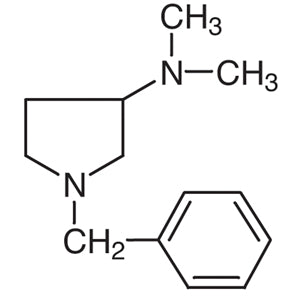
1-Benzyl-3-(dimethylamino)pyrrolidine TCI B1559
Regular price Rp 1.776.600,00Regular price