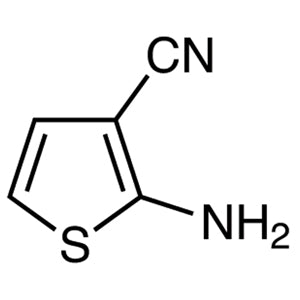
2-Amino-3-cyanothiophene is a chemical compound widely utilized in laboratory settings as a key building block for the synthesis of complex heterocyclic compounds. Its unique molecular structure, featuring both an amino group and a cyano group attached to a thiophene ring, makes it highly versatile in organic chemistry applications. This compound is essential for constructing intricate molecular frameworks, particularly in pharmaceutical and medicinal chemistry research. Due to its reactivity and functional group diversity, it is a valuable tool for chemists aiming to develop new compounds with potential therapeutic or industrial applications.
The chemical properties of 2-Amino-3-cyanothiophene make it a preferred choice in laboratory environments. It exhibits stability under controlled conditions but remains reactive to environmental factors such as high temperatures and oxidizing agents. This reactivity allows it to participate in a variety of chemical reactions, including substitution and condensation processes, which are critical in the synthesis of more complex molecules. Its ability to undergo functional group modifications further enhances its utility in synthetic pathways, making it a go-to reagent for researchers working on advanced chemical structures.
In Indonesian laboratories, 2-Amino-3-cyanothiophene is commonly used in academic and research institutions for the development of new compounds. It plays a crucial role in the study of heterocyclic chemistry, supporting both educational and industrial research initiatives. Its availability through reliable suppliers like AMI Scientific ensures that researchers have access to this essential compound for their experiments and innovations.
TCI brochures (PDF)
- Thiophenes 2026-06-29 · p. 9
Related TCI products
- Synthesis of complex heterocyclic compounds for pharmaceutical development due to its versatile functional groups and reactivity.
- Modification of thiophene rings through substitution reactions to create new molecular structures with potential medicinal applications.
- Research in medicinal chemistry for the design of novel drugs targeting specific biological pathways and disease mechanisms.
- Educational use in undergraduate and graduate chemistry programs to teach synthetic organic chemistry techniques and molecular design.
- Industrial research applications in the development of specialty chemicals and advanced materials requiring precise molecular architecture.
| Brand | TCI |
|---|---|
| CAS number | 4651-82-5 |
| Molecular formula | — |
| Purity | — |
| Category | Chemistry > Building Blocks > Heterocyclic Building Blocks |
| Pack sizes | Available in various quantities as per standard laboratory supply practices |
| Physical form | Solid (as per typical chemical compound presentation) |
| Storage | Store in a cool, dry place away from direct sunlight and incompatible materials |
2-Amino-3-cyanothiophene should be stored in a cool, dry environment to maintain its chemical integrity. It is recommended to keep the compound in airtight containers to prevent exposure to moisture and air, which may affect its stability. Due to its reactivity, it should be stored separately from strong oxidizing agents and incompatible substances. Laboratory personnel should handle the compound with appropriate personal protective equipment, including gloves and safety goggles, to ensure safe handling. Regular monitoring of storage conditions is essential to maintain the compound's quality and ensure its suitability for use in chemical synthesis processes.
—
Produk Terkait
-
2-Cyanothiophene TCI T2121
Regular price From Rp 928.200,00Regular price -
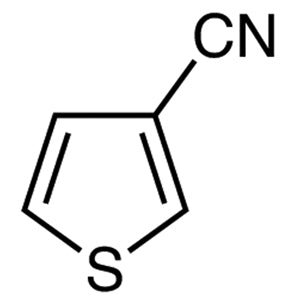
3-Cyanothiophene TCI C1344
Regular price From Rp 1.961.400,00Regular price -
4-Bromo-2-cyanothiophene TCI B4212
Regular price Rp 2.411.850,00Regular price -
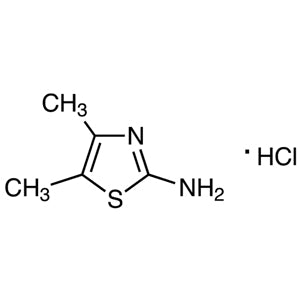
2-Amino-4,5-dimethylthiazoleHydrochloride TCI A0292
Regular price From Rp 505.050,00Regular price -
2-Amino-4-methylthiazoleHydrochloride TCI A0336
Regular price From Rp 1.326.150,00Regular price -
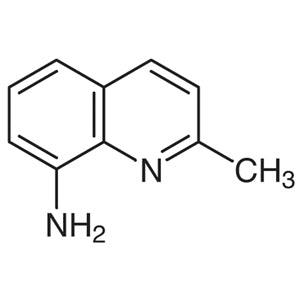
8-Amino-2-methylquinoline TCI A0416
Regular price From Rp 1.273.650,00Regular price -
2-Amino-5-mercapto-1,3,4-thiadiazole TCI A0425
Regular price From Rp 769.650,00Regular price -
5-Amino-1H-tetrazole TCI A0427
Regular price From Rp 1.776.600,00Regular price