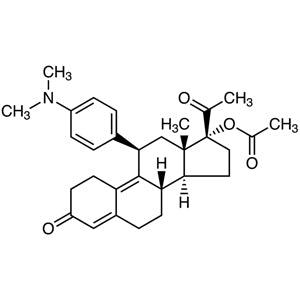
Allylestrenol is a chemical compound classified under the category of steroids, widely used in life science and organic chemistry research. It plays a crucial role in laboratories as a key reagent or starting material for the synthesis of various compounds. Its structural complexity and functional versatility make it an essential component in experiments involving steroid-based reactions. Due to its stability under controlled conditions, Allylestrenol is frequently employed in biochemical studies that require precise chemical interactions.
The compound’s ability to interact with multiple functional groups and its relatively non-toxic nature contribute to its popularity among researchers. These properties allow it to be safely used in a wide range of laboratory settings without compromising experimental outcomes. Its chemical stability ensures consistent results, while its low toxicity minimizes safety concerns. This combination of features makes Allylestrenol a reliable and preferred choice for many scientific applications.
In Indonesian laboratories, Allylestrenol is commonly used in life science research, particularly in academic institutions and research centers. It is integral to experiments involving hormonal studies, metabolic processes, and steroid-based synthesis. Its availability and reliability have made it a standard material in the chemical supply chain supporting scientific research in Indonesia.
TCI brochures (PDF)
- Steroids 2026-07-28 · p. 3
- Hormonal Research: Allylestrenol is ideal for studying hormone-related processes due to its steroid structure and ability to interact with biological systems.
- Metabolic Studies: It is used to investigate metabolic pathways, offering insights into how steroid compounds are processed in living organisms.
- Synthetic Chemistry: Its complex chemical structure makes it suitable for the synthesis of other steroid derivatives and related compounds.
- Biochemical Reactions: Allylestrenol serves as a reagent in reactions requiring specific steroid-based functional groups for chemical transformations.
- Educational Research: It is frequently used in academic settings to teach and conduct experiments related to organic chemistry and biochemistry.
| Brand | TCI |
|---|---|
| CAS number | 432-60-0 |
| Molecular formula | — |
| Purity | — |
| Category | Life Science > Biochemicals and Reagents > Steroids |
| Pack sizes | Available in various quantities as per standard laboratory supply specifications |
| Physical form | Solid or liquid, depending on the specific product formulation |
| Storage | Store in a cool, dry place away from direct sunlight and moisture |
Allylestrenol should be stored in a cool, dry environment to maintain its chemical stability. It is recommended to keep it in airtight containers to prevent exposure to moisture and air, which may affect its integrity. Proper labeling of containers is essential for safe handling and identification. Laboratory personnel should wear appropriate personal protective equipment when handling the compound. Due to its relatively low toxicity, it is generally safe to use, but standard laboratory safety protocols should still be followed to ensure a secure working environment.
—
Produk Terkait
-
UlipristalAcetate TCI U0102
Regular price From Rp 5.114.550,00Regular priceRp 3.592.050,00Sale price From Rp 5.114.550,00 -
Trenbolone TCI T2328
Regular price Rp 4.823.700,00Regular priceRp 3.388.350,00Sale price Rp 4.823.700,00 -
Altrenogest TCI A2892
Regular price From Rp 1.405.950,00Regular priceRp 998.550,00Sale price From Rp 1.405.950,00 -
NorethisteroneEnanthate TCI N1290
Regular price From Rp 2.306.850,00Regular priceRp 1.628.550,00Sale price From Rp 2.306.850,00 -
(-)-Norgestrel TCI N0889
Regular price From Rp 1.192.800,00Regular priceRp 849.450,00Sale price From Rp 1.192.800,00 -
Nandrolone TCI N0777
Regular price Rp 2.227.050,00Regular priceRp 1.572.900,00Sale price Rp 2.227.050,00 -
NorethisteroneAcetate TCI N0450
Regular price From Rp 1.060.500,00Regular priceRp 757.050,00Sale price From Rp 1.060.500,00 -
Norethisterone TCI N0449
Regular price From Rp 848.400,00Regular priceRp 609.000,00Sale price From Rp 848.400,00