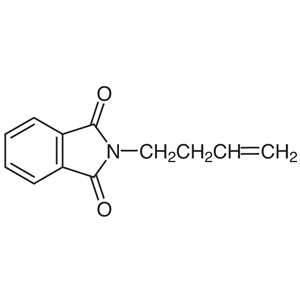
N-Allylphthalimide is a chemical compound widely used as a building block in the synthesis of complex organic molecules. It plays a crucial role in laboratory settings, where it serves as a versatile reagent for various chemical reactions. Its ability to participate in multiple reaction types, such as substitution, addition, and cross-coupling, makes it an essential component in synthetic chemistry. This compound is particularly valuable in the development of heterocyclic structures and larger molecular frameworks, contributing to the advancement of organic chemistry research.
The properties of N-Allylphthalimide make it a preferred choice for chemists. It exhibits high reactivity, allowing it to interact effectively with a variety of functional groups. Its polar nature enables solubility in organic solvents like ethyl acetate and acetone, facilitating its use in diverse synthetic processes. The stability of its molecular structure combined with its reactivity ensures that it can be reliably used in a wide range of laboratory applications. These characteristics make it a reliable and efficient reagent for both academic and industrial research.
In Indonesian laboratories, N-Allylphthalimide is highly sought after by researchers and students working on organic compound synthesis. Its availability and effectiveness in various chemical reactions make it a popular choice for both basic and advanced chemical studies. It is commonly used in pure chemistry research, supporting the development of new compounds and the exploration of chemical reaction mechanisms. Its role in academic and research settings underscores its importance in the field of chemistry in Indonesia.
- Organic synthesis is a key application where N-Allylphthalimide is used to construct complex molecules through various reaction mechanisms.
- Heterocyclic compound formation benefits from its ability to participate in reactions that build ring structures essential in pharmaceutical and medicinal chemistry.
- Cross-coupling reactions rely on its reactivity to form new carbon-carbon bonds, making it valuable in synthetic pathways.
- Functional group modification is enhanced by its capacity to interact with different reagents, enabling the transformation of molecular structures.
- Analytical chemistry applications utilize its solubility and reactivity for the preparation of standard solutions and reaction intermediates.
| Brand | TCI |
|---|---|
| CAS number | 5428-09-1 |
| Molecular formula | — |
| Purity | — |
| Category | Chemistry > Building Blocks > Non-Heterocyclic Building Blocks |
| Pack sizes | Available in various quantities suitable for laboratory use |
| Physical form | Solid |
| Storage | Store in a cool, dry place away from light and moisture |
N-Allylphthalimide should be stored in a cool, dry place, away from direct light and moisture to maintain its stability and reactivity. It is recommended to use airtight containers to prevent exposure to air and moisture, which could affect its chemical properties. In a laboratory setting, it is important to handle the compound with appropriate personal protective equipment, such as gloves and safety goggles, to ensure safety. Proper ventilation should be maintained when working with this compound to minimize inhalation risks. Due to its reactivity, it should be stored separately from incompatible substances to prevent unwanted chemical interactions. Regular inspection of storage conditions ensures the compound remains in optimal condition for use in research and synthesis processes.
—
Produk Terkait
-
N-(4-Bromophenyl)phthalimide TCI B2707
Regular price From Rp 2.782.500,00Regular priceRp 1.961.400,00Sale price From Rp 2.782.500,00 -
N-(3-Buten-1-yl)phthalimide TCI B1881
Regular price Rp 7.949.550,00Regular priceRp 5.574.450,00Sale price Rp 7.949.550,00 -
PhthalimidePotassiumSalt TCI P0403
Regular price From Rp 610.050,00Regular priceRp 442.050,00Sale price From Rp 610.050,00 -
Phthalimide TCI P0402
Regular price From Rp 582.750,00Regular priceRp 423.150,00Sale price From Rp 582.750,00 -
N-(2-Hydroxyethyl)phthalimide TCI H0245
Regular price From Rp 742.350,00Regular priceRp 534.450,00Sale price From Rp 742.350,00 -
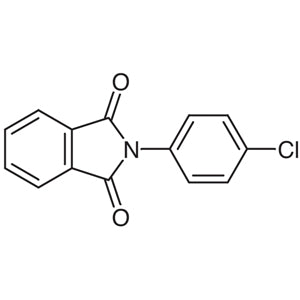
N-(4-Chlorophenyl)phthalimide TCI C1958
Regular price From Rp 1.431.150,00Regular priceRp 1.016.400,00Sale price From Rp 1.431.150,00 -
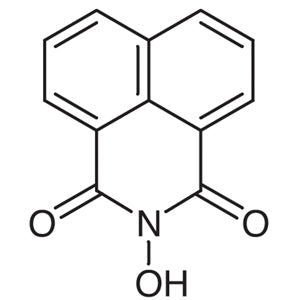
N-Hydroxy-1,8-naphthalimide TCI H1040
Regular price From Rp 980.700,00Regular priceRp 701.400,00Sale price From Rp 980.700,00 -
4-Bromo-N-methylphthalimide TCI B3443
Regular price From Rp 2.199.750,00Regular priceRp 1.554.000,00Sale price From Rp 2.199.750,00