N-Hydroxy-1,8-naphthalimide (NHN) is a chemical compound widely used as a building block in the synthesis of heterocyclic compounds and complex organic molecules. Its stable structure makes it a versatile reagent in various chemical reactions, including acylation and substitution reactions. In the laboratory, NHN plays a crucial role in constructing more intricate molecular frameworks, especially in organic chemistry and pharmacological synthesis. It is valued for its ability to participate in controlled chemical transformations, making it an essential tool for researchers aiming to develop new compounds with specific functionalities.
The chemical properties of N-Hydroxy-1,8-naphthalimide make it a preferred choice for laboratory use. It exhibits excellent reactivity while maintaining stability under typical laboratory conditions, which simplifies handling and storage. Its ability to interact with a variety of functional groups allows it to be used in a wide range of synthetic pathways. Additionally, its resistance to degradation ensures consistent performance in experiments, contributing to reliable and reproducible results.
In Indonesian laboratories, N-Hydroxy-1,8-naphthalimide is extensively used in chemical research, particularly in higher education institutions and research organizations. It is a key component in the development of new compounds, especially in pharmaceutical and organic chemistry studies. Its reliability and stability make it a go-to material for researchers seeking a dependable building block for complex molecular synthesis.
Advantages (TCI brochure)
- RAE reduction potential shown in comparison chart
TCI brochures (PDF)
- Organic synthesis applications benefit from NHN’s ability to participate in acylation and substitution reactions, enabling the construction of complex molecular structures.
- Pharmacological research uses NHN as a building block for developing new drug compounds due to its reactivity and stability.
- Chemical education in Indonesian universities incorporates NHN in teaching practical synthesis techniques to students.
- Industrial research laboratories rely on NHN for its consistent performance in controlled chemical transformations.
- Analytical chemistry applications utilize NHN as a reference compound for testing and validating synthetic processes.
| Brand | TCI |
|---|---|
| CAS number | 7797-81-1 |
| Molecular formula | — |
| Purity | — |
| Category | Chemistry > Building Blocks > Non-Heterocyclic Building Blocks |
| Pack sizes | Available in various quantities as per standard laboratory supply |
| Physical form | Solid |
| Storage | Store in a cool, dry place away from direct sunlight |
Data from the TCI brochure
| Ep (vs. Fc+/Fc) of RAE | -1.589 V (RAE with R = phenylcyclopropyl group as drawn in brochure) |
|---|
Source: TCI brochure RR190 (2024-02-06)
N-Hydroxy-1,8-naphthalimide should be stored in a cool, dry environment to maintain its stability and prevent degradation. It is recommended to use airtight containers to protect it from moisture and contaminants. Since it is a solid, it does not require refrigeration under normal laboratory conditions. General laboratory precautions include handling with care to avoid exposure to skin or inhalation. Always ensure proper ventilation when working with this compound to maintain a safe and controlled environment.
References cited in the TCI brochure
- Daniel C. Salgueiro. Control of Redox‐Active Ester Reactivity Enables a General Cross‐Electrophile Approach to Access Arylated Strained Rings** Angewandte Chemie International Edition, 2022. doi:10.1002/anie.202205673
Produk Terkait
-
N-(4-Bromophenyl)phthalimide TCI B2707
Regular price From Rp 2.782.500,00Regular priceRp 1.961.400,00Sale price From Rp 2.782.500,00 -
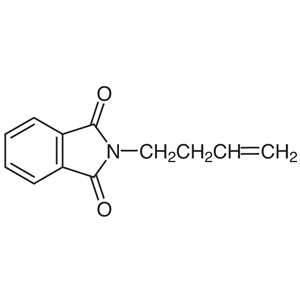
N-(3-Buten-1-yl)phthalimide TCI B1881
Regular price Rp 7.949.550,00Regular priceRp 5.574.450,00Sale price Rp 7.949.550,00 -
4-Bromo-1,8-naphthalicAnhydride TCI B0858
Regular price Rp 769.650,00Regular priceRp 537.600,00Sale price Rp 769.650,00 -
PhthalimidePotassiumSalt TCI P0403
Regular price From Rp 610.050,00Regular priceRp 442.050,00Sale price From Rp 610.050,00 -
Phthalimide TCI P0402
Regular price From Rp 582.750,00Regular priceRp 423.150,00Sale price From Rp 582.750,00 -
1,2-NaphthalicAnhydride TCI N0583
Regular price From Rp 11.103.750,00Regular priceRp 7.764.750,00Sale price From Rp 11.103.750,00 -
1,8-NaphthalicAnhydride TCI N0022
Regular price Rp 689.850,00Regular priceRp 481.950,00Sale price Rp 689.850,00 -
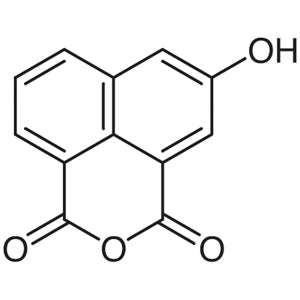
3-Hydroxy-1,8-naphthalicAnhydride TCI H0278
Regular price Rp 6.651.750,00Regular priceRp 4.667.250,00Sale price Rp 6.651.750,00