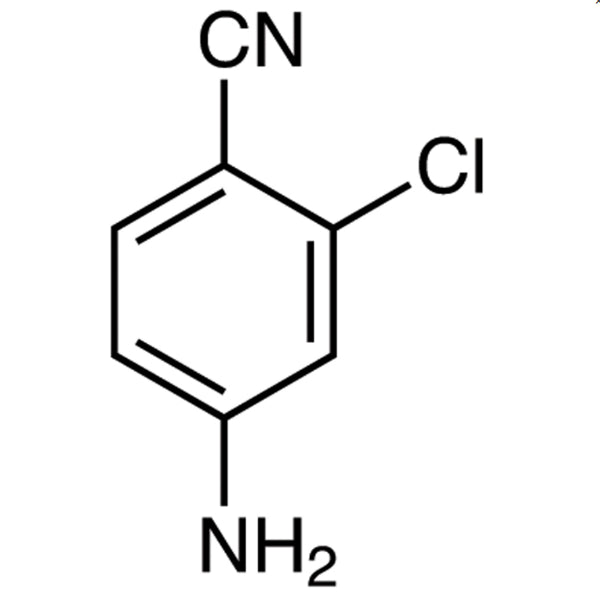
4-Amino-2-chlorobenzonitrile is a chemical compound widely used as a building block in the synthesis of complex organic molecules. This versatile reagent contains both an amino group and a nitrile group, making it highly reactive in nucleophilic and electrophilic reactions. Its structural features enable it to participate in a variety of chemical transformations, making it a valuable tool for chemists. In the laboratory, it serves as a foundational material for the development of new compounds, supporting research in pharmacology, organic chemistry, and functional compound synthesis.
The compound is known for its chemical stability and reactivity, which are key factors in its popularity among researchers. It exhibits good solubility in organic solvents, facilitating its use in various synthetic procedures. This solubility, combined with its functional groups, allows for efficient processing and application in different experimental setups. Its ability to undergo multiple chemical reactions makes it a preferred choice for laboratories seeking reliable and versatile reagents.
In Indonesian laboratories, 4-Amino-2-chlorobenzonitrile is commonly used in scientific research focused on the synthesis of new compounds. Educational and research institutions in Indonesia frequently utilize this compound to advance chemical studies and develop innovative materials. Its availability and chemical properties make it an essential component in the toolkit of chemists working on diverse projects.
Related TCI products
- Organic synthesis applications benefit from its reactive amino and nitrile groups, enabling the construction of complex molecular structures.
- Pharmaceutical research utilizes this compound as a precursor in the development of new drug molecules due to its functional versatility.
- Functional compound synthesis relies on its ability to participate in multiple chemical reactions, supporting the creation of specialized chemical entities.
- Academic research in chemistry often incorporates this reagent for teaching and experimental purposes in undergraduate and graduate studies.
- Industrial chemical processes may use it as a building block for the production of specialized chemicals and materials.
| Brand | TCI |
|---|---|
| CAS number | 20925-27-3 |
| Molecular formula | — |
| Purity | — |
| Category | Chemistry > Building Blocks > Non-Heterocyclic Building Blocks |
| Pack sizes | Available in various quantities as per supplier specifications |
| Physical form | Solid or liquid, depending on the specific product variant |
| Storage | Store in a cool, dry place away from direct sunlight and moisture |
This compound should be stored in a cool, dry environment, away from direct sunlight and moisture to maintain its chemical integrity. It is recommended to use airtight containers to prevent exposure to air and humidity, which may affect its stability. Proper labeling of containers is essential for safe handling and identification. In laboratory settings, it should be handled with care, using appropriate personal protective equipment such as gloves and safety goggles. While it is generally stable under normal storage conditions, it is important to avoid contact with incompatible substances to ensure safety during use and storage.
—
Produk Terkait
-
2-Amino-4-chlorobenzonitrile TCI A2483
Regular price From Rp 1.140.300,00Regular price -
4-Amino-3-chlorobenzonitrile TCI A1962
Regular price Rp 2.411.850,00Regular price -
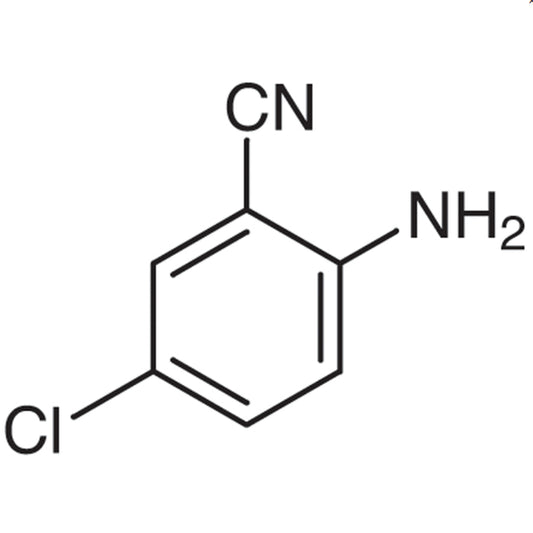
2-Amino-5-chlorobenzonitrile TCI A1572
Regular price From Rp 1.220.100,00Regular price -
4-Bromo-2-chlorobenzonitrile TCI B4241
Regular price Rp 505.050,00Regular price -
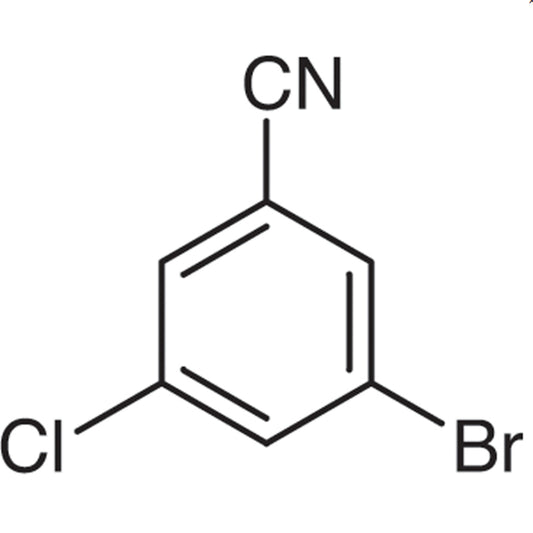
3-Bromo-5-chlorobenzonitrile TCI B3118
Regular price From Rp 1.008.000,00Regular price -
5-Bromo-2-chlorobenzonitrile TCI B3116
Regular price From Rp 2.942.100,00Regular price -
2-Chlorobenzonitrile TCI C1130
Regular price From Rp 980.700,00Regular price -
3-Chlorobenzonitrile TCI C1100
Regular price Rp 1.776.600,00Regular price