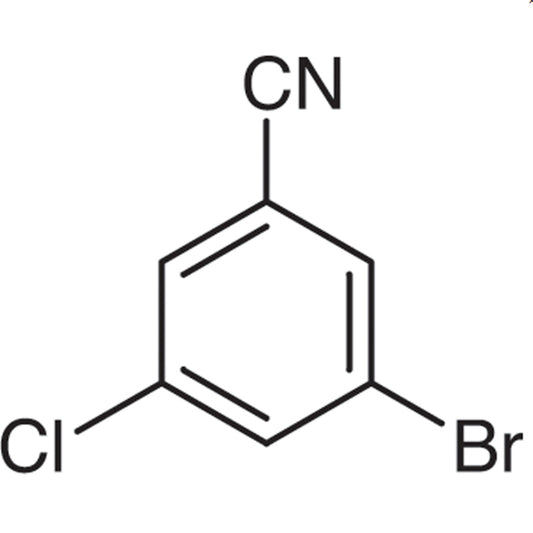
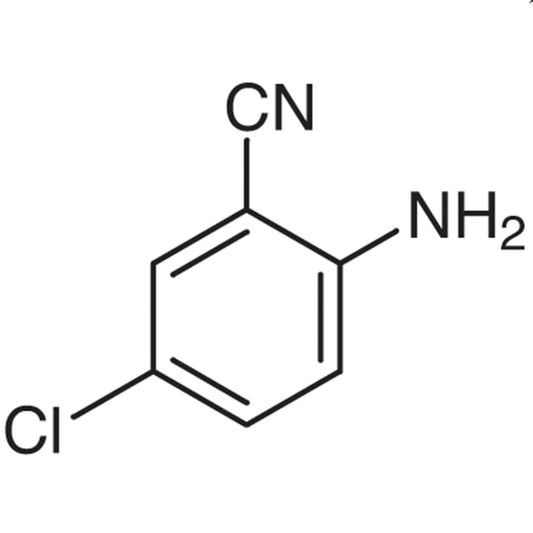
5-Bromo-2-chlorobenzonitrile is a chemical compound widely used as a building block in the synthesis of complex organic molecules. This compound contains bromo, chloro, and nitrile functional groups, which contribute to its high reactivity and versatility in chemical reactions. It is a key reagent in organic chemistry laboratories, where it plays a vital role in the development of new compounds and materials. Its structural features make it an essential tool for researchers aiming to create functional molecules with specific properties.
The compound’s combination of bromo and chloro substituents, along with the nitrile group, provides it with a unique set of chemical properties. These groups enable it to participate in various substitution and electrophilic reactions, making it a preferred choice for synthetic chemists. The nitrile group also contributes to the compound’s stability under certain conditions, while the halogen substituents enhance its reactivity in different reaction environments. This balance of stability and reactivity makes it a valuable reagent in both academic and industrial settings.
In Indonesian laboratories, 5-Bromo-2-chlorobenzonitrile is commonly used by researchers and students in pharmaceutical, organic chemistry, and materials science projects. Its solubility in organic solvents such as ethyl acetate and acetone facilitates its use in various synthetic processes. The compound’s availability and chemical versatility make it an essential component in the toolkit of any organic chemistry laboratory in Indonesia.
Related TCI products
- Organic synthesis applications benefit from 5-Bromo-2-chlorobenzonitrile due to its reactivity and functional group diversity, enabling the creation of complex molecular structures.
- Pharmaceutical research utilizes this compound as a building block for the development of new drugs, leveraging its halogen and nitrile groups for targeted chemical modifications.
- Materials science applications rely on its chemical versatility to synthesize advanced materials with specific functional properties.
- Teaching laboratories use it to demonstrate substitution and electrophilic reactions, providing hands-on experience for students in organic chemistry.
- Industrial research and development incorporates it in the design of novel compounds for various chemical applications, including specialty chemicals and polymers.
| Brand | TCI |
|---|---|
| CAS number | 57381-44-9 |
| Molecular formula | — |
| Purity | — |
| Category | Chemistry > Building Blocks > Non-Heterocyclic Building Blocks |
| Pack sizes | Available in various quantities as per supplier specifications |
| Physical form | Solid or liquid, depending on the specific product variant |
| Storage | Store in a cool, dry place away from light and incompatible materials |
5-Bromo-2-chlorobenzonitrile should be stored in a cool, dry environment, away from direct sunlight and sources of heat. It is recommended to keep the compound in a tightly sealed container to prevent exposure to moisture and air. Due to its reactivity, it should be stored separately from strong bases, reducing agents, and other incompatible substances. In laboratory settings, proper personal protective equipment, such as gloves and safety goggles, should always be worn when handling this compound. Regular monitoring of storage conditions ensures the compound remains stable and safe for use in chemical experiments.
—
Produk Terkait
-
4-Bromo-2-chlorobenzonitrile TCI B4241
Regular price Rp 557.550,00Regular priceRp 405.300,00Sale price Rp 557.550,00 -
3-Bromo-5-chlorobenzonitrile TCI B3118
Regular price From Rp 1.060.500,00Regular priceRp 757.050,00Sale price From Rp 1.060.500,00 -
4-Amino-2-chlorobenzonitrile TCI A2784
Regular price From Rp 2.147.250,00Regular priceRp 1.517.250,00Sale price From Rp 2.147.250,00 -
2-Amino-4-chlorobenzonitrile TCI A2483
Regular price From Rp 1.192.800,00Regular priceRp 849.450,00Sale price From Rp 1.192.800,00 -
4-Amino-3-chlorobenzonitrile TCI A1962
Regular price Rp 2.464.350,00Regular priceRp 1.738.800,00Sale price Rp 2.464.350,00 -
2-Amino-5-chlorobenzonitrile TCI A1572
Regular price From Rp 1.272.600,00Regular priceRp 905.100,00Sale price From Rp 1.272.600,00 -
2-Chlorobenzonitrile TCI C1130
Regular price From Rp 1.033.200,00Regular priceRp 738.150,00Sale price From Rp 1.033.200,00 -
3-Chlorobenzonitrile TCI C1100
Regular price Rp 1.829.100,00Regular priceRp 1.294.650,00Sale price Rp 1.829.100,00