1-Acetyl-5-bromoindoline is a chemical compound classified under the heterocyclic category, commonly used as a foundational building block in the synthesis of complex molecules. Its unique structure combines an indoline core with bromo and acetyl functional groups, offering versatile reactivity in organic reactions. In laboratory settings, this compound plays a crucial role in the development of new chemical entities, particularly in the field of medicinal chemistry. Its ability to participate in various substitution and functionalization reactions makes it an essential tool for researchers aiming to construct more complex molecular architectures.
The compound’s chemical properties, including its stable yet reactive nature, make it a preferred choice for synthetic chemists. Its bromo group provides a site for further modification, while the acetyl group enhances solubility and reactivity in different reaction conditions. These characteristics allow it to be adaptable in a wide range of synthetic strategies. Its reliability and consistent performance in laboratory experiments contribute to its popularity among researchers working on drug discovery and industrial chemical development.
In Indonesian laboratories, 1-Acetyl-5-bromoindoline is frequently utilized in organic chemistry research, especially in the development of pharmaceutical compounds and industrial chemicals. Its availability and high-quality standards make it a go-to material for local researchers. The compound’s role in creating complex structures supports advancements in both academic and industrial chemical applications.
Related TCI products
- Drug synthesis involving indoline-based complex structures benefits from the compound’s reactivity and structural versatility.
- Organic chemistry research relies on this compound for its ability to undergo substitution and functionalization reactions.
- Industrial chemical development utilizes its bromo and acetyl groups for further modification in synthetic pathways.
- Medicinal chemistry projects use it as a core building block for the creation of bioactive molecules.
- Research into novel compounds benefits from its stability and compatibility with various reaction conditions.
| Brand | TCI |
|---|---|
| CAS number | 22190-38-1 |
| Molecular formula | — |
| Purity | — |
| Category | Chemistry > Building Blocks > Heterocyclic Building Blocks |
| Pack sizes | Available in standard laboratory quantities |
| Physical form | Solid |
| Storage | Store in a cool, dry place away from light and moisture |
This compound should be stored in a cool, dry environment, away from direct light and moisture to maintain its stability and reactivity. It is recommended to use airtight containers to prevent exposure to air and moisture, which could affect its chemical integrity. Proper labeling and storage conditions are essential to ensure safety and prevent contamination. In laboratory settings, handling should be done with appropriate personal protective equipment, such as gloves and safety goggles, to minimize exposure. The compound is generally non-hazardous under normal conditions but should be treated with care to avoid any potential risks associated with its chemical properties.
—
Produk Terkait
-
5-Bromoindoline TCI B3885
Regular price From Rp 1.035.300,00Regular price -
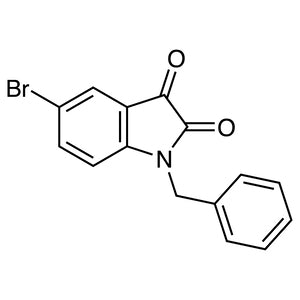
1-Benzyl-5-bromoindoline-2,3-dione TCI B6624
Regular price Rp 3.790.500,00Regular price -
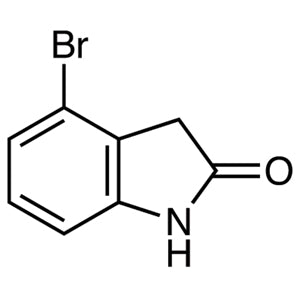
4-Bromoindolin-2-one TCI B5903
Regular price From Rp 875.700,00Regular price -
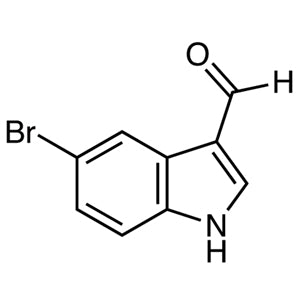
5-Bromoindole-3-carboxaldehyde TCI B4840
Regular price From Rp 717.150,00Regular price -
5-Bromoindole-3-carboxylicAcid TCI B4790
Regular price From Rp 2.889.600,00Regular price -
6-Bromoindole-2-carboxylicAcid TCI B4334
Regular price From Rp 2.439.150,00Regular price -
5-Bromoindole-2-carboxylicAcid TCI B3836
Regular price Rp 2.411.850,00Regular price -
7-Bromoindole TCI B2873
Regular price From Rp 1.590.750,00Regular price