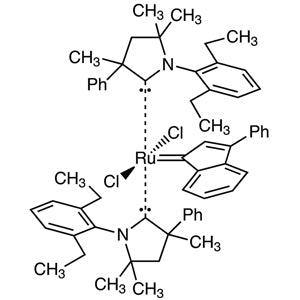
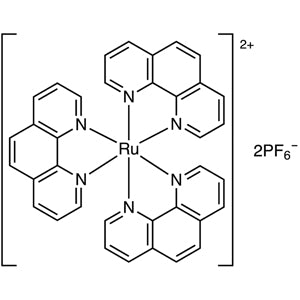
AquaMet TCI A3009 is a chemical compound with the CAS number 1414707-08-6, specifically designed for use in olefin metathesis reactions. This process is a crucial method in organic synthesis, enabling the formation of complex molecular structures through the exchange of alkyl or aryl groups between unsaturated hydrocarbons. As a catalyst, AquaMet facilitates these reactions without being consumed in the process, making it an essential tool in modern chemical laboratories. Its role is particularly significant in the field of catalysis, where efficiency and selectivity are paramount.
The unique properties of AquaMet TCI A3009 make it a preferred choice for researchers. It exhibits high reactivity and stability under specific conditions, allowing it to function effectively in reactive environments. The compound's ability to interact with a wide range of substrates enhances its versatility, enabling the synthesis of diverse organic compounds. These characteristics ensure that AquaMet remains a reliable and efficient catalyst in various chemical applications, particularly in the development of new materials and pharmaceuticals.
In Indonesian laboratories, AquaMet TCI A3009 is widely used in chemical research, especially in academic and industrial settings. It is commonly employed in the synthesis of complex organic molecules, where traditional methods may be less effective. Its application supports the advancement of chemical research, contributing to the development of innovative solutions in both academic and applied sciences.
Advantages (TCI brochure)
- Air- and moisture-stable Hoveyda-type ruthenium complex
- Applicable to reactions in water media due to an internal quaternary ammonium group
TCI brochures (PDF)
- Metathesis Catalyst Usable in Water Media AquaMet 2025-11-06 · p. 1
- Highly Active Catalyst for Olefin-metathesis nitro-Grela 2025-11-04 · p. 1
- Metathesis Reaction Reagents 2025-04-28 · p. 1
- Olefin Polymerization Catalysts 2025-05-02 · p. 2
- N-Heterocyclic Carbene (NHC) Ligands and Metal Complexes 2026-02-10 · p. 2
- Transition Metal Catalysts 2026-04-10 · p. 8
Related TCI products
- TCI U0141 2055540-61-7 UltraCat (contains 5% Nitromethane at maximum)
- TCI U0116 2106819-64-9 UltraNitroCat
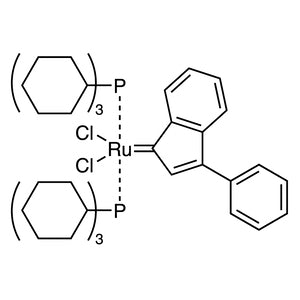
- TCI P2004 250220-36-1 (3-Phenyl-1H-inden-1-ylidene)bis(tricyclohexylphosphine)ruthenium(II) Dichloride
- TCI N1060 502964-52-5 nitro-Grela
- TCI T3902 304695-79-2 Dichlorotris(1,10-phenanthroline)ruthenium(II) Monohydrate
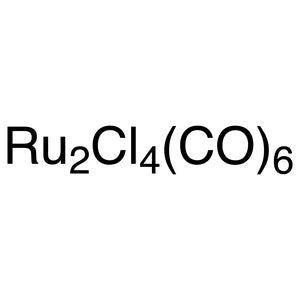
- TCI T3812 22594-69-0 Tricarbonyldichlororuthenium(II) Dimer
- Olefin Metathesis Reactions: AquaMet TCI A3009 is ideal for olefin metathesis due to its catalytic efficiency and ability to facilitate complex molecular rearrangements.
- Organic Synthesis: The compound is widely used in the synthesis of various organic compounds, offering high reactivity and selectivity in reaction conditions.
- Catalytic Research: AquaMet supports catalytic studies by providing a stable and effective catalyst for a range of chemical transformations.
- Industrial Chemical Processes: Its application extends to industrial settings where efficient and controlled chemical reactions are required.
- Advanced Material Development: AquaMet is used in the creation of new materials, leveraging its reactivity to form complex structures with desired properties.
From the TCI brochure
- Intermolecular metathesis of a Z-olefin in D2O
- Ring closing metathesis of a quaternary ammonium substrate in D2O
| Brand | TCI |
|---|---|
| CAS number | 1414707-08-6 |
| Molecular formula | — |
| Purity | — |
| Category | Chemistry > Catalysis and Inorganic Chemistry > Olefin Metathesis [Catalysis] |
| Pack sizes | — |
| Physical form | — |
| Storage | Store in a cool, dry place away from moisture and direct sunlight |
Data from the TCI brochure
| Catalyst loading (intermolecular metathesis) | 0.5 mol% (D2O, 1.1 h) |
|---|---|
| Catalyst loading (ring closing metathesis) | 2.5 mol% (D2O, 2.5 h) |
Source: TCI brochure RR082 (2025-11-06)
AquaMet TCI A3009 should be stored in a cool, dry environment to maintain its stability and effectiveness. It is recommended to use airtight containers to prevent exposure to moisture and air, which could compromise its catalytic properties. Due to its reactivity, it should be handled with care, using appropriate personal protective equipment such as gloves and safety goggles. The compound should not be stored near incompatible materials or in areas with high humidity. Regular monitoring of storage conditions is advised to ensure the integrity of the material during long-term use. Proper labeling and storage practices are essential to maintain safety and efficiency in laboratory operations.
—
Produk Terkait
-
UltraCat(contains5%Nitromethaneatmaximum) TCI U0141
Regular price Rp 3.683.400,00Regular priceRp 2.591.400,00Sale price Rp 3.683.400,00 -
UltraNitroCat TCI U0116
Regular price Rp 4.266.150,00Regular priceRp 2.998.800,00Sale price Rp 4.266.150,00 -
(3-Phenyl-1H-inden-1-ylidene)bis(tricyclohexylphosphine)ruthenium(II)Dichloride TCI P2004
Regular price Rp 5.062.050,00Regular priceRp 3.555.300,00Sale price Rp 5.062.050,00 -
nitro-Grela TCI N1060
Regular price From Rp 3.895.500,00Regular priceRp 2.739.450,00Sale price From Rp 3.895.500,00 -
Dichlorotris(1,10-phenanthroline)ruthenium(II)Monohydrate TCI T3902
Regular price Rp 5.246.850,00Regular priceRp 3.684.450,00Sale price Rp 5.246.850,00 -
Tricarbonyldichlororuthenium(II)Dimer TCI T3812
Regular price Rp 4.636.800,00Regular priceRp 3.258.150,00Sale price Rp 4.636.800,00 -
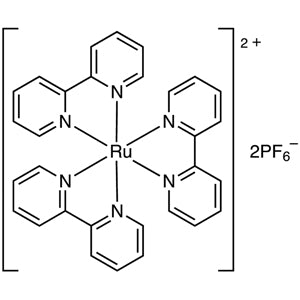
Tris(2,2'-bipyridine)ruthenium(II)Bis(hexafluorophosphate) TCI T3435
Regular price Rp 4.133.850,00Regular priceRp 2.906.400,00Sale price Rp 4.133.850,00 -
Tris(1,10-phenanthroline)ruthenium(II)Bis(hexafluorophosphate) TCI T3208
Regular price From Rp 1.881.600,00Regular priceRp 1.331.400,00Sale price From Rp 1.881.600,00