2-Amino-5-(4,4,5,5-tetramethyl-1,3,2-dioxaborolan-2-yl)pyrimidine is a specialized organic compound used extensively in chemical research, particularly in the synthesis of complex molecules. This reagent plays a crucial role in laboratory settings where precision and reactivity are essential. It is widely utilized in the field of organoboron chemistry, where its unique structure enables it to participate in various chemical transformations. Its presence in the laboratory supports advanced synthetic strategies that require high reactivity and compatibility with multiple substrates.
The compound’s molecular structure is highly complex, which contributes to its reactivity in specific reaction conditions. This characteristic makes it a preferred choice for chemists working on intricate synthetic pathways. Its ability to engage in coupling reactions, substitution processes, and metal-based reactions enhances its versatility. Additionally, the compound exhibits good stability under controlled conditions, ensuring consistent performance in experimental setups. These properties make it a reliable and efficient reagent for a wide range of chemical applications.
In Indonesian laboratories, this compound is commonly used in research focused on organic synthesis, particularly in the development of bioactive compounds. It is a key component in studies related to heterocyclic chemistry and pharmaceutical research. Its application in academic and research institutions in Indonesia highlights its importance in advancing scientific knowledge and innovation in the chemical sciences.
TCI brochures (PDF)
- Suzuki-Miyaura Cross Coupling Reaction 2025-12-01 · p. 18
Related TCI products
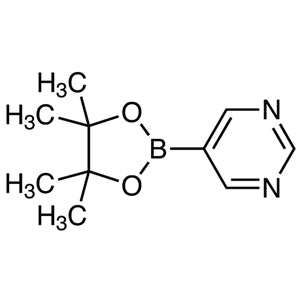
- TCI T2521 321724-19-0 5-(4,4,5,5-Tetramethyl-1,3,2-dioxaborolan-2-yl)pyrimidine
- TCI A2993 893440-50-1 3-Amino-2-methoxy-5-(4,4,5,5-tetramethyl-1,3,2-dioxaborolan-2-yl)pyridine
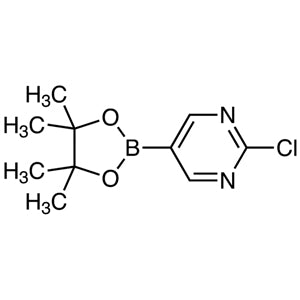
- TCI C3436 1003845-08-6 2-Chloro-5-(4,4,5,5-tetramethyl-1,3,2-dioxaborolan-2-yl)pyrimidine
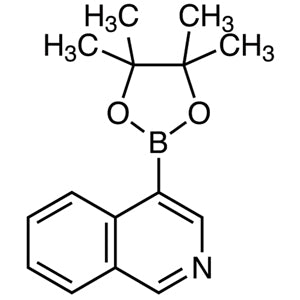
- TCI I0739 685103-98-4 4-(4,4,5,5-Tetramethyl-1,3,2-dioxaborolan-2-yl)isoquinoline
- TCI T4406 1219637-88-3 1-(4,4,5,5-Tetramethyl-1,3,2-dioxaborolan-2-yl)-9H-carbazole
- TCI T4400 942919-26-8 4-(4,4,5,5-Tetramethyl-1,3,2-dioxaborolan-2-yl)-1H-pyrrolo[2,3-b]pyridine
- Used in organic synthesis for the preparation of complex heterocyclic compounds due to its reactivity and compatibility with various substrates.
- Applied in coupling reactions to facilitate the formation of carbon-carbon bonds in synthetic pathways.
- Employed in pharmaceutical research for the development of bioactive molecules and drug candidates.
- Utilized in metal-based reactions to enhance the efficiency of catalytic processes in chemical transformations.
- Integrated into research projects focused on the synthesis of advanced materials and functional compounds.
| Brand | TCI |
|---|---|
| CAS number | 402960-38-7 |
| Molecular formula | — |
| Purity | — |
| Category | Chemistry > Organometallic Reagents > Organoboron [Organometallic Reagents] |
| Pack sizes | As per supplier specifications |
| Physical form | Solid (as per standard product description) |
| Storage | Store in a cool, dry place away from moisture and direct sunlight |
This compound should be stored in a cool, dry environment to maintain its stability and prevent degradation. It is recommended to keep it in a tightly sealed container to avoid exposure to moisture and air. Due to its chemical nature, it should be handled in a well-ventilated area, preferably with appropriate personal protective equipment. Avoid contact with incompatible materials and ensure proper disposal procedures are followed. Regular inspection of storage conditions is advised to ensure the compound remains in optimal condition for use in laboratory applications.
—
Produk Terkait
-
5-(4,4,5,5-Tetramethyl-1,3,2-dioxaborolan-2-yl)pyrimidine TCI T2521
Regular price From Rp 1.378.650,00Regular priceRp 979.650,00Sale price From Rp 1.378.650,00 -
3-Amino-2-methoxy-5-(4,4,5,5-tetramethyl-1,3,2-dioxaborolan-2-yl)pyridine TCI A2993
Regular price From Rp 795.900,00Regular priceRp 572.250,00Sale price From Rp 795.900,00 -
2-Chloro-5-(4,4,5,5-tetramethyl-1,3,2-dioxaborolan-2-yl)pyrimidine TCI C3436
Regular price From Rp 1.801.800,00Regular priceRp 1.275.750,00Sale price From Rp 1.801.800,00 -
4-(4,4,5,5-Tetramethyl-1,3,2-dioxaborolan-2-yl)isoquinoline TCI I0739
Regular price From Rp 2.439.150,00Regular priceRp 1.720.950,00Sale price From Rp 2.439.150,00 -
1-(4,4,5,5-Tetramethyl-1,3,2-dioxaborolan-2-yl)-9H-carbazole TCI T4406
Regular price Rp 3.074.400,00Regular priceRp 2.165.100,00Sale price Rp 3.074.400,00 -
4-(4,4,5,5-Tetramethyl-1,3,2-dioxaborolan-2-yl)-1H-pyrrolo[2,3-b]pyridine TCI T4400
Regular price From Rp 3.683.400,00Regular priceRp 2.591.400,00Sale price From Rp 3.683.400,00 -
4-(4,4,5,5-Tetramethyl-1,3,2-dioxaborolan-2-yl)isoxazole TCI T4396
Regular price From Rp 2.227.050,00Regular priceRp 1.572.900,00Sale price From Rp 2.227.050,00 -
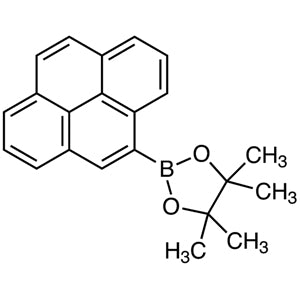
4-(4,4,5,5-Tetramethyl-1,3,2-dioxaborolan-2-yl)pyrene TCI T3857
Regular price Rp 4.452.000,00Regular priceRp 3.129.000,00Sale price Rp 4.452.000,00