


2-Chloro-5-(4,4,5,5-tetramethyl-1,3,2-dioxaborolan-2-yl)pyrimidine is a chemical compound widely used in pharmaceutical research and development. It serves as a key building block in the synthesis of various pharmacologically active compounds. This reagent plays a crucial role in the creation of complex molecular structures, particularly in the field of drug discovery. Its unique chemical structure enables it to participate in multiple reaction types, making it an essential tool for researchers aiming to develop new therapeutic agents.
The compound is valued for its chemical stability under controlled conditions and its ability to react with a variety of reagents, including amines, sulfides, and transition metals. Its versatility in participating in S-N coupling reactions and other nitrogen-sulfur bond-forming processes makes it a preferred choice for synthetic chemists. The presence of the boronic acid group enhances its reactivity and compatibility with various synthetic methodologies, supporting the development of bioactive molecules with specific therapeutic applications.
In Indonesian laboratories, this compound is commonly used in research projects focused on drug development and pharmacological compound synthesis. Its availability in solid form and its ability to engage in chemical reactions make it a reliable and practical option for researchers. It is frequently employed in academic and industrial settings to explore new chemical pathways and improve the efficiency of drug discovery processes.
TCI brochures (PDF)
- Suzuki-Miyaura Cross Coupling Reaction 2025-12-01 · p. 18
- Boron Compounds 2025-10-07 · p. 19
Related TCI products
- TCI T2521 321724-19-0 5-(4,4,5,5-Tetramethyl-1,3,2-dioxaborolan-2-yl)pyrimidine
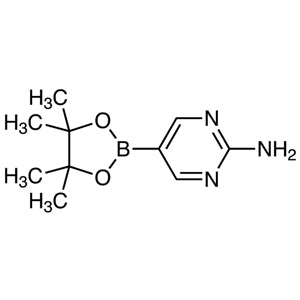
- TCI A3087 402960-38-7 2-Amino-5-(4,4,5,5-tetramethyl-1,3,2-dioxaborolan-2-yl)pyrimidine
- TCI C3529 458532-84-8 2-Chloro-4-(4,4,5,5-tetramethyl-1,3,2-dioxaborolan-2-yl)pyridine
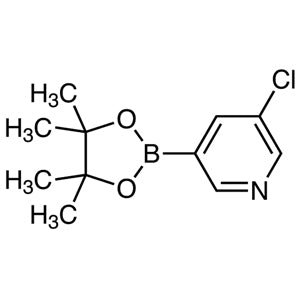
- TCI C3367 865186-94-3 3-Chloro-5-(4,4,5,5-tetramethyl-1,3,2-dioxaborolan-2-yl)pyridine
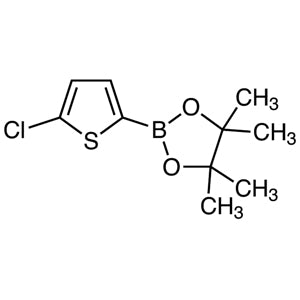
- TCI C3301 635305-24-7 5-Chloro-2-(4,4,5,5-tetramethyl-1,3,2-dioxaborolan-2-yl)thiophene
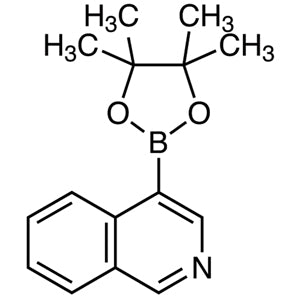
- TCI I0739 685103-98-4 4-(4,4,5,5-Tetramethyl-1,3,2-dioxaborolan-2-yl)isoquinoline
- Pharmaceutical Development: This compound is ideal for synthesizing complex drug molecules due to its reactivity and compatibility with various synthetic methods.
- Drug Discovery Research: It supports the creation of new therapeutic agents by participating in key chemical reactions that form nitrogen-sulfur bonds.
- Organic Synthesis Projects: Its stability and reactivity make it a valuable reagent in the preparation of bioactive compounds and molecular scaffolds.
- Academic Research: It is widely used in university laboratories to study chemical reactions and develop new synthetic strategies for pharmaceutical applications.
- Industrial R&D: It is employed in pharmaceutical companies to optimize synthetic routes and improve the efficiency of drug manufacturing processes.
| Brand | TCI |
|---|---|
| CAS number | 1003845-08-6 |
| Molecular formula | — |
| Purity | — |
| Category | Chemistry > Pharmaceutical Development and Drug Discovery Research Reagents > Building Blocks for Pharmaceutical Ingredients (for Research and Experimental Use) |
| Pack sizes | Available in various quantities suitable for laboratory use |
| Physical form | Solid |
| Storage | Store in a cool, dry place away from moisture and direct sunlight |
This compound should be stored in a cool, dry environment to maintain its chemical stability. It is recommended to keep it in airtight containers to prevent exposure to moisture and air. Due to its chemical reactivity, it should be handled with appropriate personal protective equipment, such as gloves and safety goggles. It is important to ensure that the storage area is well-ventilated to minimize the risk of inhalation of any vapors. Avoid contact with incompatible materials such as strong oxidizers or acids. Proper labeling and storage conditions are essential to ensure safe handling and long-term usability in laboratory settings.
—
Product Categories
Produk Terkait
-
5-(4,4,5,5-Tetramethyl-1,3,2-dioxaborolan-2-yl)pyrimidine TCI T2521
Regular price From Rp 1.326.150,00Regular price -
2-Amino-5-(4,4,5,5-tetramethyl-1,3,2-dioxaborolan-2-yl)pyrimidine TCI A3087
Regular price From Rp 1.458.450,00Regular price -
2-Chloro-4-(4,4,5,5-tetramethyl-1,3,2-dioxaborolan-2-yl)pyridine TCI C3529
Regular price From Rp 1.060.500,00Regular price -
3-Chloro-5-(4,4,5,5-tetramethyl-1,3,2-dioxaborolan-2-yl)pyridine TCI C3367
Regular price From Rp 795.900,00Regular price -
5-Chloro-2-(4,4,5,5-tetramethyl-1,3,2-dioxaborolan-2-yl)thiophene TCI C3301
Regular price From Rp 1.035.300,00Regular price -
4-(4,4,5,5-Tetramethyl-1,3,2-dioxaborolan-2-yl)isoquinoline TCI I0739
Regular price From Rp 2.386.650,00Regular price -
1-(4,4,5,5-Tetramethyl-1,3,2-dioxaborolan-2-yl)-9H-carbazole TCI T4406
Regular price Rp 3.021.900,00Regular price -
4-(4,4,5,5-Tetramethyl-1,3,2-dioxaborolan-2-yl)-1H-pyrrolo[2,3-b]pyridine TCI T4400
Regular price From Rp 3.630.900,00Regular price



![942919-26-8 4-(4,4,5,5-Tetramethyl-1,3,2-dioxaborolan-2-yl)-1H-pyrrolo[2,3-b]pyridine - AMI Scientific](http://amiscientific.com/cdn/shop/files/TCI2510T4400.jpg?v=1767145178&width=533)