

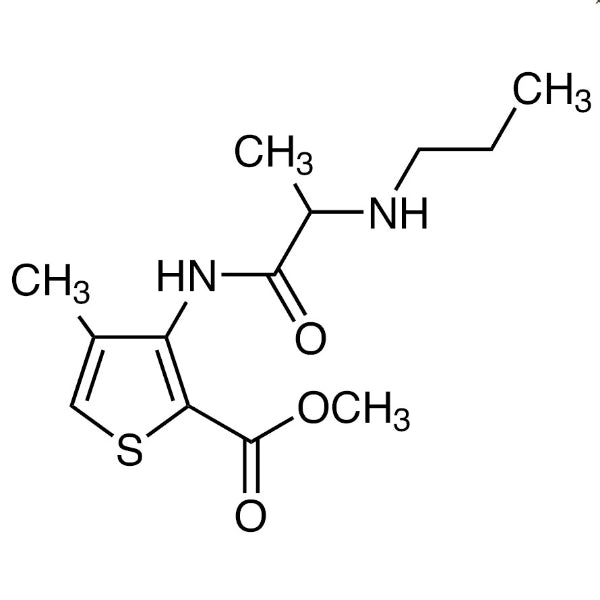
Articaine, with CAS number 23964-58-1, is a pharmacological compound widely used in scientific experiments and medical research. It belongs to the category of pharmaceutical ingredients for research and experimental use, classified under USP drug standards. This compound plays a crucial role in laboratories where the study of drug mechanisms and biological responses is essential. Its application spans across various life science disciplines, including pharmacology and biochemistry, making it a versatile tool for researchers.
Articaine is preferred due to its chemical stability and good solubility in organic solvents, which simplifies its handling and integration into experimental protocols. These properties enable consistent results and ease of use in diverse laboratory settings. Additionally, its non-irritating nature and relatively safe profile make it suitable for use in environments where safety and precision are paramount. This combination of characteristics ensures that Articaine remains a reliable choice for both routine and specialized research applications.
In Indonesian laboratories, Articaine is commonly used in pharmacological studies, biochemical experiments, and drug development projects. It is particularly valuable for testing the pharmacological effects, biological activity, and safety of chemical substances in controlled environments. Its role in supporting scientific inquiry is vital, especially in research institutions and academic settings where high-quality and reliable reagents are essential.
TCI brochures (PDF)
- Thiophenes 2026-06-29 · p. 10
Related TCI products
- Pharmacological research: Articaine is used to study the mechanisms of local anesthetics and their effects on nerve conduction.
- Biochemical experiments: It serves as a key reagent in studies involving drug interactions and biological responses to chemical compounds.
- Drug development: Articaine is utilized in the formulation and testing of new pharmaceutical products for clinical trials.
- Toxicological testing: It helps in evaluating the safety profile of compounds by assessing their biological impact under controlled conditions.
- Analytical chemistry: Articaine is employed in analytical procedures to determine the purity and stability of pharmaceutical substances.
| Brand | TCI |
|---|---|
| CAS number | 23964-58-1 |
| Molecular formula | — |
| Purity | — |
| Category | Pharmaceutical Ingredients (for Research and Experimental Use) |
| Pack sizes | Available in standard laboratory quantities |
| Physical form | Powder or liquid, depending on the formulation |
| Storage | Store in a cool, dry place away from direct sunlight |
Articaine should be stored in a cool, dry environment, away from direct sunlight and sources of heat. It is recommended to use airtight containers to prevent moisture absorption and contamination. When handling, it is important to follow standard laboratory safety protocols, including the use of personal protective equipment such as gloves and safety goggles. Due to its chemical properties, it should be kept separate from incompatible substances to avoid any adverse reactions. Proper labeling of containers is essential to ensure safe handling and prevent accidental exposure. Maintaining appropriate storage conditions ensures the stability and effectiveness of Articaine in research applications.
—
Product Categories
Produk Terkait
-
Lidocaine TCI L0156
Regular price From Rp 1.298.850,00Regular priceRp 924.000,00Sale price From Rp 1.298.850,00 -
DibucaineHydrochloride TCI B6467
Regular price From Rp 1.113.000,00Regular priceRp 793.800,00Sale price From Rp 1.113.000,00


