Ammonium Heptamolybdate Tetrahydrate, with the chemical formula (NH₄)₆Mo₇O₂₄·4H₂O, is a versatile inorganic compound widely utilized in laboratory settings, particularly in catalysis and inorganic chemistry. This compound serves as a valuable source of molybdenum, playing a crucial role in redox reactions and the synthesis of transition metal-based catalysts. Its importance lies in its ability to facilitate chemical reactions without undergoing significant chemical changes itself, making it an essential reagent for researchers in various scientific disciplines. In Indonesian laboratories, it is commonly used in both academic and industrial research to support chemical processes that require a stable and reliable molybdenum source.
The compound is known for its chemical stability under controlled conditions and its solubility in water, which makes it ideal for aqueous-based reactions. These properties contribute to its popularity among chemists who need a reagent that is both effective and easy to handle. Its crystalline structure and consistent physical form also enhance its usability in laboratory experiments, allowing for precise measurements and reliable results. The combination of these characteristics ensures that it remains a preferred choice for a wide range of chemical applications.
In the context of Indonesian laboratories, this compound is frequently employed in chemical research, especially within the fields of catalysis and inorganic chemistry. It is a staple in research institutions and universities, where it is used to support experiments that require a stable and effective source of molybdenum. Its availability in various packaging options further facilitates its use in both small-scale and large-scale laboratory operations.
TCI brochures (PDF)
- Transition Metal Catalysts 2026-04-10 · p. 6
Related TCI products
- TCI M2095 13446-34-9 Manganese(II) Chloride Tetrahydrate
- TCI I1247 31096-47-6 Iron(III) Phosphate Tetrahydrate
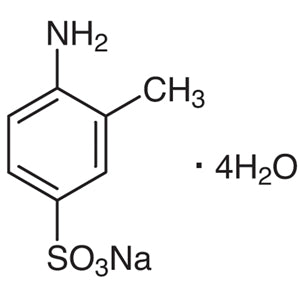
- TCI T0304 63450-43-1 o-Toluidine-4-sulfonic Acid Sodium Salt Tetrahydrate
- TCI P1798 6381-59-5 Potassium Sodium L-(+)-Tartrate Tetrahydrate
- TCI N1270 124594-15-6 Nickel(II) Sulfamate Tetrahydrate
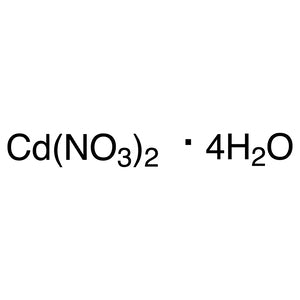
- TCI C3935 10022-68-1 Cadmium(II) Nitrate Tetrahydrate
- Catalytic Reaction Support: Ammonium Heptamolybdate Tetrahydrate is widely used in catalytic processes due to its ability to act as a redox mediator, facilitating the conversion of reactants into products without being consumed.
- Inorganic Chemistry Research: This compound is essential in inorganic chemistry experiments, particularly those involving the synthesis of molybdenum-based compounds and transition metal complexes.
- Redox Reaction Studies: Its role in redox reactions makes it a key reagent for studying electron transfer mechanisms and oxidation-reduction processes in chemical systems.
- Analytical Chemistry Applications: It is used in analytical procedures to prepare standard solutions and as a reagent in qualitative and quantitative analysis of molybdenum-containing compounds.
- Environmental Chemistry Studies: The compound is employed in environmental research to investigate the behavior of molybdenum in aqueous systems and its role in natural and industrial processes.
| Brand | TCI |
|---|---|
| CAS number | 12054-85-2 |
| Molecular formula | — |
| Purity | — |
| Category | Chemistry > Catalysis and Inorganic Chemistry > Transition Elements |
| Pack sizes | Available in various sizes to suit different laboratory needs |
| Physical form | Crystalline solid |
| Storage | Store in a cool, dry place away from moisture and direct sunlight |
Ammonium Heptamolybdate Tetrahydrate should be stored in a cool, dry environment to maintain its chemical stability and prevent degradation. It is recommended to keep the compound in a sealed container to avoid exposure to moisture, which can affect its solubility and purity. Due to its water solubility, it is important to ensure that the storage area is free from sources of contamination. In laboratory settings, it should be handled with appropriate personal protective equipment, such as gloves and safety goggles, to prevent direct contact. The compound is generally considered non-hazardous under normal conditions, but standard laboratory safety protocols should always be followed to ensure safe handling and storage.
—
Produk Terkait
-
Manganese(II)ChlorideTetrahydrate TCI M2095
Regular price From Rp 505.050,00Regular priceRp 352.800,00Sale price From Rp 505.050,00 -
Iron(III)PhosphateTetrahydrate TCI I1247
Regular price From Rp 823.200,00Regular priceRp 575.400,00Sale price From Rp 823.200,00 -
o-Toluidine-4-sulfonicAcidSodiumSaltTetrahydrate TCI T0304
Regular price From Rp 505.050,00Regular priceRp 352.800,00Sale price From Rp 505.050,00 -
PotassiumSodiumL-(+)-TartrateTetrahydrate TCI P1798
Regular price From Rp 477.750,00Regular priceRp 333.900,00Sale price From Rp 477.750,00 -
Nickel(II)SulfamateTetrahydrate TCI N1270
Regular price Rp 1.035.300,00Regular priceRp 723.450,00Sale price Rp 1.035.300,00 -
Cadmium(II)NitrateTetrahydrate TCI C3935
Regular price From Rp 743.400,00Regular priceRp 519.750,00Sale price From Rp 743.400,00 -
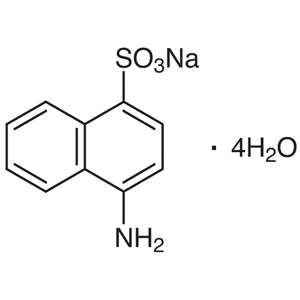
Sodium4-Amino-1-naphthalenesulfonateTetrahydrate TCI A0353
Regular price From Rp 769.650,00Regular priceRp 537.600,00Sale price From Rp 769.650,00 -
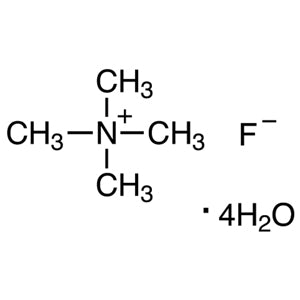
TetramethylammoniumFluorideTetrahydrate TCI T2754
Regular price From Rp 1.167.600,00Regular priceRp 831.600,00Sale price From Rp 1.167.600,00