Toluidine-4-sulfonic Acid Sodium Salt Tetrahydrate is a chemical compound widely used in laboratory settings for the synthesis of complex organic compounds. As a sodium salt of a sulfonic acid derivative, it plays a crucial role in various chemical reactions, particularly in substitution and catalytic processes. This compound is commonly found in chemical laboratories as a building block for the preparation of compounds with specific structural features. Its presence in the chemical industry highlights its importance in both academic and industrial research.
The compound is known for its solubility in water, which makes it a versatile reagent in aqueous-based reactions. Its chemical stability and reactivity contribute to its popularity among chemists. The sodium ion in its structure enhances its solubility and allows for greater control during chemical processes. These properties make it a preferred choice for applications requiring precise and controllable reactions.
In Indonesian laboratories, this compound is frequently used in both pure chemical research and industrial applications. Researchers and professionals in universities, research institutions, and manufacturing companies rely on it for the development of new products and scientific studies. Its availability in the local market ensures easy access and support for ongoing chemical investigations.
Related TCI products
- TCI A0287 88-53-9 5-Amino-2-chlorotoluene-4-sulfonic Acid
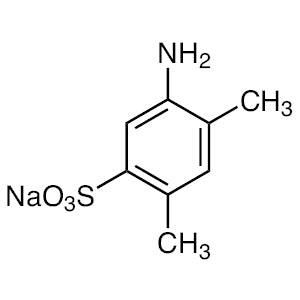
- TCI X0030 64501-84-4 2,4-Dimethylaniline-5-sulfonic Acid Sodium Salt
- TCI A0328 88-44-8 p-Toluidine-2-sulfonic Acid
- TCI A0329 133-78-8 m-Toluidine-4-sulfonic Acid
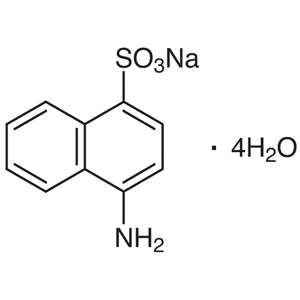
- TCI A0353 130-13-2 Sodium 4-Amino-1-naphthalenesulfonate Tetrahydrate
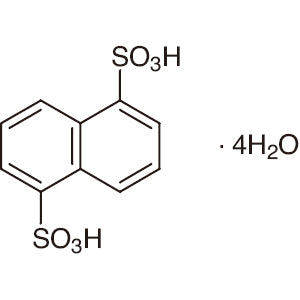
- TCI N0763 211366-30-2 1,5-Naphthalenedisulfonic Acid Tetrahydrate
- Organic synthesis applications benefit from its reactivity and solubility, enabling efficient reaction conditions in aqueous environments.
- Catalytic processes often utilize this compound due to its stability and ability to participate in substitution reactions without degrading.
- Industrial chemical manufacturing leverages its role as a building block for the production of aromatic compounds and derivatives.
- Analytical chemistry uses it as a reference material for testing and characterizing other chemical compounds.
- Educational laboratories incorporate it for teaching fundamental chemical reactions and synthesis techniques.
| Brand | TCI |
|---|---|
| CAS number | 63450-43-1 |
| Molecular formula | — |
| Purity | — |
| Category | Chemistry > Building Blocks > Non-Heterocyclic Building Blocks |
| Pack sizes | Available in standard laboratory quantities |
| Physical form | Crystalline solid |
| Storage | Store in a cool, dry place away from moisture and direct sunlight |
This compound should be stored in a cool, dry environment to maintain its chemical stability. It is recommended to keep it in airtight containers to prevent moisture absorption, which could affect its solubility and reactivity. Due to its water solubility, it should be handled in a well-ventilated area to avoid any potential exposure. Laboratory personnel should wear appropriate personal protective equipment, such as gloves and safety goggles, when handling this material. It is important to ensure that it is stored separately from incompatible substances to prevent any unwanted chemical interactions. Proper storage and handling practices help maintain the integrity and effectiveness of the compound in laboratory applications.
—
Produk Terkait
-
5-Amino-2-chlorotoluene-4-sulfonicAcid TCI A0287
Regular price From Rp 637.350,00Regular priceRp 445.200,00Sale price From Rp 637.350,00 -
2,4-Dimethylaniline-5-sulfonicAcidSodiumSalt TCI X0030
Regular price Rp 4.268.250,00Regular priceRp 2.984.100,00Sale price Rp 4.268.250,00 -
p-Toluidine-2-sulfonicAcid TCI A0328
Regular price From Rp 477.750,00Regular priceRp 333.900,00Sale price From Rp 477.750,00 -
m-Toluidine-4-sulfonicAcid TCI A0329
Regular price Rp 1.431.150,00Regular priceRp 1.000.650,00Sale price Rp 1.431.150,00 -
Sodium4-Amino-1-naphthalenesulfonateTetrahydrate TCI A0353
Regular price From Rp 769.650,00Regular priceRp 537.600,00Sale price From Rp 769.650,00 -
1,5-NaphthalenedisulfonicAcidTetrahydrate TCI N0763
Regular price From Rp 637.350,00Regular priceRp 445.200,00Sale price From Rp 637.350,00 -
1-Amino-4-bromoanthraquinone-2-sulfonicAcidSodiumSalt TCI A0279
Regular price From Rp 822.150,00Regular priceRp 590.100,00Sale price From Rp 822.150,00 -
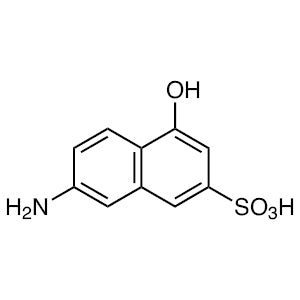
6-Amino-1-naphthol-3-sulfonicAcid TCI A0370
Regular price From Rp 505.050,00Regular priceRp 352.800,00Sale price From Rp 505.050,00