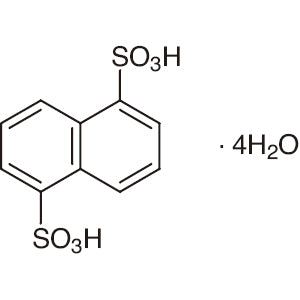
1,5-Naphthalenedisulfonic Acid Tetrahydrate from TCI is an aromatic sulfonic acid with two sulfonic acid groups at positions 1 and 5 of the naphthalene ring. It is supplied as a hydrate containing four molecules of water of crystallization, and it is also known as Armstrong's acid. In the laboratory it serves as a non-heterocyclic building block, a strong organic acid, and an intermediate in the synthesis of dyes and naphthalene derivatives. In pharmaceutical chemistry, the 1,5-naphthalenedisulfonate anion is a known counterion for forming napadisylate salts of basic compounds.
Chemists choose this material for its high acidity and symmetrical structure. The two sulfonic acid groups make it highly soluble in water and let it protonate organic bases effectively. The salts it forms often crystallize well, which makes the compound useful for studying salt formation and polymorphism. The rigid naphthalene framework gives a clearly defined structure. The sulfonic acid groups can be converted into sulfonyl chlorides, sulfonamides, or other functional groups, so the compound works as a versatile starting point for further synthesis in research and development work.
In Indonesia, this material suits organic chemistry laboratories at universities and research institutions that work on aromatic synthesis and naphthalene derivative chemistry. Pharmaceutical research and development teams can use it for salt screening of basic active compounds, where napadisylate salts may be compared with other salt forms. Laboratories that study dyes and colorant intermediates may also use it as a starting material. Its dependable TCI origin supports reproducible results in academic teaching, thesis research, and industrial method development.
Related TCI products
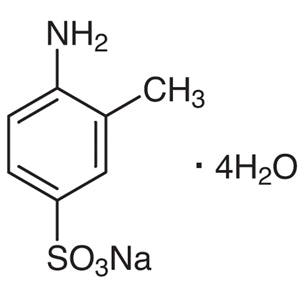
- TCI T0304 63450-43-1 o-Toluidine-4-sulfonic Acid Sodium Salt Tetrahydrate
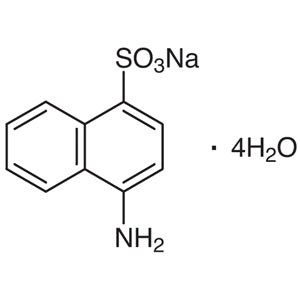
- TCI A0353 130-13-2 Sodium 4-Amino-1-naphthalenesulfonate Tetrahydrate
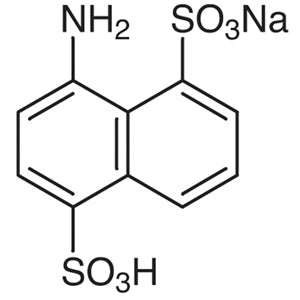
- TCI A0342 85328-80-9 Sodium 4-Amino-1,5-naphthalenedisulfonate
- TCI N0441 1655-29-4 Disodium 1,5-Naphthalenedisulfonate
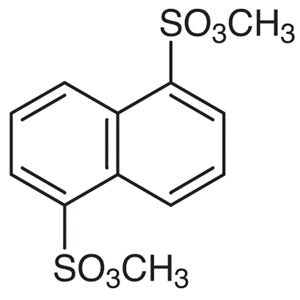
- TCI N0439 20779-13-9 Dimethyl 1,5-Naphthalenedisulfonate
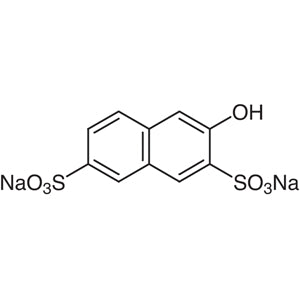
- TCI N0029 135-51-3 Disodium 3-Hydroxy-2,7-naphthalenedisulfonate
- Pharmaceutical salt formation: the 1,5-naphthalenedisulfonate anion is a known counterion for napadisylate salts, so the compound suits salt screening of basic drug candidates.
- Polymorphism and crystallization studies: salts made with this acid often crystallize well, which makes them useful for studying crystal forms, solid-state behavior, and polymorph screening.
- Dye intermediate synthesis: as a sulfonated naphthalene, the compound is an established intermediate for making dyes and related colorants in synthetic organic chemistry laboratories.
- Preparation of sulfonyl derivatives: the two sulfonic acid groups can be converted into sulfonyl chlorides and sulfonamides, giving symmetrical difunctional naphthalene building blocks for further synthesis.
- Strong organic acid reagent: its high acidity and good water solubility let it protonate organic bases effectively, which is useful in acid-base studies and in isolating basic compounds.
| Brand | TCI (product code N0763) |
|---|---|
| CAS number | 211366-30-2 |
| Molecular formula | — |
| Purity | — |
| Category | Chemistry > Building Blocks > Non-Heterocyclic Building Blocks |
| Pack sizes | see the product page for available pack sizes |
| Physical form | tetrahydrate (contains four molecules of water of crystallization) |
| Storage | keep tightly closed in a cool, dry place and follow the TCI label and Safety Data Sheet |
Store 1,5-Naphthalenedisulfonic Acid Tetrahydrate in its original tightly closed container in a cool, dry, well-ventilated area, away from strong bases and oxidizing agents. Because it is a hydrate, keep the container sealed so the water content stays stable. If you move the material to another container, use a chemically resistant one such as glass or a suitable plastic. This compound is a strong acid, so wear gloves, safety glasses, and a lab coat, and avoid breathing in dust or getting it on your skin or in your eyes. Handle it in a fume hood or a well-ventilated area. Always check the TCI Safety Data Sheet for detailed hazard, first-aid, and disposal information before use.
—
Produk Terkait
-
o-Toluidine-4-sulfonicAcidSodiumSaltTetrahydrate TCI T0304
Regular price From Rp 505.050,00Regular price -
Sodium4-Amino-1-naphthalenesulfonateTetrahydrate TCI A0353
Regular price From Rp 769.650,00Regular price -
Sodium4-Amino-1,5-naphthalenedisulfonate TCI A0342
Regular price Rp 1.298.850,00Regular price -
Disodium1,5-Naphthalenedisulfonate TCI N0441
Regular price From Rp 505.050,00Regular price -
Dimethyl1,5-Naphthalenedisulfonate TCI N0439
Regular price Rp 3.683.400,00Regular price -
Disodium3-Hydroxy-2,7-naphthalenedisulfonate TCI N0029
Regular price From Rp 1.510.950,00Regular price -
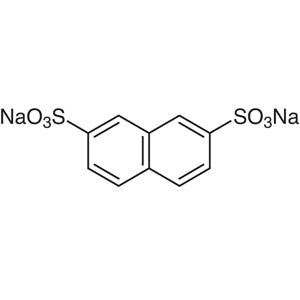
Disodium2,7-Naphthalenedisulfonate TCI N0014
Regular price Rp 2.094.750,00Regular price -
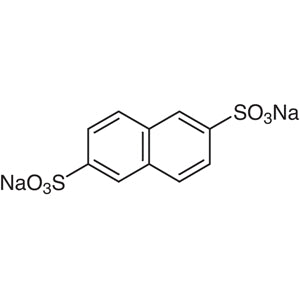
Disodium2,6-Naphthalenedisulfonate TCI N0013
Regular price Rp 1.035.300,00Regular price