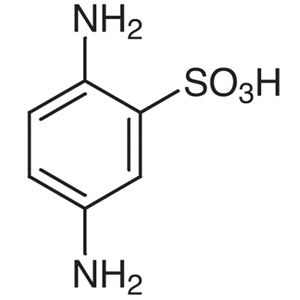
m-Toluidine-4-sulfonic Acid is a chemical compound widely used in laboratory settings for the synthesis of complex organic molecules and industrial chemicals. As a non-heterocyclic building block, it plays a crucial role in organic chemistry by serving as a versatile intermediate in various synthetic pathways. This compound is essential for researchers aiming to develop new materials, pharmaceuticals, or specialty chemicals. Its unique molecular structure, featuring a sulfonic acid group, contributes to its reactivity and polarity, making it a valuable tool in chemical synthesis.
The compound’s high polarity and reactivity make it a preferred choice for chemical reactions requiring solubility and rapid reaction kinetics. It is easily soluble in organic solvents such as ethyl acetate and ethanol, which facilitates its use in a wide range of laboratory procedures. The presence of the sulfonic acid group enhances its ability to participate in nucleophilic and electrophilic reactions, allowing it to be integrated into diverse synthetic strategies. Its stability under controlled conditions ensures consistent performance in both research and industrial applications.
In Indonesian laboratories, m-Toluidine-4-sulfonic Acid is commonly used in organic chemistry research, industrial chemical production, and the development of new products. Its availability in solid form and practical packaging makes it convenient for use in academic and industrial settings. Researchers and professionals rely on its predictable behavior and compatibility with various reagents, making it an essential component in chemical laboratories across Indonesia.
Related TCI products
- TCI A0328 88-44-8 p-Toluidine-2-sulfonic Acid
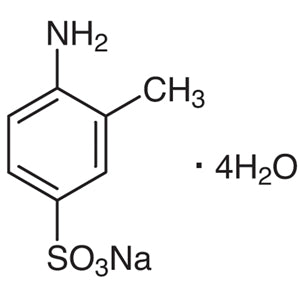
- TCI T0304 63450-43-1 o-Toluidine-4-sulfonic Acid Sodium Salt Tetrahydrate
- TCI A0279 6258-06-6 1-Amino-4-bromoanthraquinone-2-sulfonic Acid Sodium Salt
- TCI A0287 88-53-9 5-Amino-2-chlorotoluene-4-sulfonic Acid
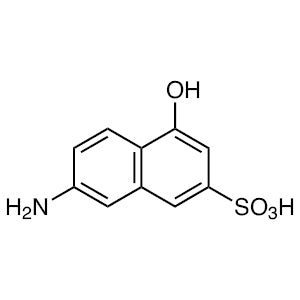
- TCI A0370 87-02-5 6-Amino-1-naphthol-3-sulfonic Acid
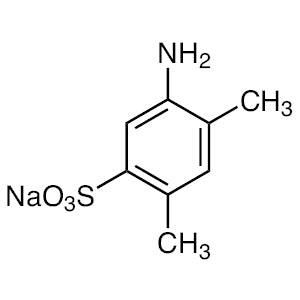
- TCI X0030 64501-84-4 2,4-Dimethylaniline-5-sulfonic Acid Sodium Salt
- Organic synthesis of complex compounds due to its reactivity and solubility in organic solvents.
- Industrial chemical production as a building block for the creation of specialty chemicals.
- Development of new products in research and development laboratories for material innovation.
- Catalytic processes where its polar and reactive nature enhances reaction efficiency.
- Analytical chemistry applications for its compatibility with various chemical reagents and solvents.
| Brand | TCI |
|---|---|
| CAS number | 133-78-8 |
| Molecular formula | — |
| Purity | — |
| Category | Chemistry > Building Blocks > Non-Heterocyclic Building Blocks |
| Pack sizes | Available in various quantities as per standard laboratory supply |
| Physical form | Solid |
| Storage | Store in a cool, dry place away from moisture and direct sunlight |
m-Toluidine-4-sulfonic Acid should be stored in a cool, dry environment to maintain its chemical stability. It is recommended to keep it in airtight containers to prevent moisture absorption, which could affect its reactivity. Due to its polar and reactive nature, it should be handled in a well-ventilated area to minimize exposure. Proper personal protective equipment, such as gloves and safety goggles, should be worn when handling the compound. It is important to avoid direct contact with skin and eyes, and to ensure that it is stored separately from incompatible substances to prevent any potential chemical reactions. Regular monitoring of storage conditions ensures the compound remains suitable for use in laboratory applications.
—
Produk Terkait
-
p-Toluidine-2-sulfonicAcid TCI A0328
Regular price From Rp 477.750,00Regular priceRp 333.900,00Sale price From Rp 477.750,00 -
o-Toluidine-4-sulfonicAcidSodiumSaltTetrahydrate TCI T0304
Regular price From Rp 505.050,00Regular priceRp 352.800,00Sale price From Rp 505.050,00 -
1-Amino-4-bromoanthraquinone-2-sulfonicAcidSodiumSalt TCI A0279
Regular price From Rp 822.150,00Regular priceRp 590.100,00Sale price From Rp 822.150,00 -
5-Amino-2-chlorotoluene-4-sulfonicAcid TCI A0287
Regular price From Rp 637.350,00Regular priceRp 445.200,00Sale price From Rp 637.350,00 -
6-Amino-1-naphthol-3-sulfonicAcid TCI A0370
Regular price From Rp 505.050,00Regular priceRp 352.800,00Sale price From Rp 505.050,00 -
2,4-Dimethylaniline-5-sulfonicAcidSodiumSalt TCI X0030
Regular price Rp 4.268.250,00Regular priceRp 2.984.100,00Sale price Rp 4.268.250,00 -
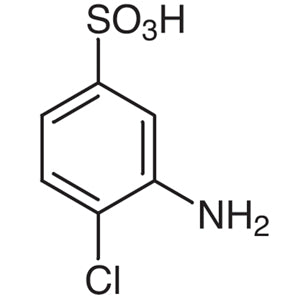
2-Chloroaniline-5-sulfonicAcid TCI A2196
Regular price Rp 1.961.400,00Regular priceRp 1.371.300,00Sale price Rp 1.961.400,00 -
1,4-Phenylenediamine-2-sulfonicAcid TCI P1691
Regular price From Rp 769.650,00Regular priceRp 537.600,00Sale price From Rp 769.650,00