2,2'-Benzidinedisulfonic Acid is a chemical compound widely used in scientific and industrial applications. It plays a crucial role in laboratory settings, particularly in polymer and macromolecule research. This reagent is commonly employed in chemical reactions involving polymer synthesis, qualitative analysis, and material processing. Its versatility makes it an essential component in various experimental procedures, especially those requiring precise pH control. In laboratory environments, it functions as a reagent or auxiliary material in the synthesis of complex compounds or in reactions that demand specific chemical conditions.
One of the key properties that make 2,2'-Benzidinedisulfonic Acid a preferred choice is its ability to react with both organic and inorganic compounds. Its chemical stability under controlled conditions ensures consistent performance in experiments. Additionally, its role as a pH regulator is vital in maintaining the desired chemical environment for reactions. The compound's controlled concentration and solid form make it ideal for use in high-quality laboratory applications. Its reliability and effectiveness contribute to its popularity among researchers and scientists.
In Indonesian laboratories, 2,2'-Benzidinedisulfonic Acid is frequently used in chemical research, material development, and analytical studies. Its ability to support complex reactions and maintain specific pH levels makes it a valuable tool for scientists working on polymer synthesis and other chemical processes. The compound's availability in a controlled form ensures that it meets the high standards required for laboratory use. Its consistent performance and reliability make it a trusted choice for researchers in Indonesia.
TCI brochures (PDF)
- Raw Materials for Polyimide Synthesis 2026-05-11 · p. 4
- Monomers 2025-05-28 · p. 29
Related TCI products
- TCI T1419 55011-44-4 3,7-Diamino-2,8-dimethyldibenzothiophene Sulfone (contains 2,6-Dimethyl isomer)
- TCI D0754 13138-48-2 3,3'-Dimethylnaphthidine [for Colorimetric Determination of Cl in Water]
- TCI T1023 54827-17-7 3,3',5,5'-Tetramethylbenzidine
- TCI U0141 2055540-61-7 UltraCat (contains 5% Nitromethane at maximum)
- TCI T3239 368-53-6 5-Trifluoromethyl-1,3-phenylenediamine
- TCI T3098 84-67-3 m-Tolidine
- Polymer synthesis and macromolecule research due to its reactivity and pH-regulating properties.
- Qualitative analysis in chemical testing for its ability to interact with various compounds.
- Material processing applications where precise chemical conditions are required.
- pH control in experimental setups that demand stable and predictable chemical environments.
- Chemical reaction support in the synthesis of complex organic and inorganic compounds.
| Brand | TCI |
|---|---|
| CAS number | 117-61-3 |
| Molecular formula | — |
| Purity | — |
| Category | Materials Science > Polymer/Macromolecule Reagents > Monomers |
| Pack sizes | As available from supplier |
| Physical form | Solid |
| Storage | Store in a cool, dry place away from direct sunlight |
This material should be stored in a cool, dry place, away from direct sunlight and sources of heat. It is recommended to use airtight containers to prevent moisture absorption, as it contains up to 20% water. Proper labeling of containers is essential to ensure safe handling. Due to its chemical nature, it should be handled with appropriate personal protective equipment, such as gloves and safety goggles. Avoid exposure to incompatible substances and ensure good ventilation in the work area. Regular monitoring of storage conditions helps maintain the integrity and effectiveness of the compound in laboratory applications.
—
Produk Terkait
-
3,7-Diamino-2,8-dimethyldibenzothiopheneSulfone(contains2,6-Dimethylisomer) TCI T1419
Regular price Rp 5.326.650,00Regular priceRp 3.740.100,00Sale price Rp 5.326.650,00 -
3,3'-Dimethylnaphthidine[forColorimetricDeterminationofClinWater] TCI D0754
Regular price From Rp 6.651.750,00Regular priceRp 4.667.250,00Sale price From Rp 6.651.750,00 -
3,3',5,5'-Tetramethylbenzidine TCI T1023
Regular price From Rp 1.351.350,00Regular priceRp 960.750,00Sale price From Rp 1.351.350,00 -
UltraCat(contains5%Nitromethaneatmaximum) TCI U0141
Regular price Rp 3.683.400,00Regular priceRp 2.591.400,00Sale price Rp 3.683.400,00 -
5-Trifluoromethyl-1,3-phenylenediamine TCI T3239
Regular price Rp 1.326.150,00Regular priceRp 942.900,00Sale price Rp 1.326.150,00 -
m-Tolidine TCI T3098
Regular price Rp 2.439.150,00Regular priceRp 1.720.950,00Sale price Rp 2.439.150,00 -
2-(Trifluoromethyl)-1,4-phenylenediamine TCI T2969
Regular price Rp 1.829.100,00Regular priceRp 1.278.900,00Sale price Rp 1.829.100,00 -
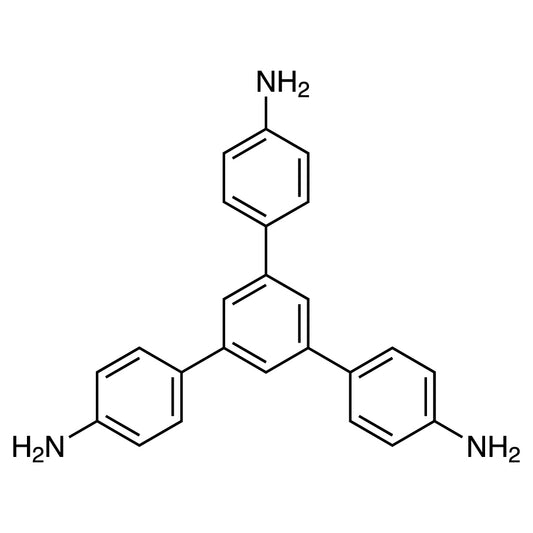
1,3,5-Tris(4-aminophenyl)benzene TCI T2728
Regular price From Rp 6.465.900,00Regular priceRp 4.537.050,00Sale price From Rp 6.465.900,00