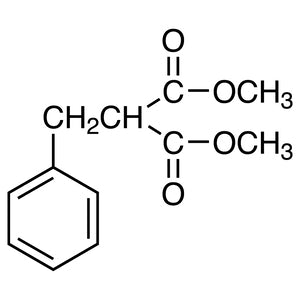
Diethyl Benzylmalonate is a chemical compound widely used as a building block in the synthesis of complex organic compounds. It plays a crucial role in various laboratory processes, particularly in the formation of heterocyclic structures and compounds containing carbonyl groups. Its versatility makes it an essential reagent for chemists and researchers working on diverse synthetic pathways. This compound is commonly employed in reactions such as alkylation, Diels-Alder reactions, and substitution reactions due to its ability to participate in multiple chemical transformations.
The unique properties of Diethyl Benzylmalonate make it a preferred choice for laboratory applications. It is a colorless liquid with a mild, non-offensive odor, ensuring it is safe to handle in controlled environments. Its molecular structure features two ethyl groups attached to the same carbon atom, contributing to its reactivity and stability. This compound maintains its integrity during chemical reactions, making it ideal for experiments requiring consistent performance. Its chemical stability and reactivity allow it to be used in a wide range of synthetic processes without significant degradation.
In Indonesian laboratories, Diethyl Benzylmalonate is frequently used in research and development projects focused on organic synthesis. It is particularly valuable in academic and industrial settings where the synthesis of complex molecules is required. Its availability and reliability make it a go-to reagent for scientists and students alike. The compound’s consistent performance and compatibility with various reaction conditions ensure its continued use in both teaching and research laboratories.
- Organic synthesis is a primary application where Diethyl Benzylmalonate is used for its ability to participate in multiple reaction types, including alkylation and substitution.
- Heterocyclic compound formation benefits from its structural properties, allowing it to contribute to the creation of complex ring structures.
- Diels-Alder reactions are enhanced by its reactivity, making it a key reagent in the formation of conjugated dienes and dienophiles.
- Alkylation processes rely on its stability and reactivity, enabling the introduction of alkyl groups into molecular frameworks.
- Research and development in pharmaceutical and chemical industries utilize it for the synthesis of novel compounds with potential industrial applications.
| Brand | TCI |
|---|---|
| CAS number | 607-81-8 |
| Molecular formula | — |
| Purity | — |
| Category | Chemistry > Building Blocks > Non-Heterocyclic Building Blocks |
| Pack sizes | Available in various sizes as per supplier specifications |
| Physical form | Colorless liquid |
| Storage | Store in a cool, dry place away from direct sunlight |
Diethyl Benzylmalonate should be stored in a cool, dry place, away from direct sunlight and sources of heat. It is recommended to use airtight containers made of glass or high-density polyethylene to prevent contamination and evaporation. Since it is a liquid, it should be kept in properly sealed containers to avoid spills and exposure to air. In laboratory settings, it is important to handle the compound with care, using appropriate personal protective equipment such as gloves and safety goggles. Proper ventilation should be maintained when working with this compound to ensure a safe working environment. Its chemical stability allows for long-term storage, provided it is kept in optimal conditions.
—
Produk Terkait
-
DimethylBenzylmalonate TCI D3432
Regular price From Rp 1.829.100,00Regular priceRp 1.278.900,00Sale price From Rp 1.829.100,00 -
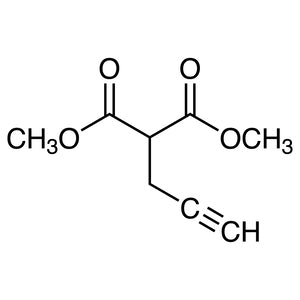
Dimethyl2-Propyn-1-ylmalonate TCI D6072
Regular price From Rp 1.167.600,00Regular priceRp 831.600,00Sale price From Rp 1.167.600,00 -
BenzylmalonicAcid TCI B0422
Regular price From Rp 1.298.850,00Regular priceRp 908.250,00Sale price From Rp 1.298.850,00 -
DiethylAllylmalonate TCI A0231
Regular price From Rp 2.121.000,00Regular priceRp 1.498.350,00Sale price From Rp 2.121.000,00 -
DiethylAcetylenedicarboxylate TCI A0089
Regular price From Rp 2.889.600,00Regular priceRp 2.035.950,00Sale price From Rp 2.889.600,00 -
Diethyl1,3-Acetonedicarboxylate TCI A0055
Regular price From Rp 1.192.800,00Regular priceRp 849.450,00Sale price From Rp 1.192.800,00 -
TerephthalaldehydeMono(diethylAcetal) TCI T1401
Regular price Rp 3.578.400,00Regular priceRp 2.502.150,00Sale price Rp 3.578.400,00 -
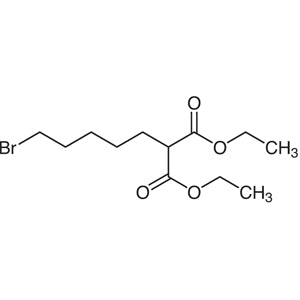
Diethyl(5-Bromopentyl)malonate TCI B2083
Regular price From Rp 2.306.850,00Regular priceRp 1.628.550,00Sale price From Rp 2.306.850,00