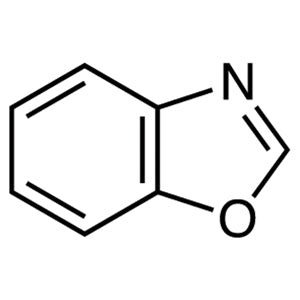
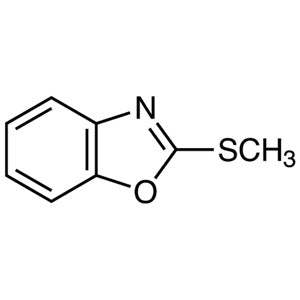
2-Benzoxazolinone is a chemical compound widely used as a foundational building block in the synthesis of heterocyclic compounds. It plays a crucial role in laboratory settings where researchers aim to create complex molecular structures. This compound is particularly valued for its ability to participate in various chemical reactions, making it an essential tool in organic chemistry and pharmaceutical research. Its unique molecular structure contributes to its versatility in chemical transformations, allowing it to be a key component in the development of bioactive molecules and industrial chemicals.
The compound’s stability and controlled reactivity make it a preferred choice for scientists working in diverse fields. Its ability to undergo nucleophilic and electrophilic reactions enhances its utility in synthetic pathways. Additionally, its molecular structure featuring an oxazoline ring provides a degree of stability that simplifies the synthesis process. These properties enable researchers to achieve consistent results, which is vital in both academic and industrial laboratories.
In Indonesian laboratories, 2-Benzoxazolinone is commonly used in the development of bioactive compounds and pharmaceuticals. Its solubility in organic solvents facilitates efficient separation and isolation techniques. This makes it particularly suitable for applications requiring precise chemical manipulation and controlled reaction conditions. Its reliability and effectiveness have made it a staple in the chemical research environment across Indonesia.
- Organic synthesis applications benefit from 2-Benzoxazolinone due to its ability to participate in diverse chemical reactions, enabling the creation of complex heterocyclic structures.
- Pharmaceutical research utilizes this compound as a building block for developing bioactive molecules, contributing to drug discovery and development processes.
- Industrial chemical production relies on 2-Benzoxazolinone for the synthesis of various compounds with specific functional properties and applications.
- Analytical chemistry experiments often incorporate this compound to study reaction mechanisms and molecular behavior under controlled conditions.
- Educational laboratories use 2-Benzoxazolinone to teach students about heterocyclic chemistry and synthetic methodologies in a practical setting.
| Brand | TCI |
|---|---|
| CAS number | 59-49-4 |
| Molecular formula | — |
| Purity | — |
| Category | Chemistry > Building Blocks > Heterocyclic Building Blocks |
| Pack sizes | As available from supplier |
| Physical form | Solid |
| Storage | Store in a cool, dry place away from light |
2-Benzoxazolinone should be stored in a cool, dry environment, away from direct sunlight and sources of heat. It is recommended to keep it in a sealed container to prevent moisture absorption and maintain its chemical integrity. The compound is generally stable under normal laboratory conditions but should be handled with care to avoid exposure to incompatible substances. Proper ventilation is advised when working with this material to ensure a safe laboratory environment. Always use appropriate personal protective equipment, such as gloves and safety goggles, when handling or manipulating the compound. Regular monitoring of storage conditions ensures the compound remains suitable for use in chemical reactions and research applications.
—
Produk Terkait
-
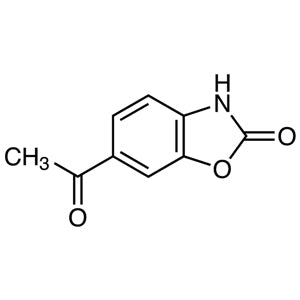
6-Acetyl-2-benzoxazolinone TCI A2907
Regular price From Rp 1.272.600,00Regular priceRp 905.100,00Sale price From Rp 1.272.600,00 -
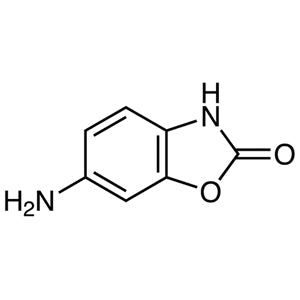
6-Amino-2-benzoxazolinone TCI A2874
Regular price Rp 2.757.300,00Regular priceRp 1.943.550,00Sale price Rp 2.757.300,00 -
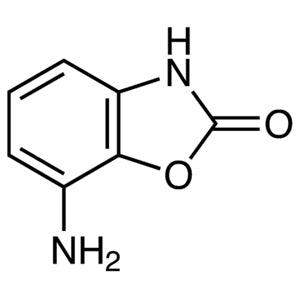
7-Amino-2-benzoxazolinone TCI A2806
Regular price From Rp 1.246.350,00Regular priceRp 887.250,00Sale price From Rp 1.246.350,00 -
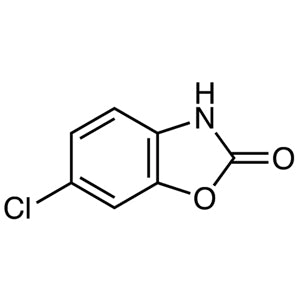
6-Chloro-2-benzoxazolinone TCI C2378
Regular price Rp 1.351.350,00Regular priceRp 960.750,00Sale price Rp 1.351.350,00 -
Benzoxazole TCI B0095
Regular price Rp 1.881.600,00Regular priceRp 1.331.400,00Sale price Rp 1.881.600,00 -
2-(2-Pyridyl)benzoxazole TCI P2098
Regular price Rp 1.483.650,00Regular priceRp 1.053.150,00Sale price Rp 1.483.650,00 -
6-Methyl-1,3-benzoxazole-2(3H)-thione TCI M3063
Regular price From Rp 1.908.900,00Regular priceRp 1.350.300,00Sale price From Rp 1.908.900,00 -
2-(Methylthio)benzoxazole TCI M2454
Regular price From Rp 1.483.650,00Regular priceRp 1.053.150,00Sale price From Rp 1.483.650,00