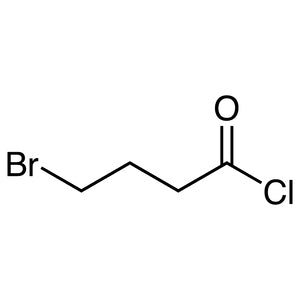
TCI B0560 1-Bromobutane, also known as n-butyl bromide, is a primary alkyl halide with a four-carbon chain and a bromine atom at the end of the chain. It is one of the most common alkylating reagents in organic synthesis. Its main job is to attach a butyl group to nitrogen, oxygen, sulfur or carbon atoms. In the catalog it is listed with the synthetic reagents for forming bonds between carbon and non-halogen heteroatoms. That listing reflects its everyday use for building C–N, C–O and C–S bonds in the laboratory.
Chemists choose 1-bromobutane because it is reactive enough to be useful and still easy to handle. As a primary halide it has little steric hindrance, so it works very well in SN2 nucleophilic substitution reactions. Bromide is also a good leaving group. It reacts faster than the corresponding chloride and, for many purposes, costs less than the iodide. Beyond alkylation, the compound is easy to convert into the Grignard reagent butylmagnesium bromide, which is used to form new carbon–carbon bonds. Because it is a liquid, it can be measured accurately with a pipette or syringe.
In Indonesia, 1-bromobutane is widely used in university organic chemistry laboratories, where students run practical sessions on nucleophilic substitution and Grignard reactions. These experiments show how reaction mechanism, substrate structure and leaving-group ability affect the result. Research groups also use it as a dependable building block whenever they need to add a butyl chain to a target molecule. It is a standard reagent for teaching and for preparative synthesis.
TCI brochures (PDF)
- Alkylation Reagents for Ester Synthesis 2026-04-06 · p. 4
- Building Blocks for Organic Semiconductor 2026-03-24 · p. 40
- N-alkylation of amines: The unhindered primary carbon reacts cleanly with nitrogen nucleophiles, so it is a practical way to add butyl groups and build C–N bonds.
- O-alkylation to prepare butyl ethers: Alkoxides and phenoxides attack 1-bromobutane efficiently by the SN2 pathway, which makes it well suited to Williamson-type ether synthesis that forms C–O bonds.
- S-alkylation of thiols and thiolates: Sulfur nucleophiles react readily with this primary bromide, so it gives a straightforward route to butyl sulfides and new C–S bonds.
- Preparation of butylmagnesium bromide: Its bromine atom lets it react with magnesium to form a Grignard reagent, which is then used to make new carbon–carbon bonds with carbonyl compounds.
- Teaching experiments on substitution and Grignard chemistry: Its clear SN2 behavior and easy liquid handling make it a good choice for undergraduate practicals that demonstrate reaction mechanisms and organometallic synthesis.
| Brand | TCI (product code B0560) |
|---|---|
| CAS number | 109-65-9 |
| Molecular formula | — |
| Purity | — |
| Category | Chemistry > Synthetic Reagents > C-X(Non-Halogen) Bond Formation [Synthetic Reagents] |
| Pack sizes | Please refer to the available options on the product listing |
| Physical form | Liquid |
| Storage | Keep in a tightly closed container in a cool, dry, well-ventilated place, following the supplier's label and Safety Data Sheet |
Store 1-bromobutane in its original, tightly sealed container. Keep it in a cool, dry and well-ventilated area away from heat, sparks, open flames and strong oxidizing agents. If you transfer it, use glass or other chemically compatible containers with secure closures. Because it is an alkylating agent, handle it inside a fume hood and wear chemical-resistant gloves, safety goggles and a laboratory coat. Avoid breathing its vapors and prevent contact with skin and eyes. Keep the container closed when you are not using it. Dispose of waste and contaminated materials as halogenated organic waste under your institution's rules. Always read the Safety Data Sheet before use.
—
Produk Terkait
-
1-Iodobutane(stabilizedwithCopperchip) TCI I0055
Regular price From Rp 557.550,00Regular priceRp 389.550,00Sale price From Rp 557.550,00 -
2-Bromobutane TCI B0561
Regular price From Rp 505.050,00Regular priceRp 352.800,00Sale price From Rp 505.050,00 -
meso-1,2,3,4-Tetrabromobutane TCI T0775
Regular price From Rp 1.298.850,00Regular priceRp 908.250,00Sale price From Rp 1.298.850,00 -
2,3-Dibromobutane TCI D0177
Regular price Rp 1.035.300,00Regular priceRp 723.450,00Sale price Rp 1.035.300,00 -
1,4-Dibromobutane TCI D0176
Regular price From Rp 477.750,00Regular priceRp 333.900,00Sale price From Rp 477.750,00 -
1,3-Dibromobutane TCI D0175
Regular price Rp 1.008.000,00Regular priceRp 704.550,00Sale price Rp 1.008.000,00 -
1,2-Dibromobutane TCI D0174
Regular price Rp 1.035.300,00Regular priceRp 723.450,00Sale price Rp 1.035.300,00 -
4-BromobutanoylChloride TCI B3964
Regular price From Rp 1.246.350,00Regular priceRp 887.250,00Sale price From Rp 1.246.350,00