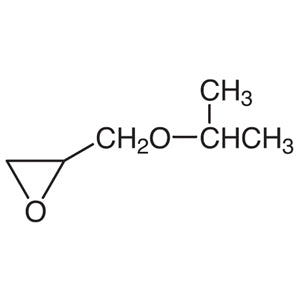
Butyl Glycidyl Ether (BGE) is a chemical compound widely used in various chemical reactions, particularly in the synthesis of heterocyclic compounds. As a building block in organic chemistry, it plays a crucial role in laboratories focused on creating complex molecular structures. Its unique molecular structure enables versatile chemical reactions, such as epoxide ring-opening and substitution reactions, making it an essential component in synthetic pathways. BGE is commonly found in research laboratories where the development of new compounds is a priority, especially in fields like pharmaceuticals, materials science, and chemical industries.
The chemical properties of BGE make it a preferred choice for synthetic chemists. It exhibits good solubility in organic solvents, which facilitates mixing and reaction processes. Its epoxide group allows it to participate in nucleophilic reactions and substitution reactions, enhancing its utility in the synthesis of heterocyclic compounds. Additionally, BGE is chemically stable under certain conditions, though it remains reactive towards acids and bases. These characteristics make it a reliable and effective reagent in laboratory settings.
In Indonesian laboratories, BGE is frequently used in both pure and applied chemical research. Its role in the synthesis of complex molecules is well recognized, and it is a standard material in chemical research facilities. Due to its reactivity and versatility, BGE is a key reagent in the development of new compounds with potential applications in various industries.
TCI brochures (PDF)
- Epoxide Monomers 2025-09-19 · p. 1
- Monomers 2025-05-28 · p. 20
- Heterocyclic Compound Synthesis: BGE is ideal for creating complex ring structures due to its epoxide functionality, enabling nucleophilic attacks and substitution reactions.
- Pharmaceutical Research: Its reactivity and solubility make it suitable for drug development, where it can be used to modify molecular structures for improved pharmacological properties.
- Material Science Applications: BGE is used in the development of new materials, particularly in polymer chemistry, where its reactivity allows for cross-linking and functional group introduction.
- Organic Synthesis Workflows: Its versatility in various reaction types makes it a valuable reagent in multi-step synthetic processes.
- Industrial Chemical Production: BGE is used in the manufacturing of specialty chemicals, where its chemical stability and reactivity support efficient production methods.
| Brand | TCI |
|---|---|
| CAS number | 2426-08-6 |
| Molecular formula | — |
| Purity | — |
| Category | Chemistry > Building Blocks > Heterocyclic Building Blocks |
| Pack sizes | Available in various quantities as per standard laboratory supply |
| Physical form | Liquid |
| Storage | Store in a cool, dry place away from direct sunlight and incompatible materials |
Butyl Glycidyl Ether should be stored in a cool, dry environment, away from direct sunlight and sources of heat. It is recommended to use sealed containers made of materials compatible with organic solvents, such as glass or high-density polyethylene. Due to its reactivity with acids and bases, it should be kept separate from such substances. In laboratory settings, proper ventilation is essential to minimize exposure. Always handle with care, using appropriate personal protective equipment. Regular monitoring of storage conditions ensures the stability and effectiveness of the compound in research applications.
—
Produk Terkait
-
AllylGlycidylEther TCI A0221
Regular price From Rp 477.750,00Regular priceRp 333.900,00Sale price From Rp 477.750,00 -
4-tert-ButylphenylGlycidylEther TCI B4831
Regular price From Rp 2.279.550,00Regular priceRp 1.593.900,00Sale price From Rp 2.279.550,00 -
BenzylGlycidylEther TCI B2108
Regular price From Rp 1.510.950,00Regular priceRp 1.056.300,00Sale price From Rp 1.510.950,00 -
tert-ButylGlycidylEther TCI B1840
Regular price Rp 1.220.100,00Regular priceRp 852.600,00Sale price Rp 1.220.100,00 -
GlycidylLaurylEther TCI G0448
Regular price From Rp 1.298.850,00Regular priceRp 908.250,00Sale price From Rp 1.298.850,00 -
GlycidylPropargylEther TCI G0445
Regular price From Rp 980.700,00Regular priceRp 685.650,00Sale price From Rp 980.700,00 -
Glycidyl2-MethoxyphenylEther TCI G0416
Regular price From Rp 1.273.650,00Regular priceRp 890.400,00Sale price From Rp 1.273.650,00 -
GlycidylIsopropylEther TCI G0255
Regular price From Rp 1.115.100,00Regular priceRp 779.100,00Sale price From Rp 1.115.100,00