N-Butylbenzenesulfonamide is a chemical compound widely used as a building block in the synthesis of complex organic compounds. It plays a crucial role in laboratory settings by serving as a versatile intermediate in various chemical reactions, particularly in substitution and bond-forming processes. Its simple molecular structure provides a foundation for the development of more intricate chemical structures, making it an essential tool for chemists working in research and development. This compound is frequently utilized in the creation of pharmaceuticals, industrial chemicals, and materials science applications due to its adaptability and reactivity.
The chemical properties of N-Butylbenzenesulfonamide make it a preferred choice for laboratory use. It exhibits stability under normal conditions and offers controlled reactivity, which is vital for precise chemical synthesis. Its solubility in organic solvents enhances its usability in a wide range of reactions, allowing for efficient and reproducible results. Additionally, its resistance to degradation ensures that it maintains its integrity during extended storage and use, contributing to the reliability of experimental outcomes. These characteristics make it a reliable and efficient reagent in both academic and industrial research environments.
In Indonesian laboratories, N-Butylbenzenesulfonamide is commonly found in organic chemistry research, particularly in higher education institutions and research organizations. It is frequently used in the development of new chemical products, including pharmaceuticals and industrial materials. Its availability and reliability make it a go-to compound for researchers seeking to explore chemical synthesis and innovation in various scientific fields.
TCI brochures (PDF)
- Polymer Additives 2026-04-16 · p. 5
- Organic synthesis applications benefit from N-Butylbenzenesulfonamide due to its role as a versatile intermediate in the creation of complex organic molecules.
- Pharmaceutical research utilizes this compound for the development of new drug compounds, as it can be modified to produce various functional groups.
- Industrial chemical production relies on N-Butylbenzenesulfonamide for the synthesis of specialty chemicals and intermediates used in manufacturing processes.
- Materials science research incorporates this compound to develop new polymers and functional materials with tailored properties.
- Academic research in Indonesian universities frequently uses N-Butylbenzenesulfonamide to teach and explore fundamental chemical reactions and synthesis techniques.
| Brand | TCI |
|---|---|
| CAS number | 3622-84-2 |
| Molecular formula | — |
| Purity | — |
| Category | Chemistry > Building Blocks > Non-Heterocyclic Building Blocks |
| Pack sizes | Available in various quantities as per supplier specifications |
| Physical form | Solid, crystalline or amorphous depending on the batch |
| Storage | Store in a cool, dry place away from direct sunlight and moisture |
N-Butylbenzenesulfonamide should be stored in a cool, dry environment to maintain its chemical stability and prevent degradation. It is recommended to keep the compound in airtight containers to minimize exposure to moisture and air, which could affect its reactivity and purity. Laboratory personnel should handle the compound with care, using appropriate personal protective equipment such as gloves and safety goggles to ensure safety during handling. Proper labeling of storage containers is essential for easy identification and to prevent accidental use. Regular inspection of storage conditions and container integrity is advised to maintain the compound's quality and usability in research applications.
—
Produk Terkait
-
4-tert-Butylbenzenesulfonamide TCI B3837
Regular price Rp 1.087.800,00Regular priceRp 775.950,00Sale price Rp 1.087.800,00 -
4-tert-ButylbenzenesulfonylChloride TCI B1983
Regular price From Rp 769.650,00Regular priceRp 537.600,00Sale price From Rp 769.650,00 -
1,3,5-Tri-tert-butylbenzene TCI T1633
Regular price From Rp 1.378.650,00Regular priceRp 963.900,00Sale price From Rp 1.378.650,00 -
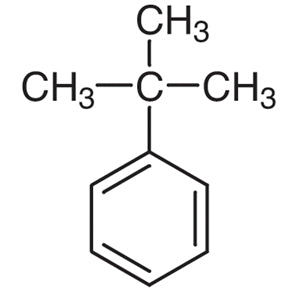
tert-Butylbenzene TCI B0715
Regular price From Rp 505.050,00Regular priceRp 352.800,00Sale price From Rp 505.050,00 -
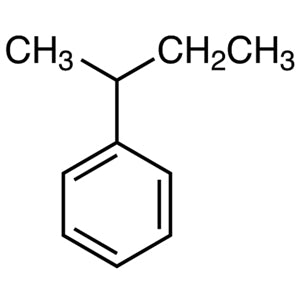
sec-Butylbenzene TCI B0714
Regular price From Rp 637.350,00Regular priceRp 445.200,00Sale price From Rp 637.350,00 -
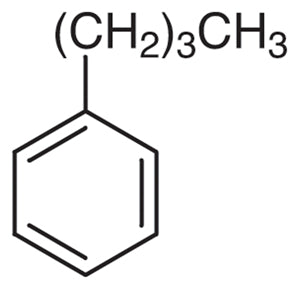
Butylbenzene TCI B0713
Regular price From Rp 875.700,00Regular priceRp 612.150,00Sale price From Rp 875.700,00 -
Isobutylbenzene TCI I0097
Regular price Rp 637.350,00Regular priceRp 445.200,00Sale price Rp 637.350,00 -
1,4-Dibutylbenzene TCI D2781
Regular price From Rp 3.683.400,00Regular priceRp 2.575.650,00Sale price From Rp 3.683.400,00