2-Tert-Butylanthraquinone is a chemical compound widely used in scientific and industrial applications. It belongs to the anthraquinone family, known for its unique chemical and physical properties. In the laboratory, this compound serves as a key building block for the synthesis of various organic compounds, particularly in the fields of organic chemistry and material science. Its role is critical in developing new materials and compounds with specific functional properties. Due to its structural complexity, it is a versatile reagent that can participate in multiple chemical reactions, making it an essential component in many research processes.
The compound is favored for its stability and controlled reactivity, which ensures consistent and accurate results in experimental settings. These properties make it a preferred choice for researchers who require reliable and reproducible outcomes. Additionally, its ability to react with a variety of reagents such as alcohols, acids, and bases enhances its utility in different synthetic pathways. The compound also exhibits resistance to certain environmental conditions, which simplifies its storage and long-term use. This combination of stability and reactivity makes it a valuable tool in both academic and industrial research environments.
In Indonesian laboratories, 2-Tert-Butylanthraquinone is commonly used in chemical synthesis and material development projects. Its solubility in organic solvents allows for easy integration into various reaction systems. The compound is particularly useful in applications that require precise control over chemical reactions, such as the production of dyes, pharmaceuticals, and specialty chemicals. Its availability and performance make it a standard material in the chemical research toolkit of Indonesian scientific institutions.
TCI brochures (PDF)
- Building Blocks for Organic Semiconductor 2026-03-24 · p. 9
- Organic synthesis applications benefit from 2-Tert-Butylanthraquinone's ability to participate in diverse chemical reactions, making it ideal for creating complex organic molecules.
- Material science research utilizes this compound as a building block for developing new semiconductor materials due to its structural versatility and chemical stability.
- Dye and pigment production relies on its unique chemical properties, which allow for the synthesis of colored compounds with specific optical characteristics.
- Pharmaceutical research uses it as a precursor in the synthesis of various bioactive compounds, contributing to drug development efforts.
- Environmental chemistry studies employ it to investigate the behavior of organic compounds under different environmental conditions, aiding in pollution control research.
| Brand | TCI |
|---|---|
| CAS number | 84-47-9 |
| Molecular formula | — |
| Purity | — |
| Category | Materials Science > Material Building Blocks > Small Molecule Semiconductor Building Blocks |
| Pack sizes | Available in various quantities as per supplier specifications |
| Physical form | Solid |
| Storage | Store in a cool, dry place away from direct sunlight and moisture |
2-Tert-Butylanthraquinone should be stored in a cool, dry environment to maintain its chemical integrity. It is recommended to keep the compound in airtight containers to prevent exposure to moisture and air, which could affect its stability. Due to its chemical nature, it is important to handle it with care, using appropriate personal protective equipment such as gloves and safety goggles. The compound should be stored away from incompatible materials like strong oxidizers or acids to avoid potential reactions. In a laboratory setting, it should be kept in a designated chemical storage area that complies with safety regulations to ensure the safety of all personnel and the integrity of the research environment.
—
Produk Terkait
-
Anthraquinone TCI A0502
Regular price From Rp 477.750,00Regular priceRp 333.900,00Sale price From Rp 477.750,00 -
2-Phenylanthraquinone TCI P2588
Regular price From Rp 928.200,00Regular priceRp 664.650,00Sale price From Rp 928.200,00 -
2-Methylanthraquinone TCI M0156
Regular price From Rp 1.087.800,00Regular priceRp 775.950,00Sale price From Rp 1.087.800,00 -
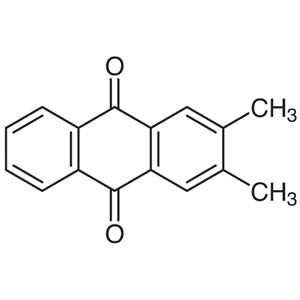
2,3-Dimethylanthraquinone TCI D2980
Regular price From Rp 1.749.300,00Regular priceRp 1.239.000,00Sale price From Rp 1.749.300,00 -
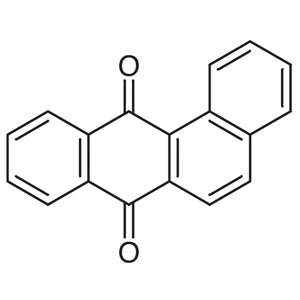
1,2-Benzanthraquinone TCI B0018
Regular price Rp 4.240.950,00Regular priceRp 2.980.950,00Sale price Rp 4.240.950,00 -
2-Bromoanthraquinone TCI B2689
Regular price From Rp 1.140.300,00Regular priceRp 812.700,00Sale price From Rp 1.140.300,00 -
1-Bromoanthraquinone TCI B2688
Regular price From Rp 4.001.550,00Regular priceRp 2.814.000,00Sale price From Rp 4.001.550,00 -
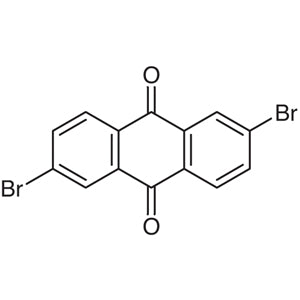
2,6-Dibromoanthraquinone TCI D3182
Regular price From Rp 2.702.700,00Regular priceRp 1.905.750,00Sale price From Rp 2.702.700,00