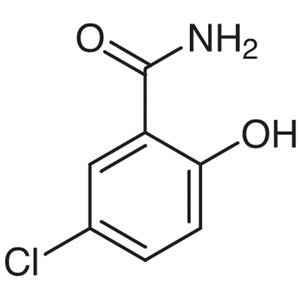
5-Bromo-4'-chlorosalicylanilide is a chemical compound widely used as a building block in the synthesis of complex organic molecules. Its versatility makes it a valuable resource in laboratory settings where researchers aim to create new compounds through various chemical reactions. This compound is commonly employed in substitution reactions and electrophilic substitution processes, enabling the development of a wide range of chemical structures. Due to its structural flexibility, it serves as a foundational element in the design of more complex molecules, supporting both academic and industrial research efforts.
The chemical properties of 5-Bromo-4'-chlorosalicylanilide contribute to its popularity in laboratory applications. Its molecular structure, containing both bromo and chloro groups, imparts unique reactivity that can be harnessed in diverse synthetic pathways. The compound exhibits stability under certain conditions, allowing for controlled chemical transformations. Its ability to interact with reagents such as alcohols, acids, and bases further enhances its utility in organic synthesis. These characteristics make it a preferred choice for chemists working on the development of new compounds with potential applications in pharmaceuticals and materials science.
In Indonesian laboratories, 5-Bromo-4'-chlorosalicylanilide is frequently used in chemical research, pharmaceutical development, and the creation of new materials. It is a common component in studies aimed at synthesizing complex organic compounds, particularly in pharmacological and industrial contexts. Researchers in universities and research institutions rely on this compound to explore its reactivity and potential applications in various scientific fields. Its role in advancing chemical innovation is well recognized in the Indonesian scientific community.
TCI brochures (PDF)
- Antimicrobials and Antitumor Agents for Research and Experimental Use 2025-04-24 · p. 9
- Pharmaceutical Ingredients for Research and Experimental Use 2026-03-09 · p. 9
- Organic synthesis of complex molecules due to its versatile functional groups and reactivity.
- Pharmaceutical research for the development of new drug compounds and therapeutic agents.
- Chemical modification of existing compounds through substitution and electrophilic reactions.
- Material science applications in the creation of functional polymers and specialty chemicals.
- Educational use in teaching organic chemistry and synthetic methodology to students and researchers.
| Brand | TCI |
|---|---|
| CAS number | 3679-64-9 |
| Molecular formula | — |
| Purity | — |
| Category | Chemistry > Building Blocks > Non-Heterocyclic Building Blocks |
| Pack sizes | Available in standard laboratory quantities |
| Physical form | Solid |
| Storage | Store in a cool, dry place away from light and moisture |
5-Bromo-4'-chlorosalicylanilide should be stored in a cool, dry environment to maintain its chemical stability. It is recommended to keep the compound in a tightly sealed container to prevent exposure to moisture and air. Due to its potential reactivity, it should be handled in a well-ventilated laboratory setting, with appropriate personal protective equipment. Avoid contact with strong acids or bases, as these can alter its chemical properties. It is best stored in airtight containers made of glass or polyethylene to ensure long-term preservation and safety. Always follow standard laboratory safety protocols when working with this compound.
—
Product Categories
- Biochemicals and ReagentsAntibioticsAntibiotics (by Application)
- Biochemicals and ReagentsPharmaceutical Research Reagents (for Experimental Use)Antifungal Ingredients (for Research and Experimental Use)
- MicrobiologyAntibioticsAntibiotics (by Application)
- Pharmaceutical Development and Drug Discovery ResearchPharmaceutical Research Reagents (for Experimental Use)Antifungal Ingredients (for Research and Experimental Use)
- Pharmaceutical Development and Drug Discovery ResearchAntibioticsAntibiotics (by Application)
Produk Terkait
-
3',4',5-Trichlorosalicylanilide TCI T0668
Regular price Rp 8.533.350,00Regular priceRp 5.982.900,00Sale price Rp 8.533.350,00 -
12-HydroxydodecanoicAcid TCI H1092
Regular price From Rp 2.121.000,00Regular priceRp 1.498.350,00Sale price From Rp 2.121.000,00 -
3-ChlorosalicylicAcid TCI C3522
Regular price Rp 900.900,00Regular priceRp 645.750,00Sale price Rp 900.900,00 -
3,5,6-TrichlorosalicylicAcid TCI T1406
Regular price From Rp 822.150,00Regular priceRp 590.100,00Sale price From Rp 822.150,00 -
5-Chlorosalicylanilide TCI C0286
Regular price From Rp 822.150,00Regular priceRp 590.100,00Sale price From Rp 822.150,00 -
4'-Bromosalicylanilide TCI B0919
Regular price Rp 5.855.850,00Regular priceRp 4.110.750,00Sale price Rp 5.855.850,00 -
5-Chlorosalicylamide TCI C0787
Regular price From Rp 1.246.350,00Regular priceRp 887.250,00Sale price From Rp 1.246.350,00 -
3,5,4'-Tribromosalicylanilide TCI T0356
Regular price Rp 2.013.900,00Regular priceRp 1.423.800,00Sale price Rp 2.013.900,00