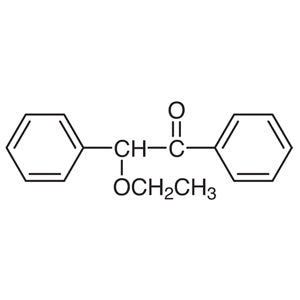
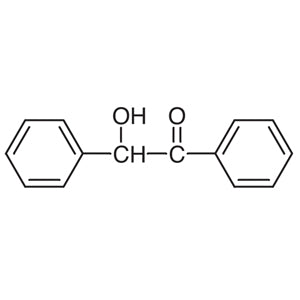
Benzoin Isobutyl Ether (B1015), with CAS number 22499-12-3, is a chemical compound widely used in laboratory settings for its role in polymerization reactions and organic synthesis. This reagent is essential in the field of materials science, particularly in the development of polymers and macromolecules. Its ability to participate in controlled chemical reactions makes it a valuable tool for researchers working on polymerization processes. It is commonly used in both academic and industrial laboratories for its versatility and reliability in chemical synthesis.
One of the key attributes of Benzoin Isobutyl Ether is its chemical stability and controlled reactivity, which allow it to be safely handled in laboratory environments. Its high boiling point makes it suitable for reactions that require elevated temperatures, ensuring consistent performance under various experimental conditions. This stability and reactivity contribute to its effectiveness in creating polymers with specific structural and functional properties. The compound’s predictable behavior in chemical reactions enhances its utility in both research and development applications.
In Indonesian laboratories, Benzoin Isobutyl Ether is frequently used in material science, organic chemistry, and polymer development. It is a common reagent in university laboratories and research institutions focused on the synthesis of new materials or the modification of existing ones. Its application is particularly relevant in studies involving polymerization, where precise control over reaction conditions is essential. The compound’s reliability and performance make it a preferred choice for researchers in Indonesia.
TCI brochures (PDF)
- Polymerization Initiators 2025-09-17 · p. 4
- Biomaterials Research Reagents 2025-02-19 · p. 25
- Polymerization reactions in materials science where controlled cross-linking is required for stable polymer structures.
- Organic synthesis of complex compounds, especially in kopolymerization processes that demand specific functional groups.
- Modification of existing polymers to enhance their mechanical or thermal properties in material development.
- Research in polymer chemistry for the creation of specialized materials with tailored properties.
- Academic and industrial experiments requiring a reliable and stable reagent for high-temperature chemical processes.
| Brand | TCI |
|---|---|
| CAS number | 22499-12-3 |
| Molecular formula | — |
| Purity | — |
| Category | Materials Science > Polymer/Macromolecule Reagents > Polymerization Reagents |
| Pack sizes | Available in various quantities as per standard laboratory supply |
| Physical form | Liquid |
| Storage | Store in a cool, dry place away from direct sunlight and incompatible materials |
Benzoin Isobutyl Ether should be stored in a cool, dry location, away from direct sunlight and sources of heat. It is recommended to use sealed containers made of glass or high-density polyethylene to prevent contamination and evaporation. The substance should be kept away from incompatible materials such as strong oxidizing agents or reactive metals. Proper ventilation is essential when handling this compound to minimize exposure. Laboratory personnel should wear appropriate personal protective equipment, including gloves and safety goggles, to ensure safe handling. Regular monitoring of storage conditions is advised to maintain the chemical’s integrity and ensure safe laboratory practices.
—
Product Categories
Produk Terkait
-
BenzoinEthylEther TCI B1019
Regular price Rp 822.150,00Regular priceRp 590.100,00Sale price Rp 822.150,00 -
BenzoinIsopropylEther TCI B0942
Regular price From Rp 557.550,00Regular priceRp 405.300,00Sale price From Rp 557.550,00 -
BenzoinMethylEther TCI B0869
Regular price From Rp 1.087.800,00Regular priceRp 775.950,00Sale price From Rp 1.087.800,00 -
Benzoin TCI B0079
Regular price From Rp 505.050,00Regular priceRp 352.800,00Sale price From Rp 505.050,00 -
3'-Hydroxyacetophenone TCI A0104
Regular price From Rp 1.113.000,00Regular priceRp 793.800,00Sale price From Rp 1.113.000,00 -
Anthraquinone TCI A0502
Regular price From Rp 477.750,00Regular priceRp 333.900,00Sale price From Rp 477.750,00 -
SodiumAnthraquinone-2-sulfonateMonohydrate TCI A0508
Regular price From Rp 822.150,00Regular priceRp 590.100,00Sale price From Rp 822.150,00 -
Acetophenone TCI A0061
Regular price From Rp 769.650,00Regular priceRp 537.600,00Sale price From Rp 769.650,00