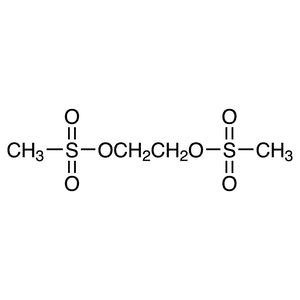
1,4-Butanediol Dimethanesulfonate is a chemical compound widely utilized in laboratory settings for its versatile reactivity and structural characteristics. As a building block in organic chemistry, it plays a critical role in various synthetic processes, particularly in reactions that involve the formation of covalent bonds. Its molecular structure features two methanesulfonate groups, which serve as electron-donating entities, making it a valuable reagent for substitution and cross-linking reactions. This compound is commonly found in research applications where precise chemical transformations are required.
The compound's stability under controlled conditions and its ability to participate in multiple reaction types make it a preferred choice for chemists. Its reactivity allows it to interact effectively with a wide range of reagents, facilitating the synthesis of complex organic molecules. The chemical's predictable behavior in different environments ensures reliable results in experimental setups. These properties contribute to its widespread use in both academic and industrial research.
In Indonesian laboratories, 1,4-Butanediol Dimethanesulfonate is frequently employed in organic chemistry research and the development of new chemical products. Its role in pharmaceutical and material science studies highlights its importance in advancing scientific knowledge. The compound is a key component in various research projects aimed at creating novel compounds and understanding chemical mechanisms.
TCI brochures (PDF)
- Antimicrobials and Antitumor Agents for Research and Experimental Use 2025-04-24 · p. 14
- Pharmaceutical Ingredients for Research and Experimental Use 2026-03-09 · p. 14
- Reagents for Biological Research 2025-03-11 · p. 44
- Organic synthesis applications benefit from this compound's ability to participate in substitution and cross-linking reactions, making it ideal for creating complex molecular structures.
- Pharmaceutical research utilizes this reagent due to its reactivity in forming covalent bonds, which is essential for drug molecule development.
- Industrial chemical production relies on its stability and reactivity to synthesize a wide range of organic compounds efficiently.
- Material science studies incorporate this compound for its role in creating new polymers and functional materials through controlled chemical reactions.
- Research in chemical engineering uses it as a building block for developing new chemical processes and optimizing reaction conditions.
| Brand | TCI |
|---|---|
| CAS number | 55-98-1 |
| Molecular formula | — |
| Purity | — |
| Category | Chemistry > Building Blocks > Non-Heterocyclic Building Blocks |
| Pack sizes | Available in standard laboratory quantities |
| Physical form | Solid powder |
| Storage | Store in a cool, dry place away from moisture and direct sunlight |
This compound should be stored in a cool, dry environment to maintain its chemical integrity and prevent degradation. It is recommended to use airtight containers to protect it from moisture and contaminants. Due to its reactivity, it should be handled with care, using appropriate personal protective equipment such as gloves and safety goggles. Storage should be in a well-ventilated area to minimize exposure to airborne particles. Avoid contact with incompatible substances to ensure safety and maintain the compound's effectiveness in laboratory applications. Proper labeling and storage conditions are essential to ensure the compound remains suitable for use in chemical experiments.
—
Product Categories
- Biochemicals and ReagentsPharmaceutical Research Reagents (for Experimental Use)Antitumor Research Reagents (for Experimental Use)
- Biochemicals and Reagents
- Pharmaceutical Development and Drug Discovery ResearchPharmaceutical Research Reagents (for Experimental Use)Antitumor Research Reagents (for Experimental Use)
Produk Terkait
-
Ethane-1,2-diylDimethanesulfonate TCI E1535
Regular price From Rp 3.392.550,00Regular priceRp 2.387.700,00Sale price From Rp 3.392.550,00 -
Hydroxyurea TCI H0310
Regular price From Rp 1.113.000,00Regular priceRp 793.800,00Sale price From Rp 1.113.000,00 -
Imatinib TCI I0906
Regular price From Rp 1.378.650,00Regular priceRp 979.650,00Sale price From Rp 1.378.650,00 -
SunitinibMalate TCI U0095
Regular price Rp 3.074.400,00Regular priceRp 2.165.100,00Sale price Rp 3.074.400,00 -
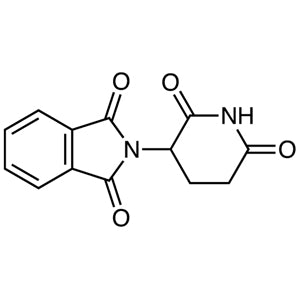
(+/-)-Thalidomide TCI T2524
Regular price From Rp 3.021.900,00Regular priceRp 2.128.350,00Sale price From Rp 3.021.900,00 -
Trifluorothymidine TCI T2511
Regular price From Rp 3.232.950,00Regular priceRp 2.276.400,00Sale price From Rp 3.232.950,00 -
Bexarotene TCI B4798
Regular price Rp 5.087.250,00Regular priceRp 3.573.150,00Sale price Rp 5.087.250,00 -
AbirateroneAcetate TCI A2891
Regular price From Rp 4.081.350,00Regular priceRp 2.869.650,00Sale price From Rp 4.081.350,00