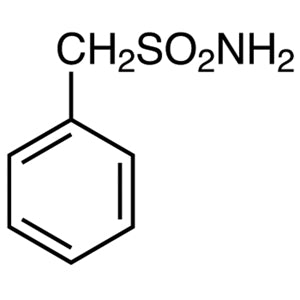
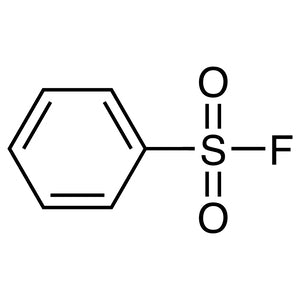
Benzylsulfonyl Fluoride (BSF) is a chemical compound widely used in organic reactions for the synthesis of complex molecules. In the laboratory, it serves as a key reagent in nucleophilic substitution reactions, particularly in the formation of sulfonates and fluoroalkyl compounds. Its high reactivity makes it an essential component in organic chemistry research and molecular synthesis. BSF is known for its stable molecular structure, which allows it to participate effectively in various chemical transformations while maintaining its reactivity toward nucleophiles.
BSF is a preferred choice due to its high reactivity and ability to participate in a wide range of chemical reactions. It is highly hygroscopic and sensitive to moisture, which necessitates careful handling and controlled storage conditions. These properties make it suitable for use in specialized laboratory environments where precision and control are critical. Its sensitivity to moisture also means that it must be stored in a dry, controlled environment to maintain its effectiveness and safety during use.
In Indonesian laboratories, BSF is commonly used in organic chemistry research, especially in the development of pharmaceutical compounds and industrial chemicals. Its availability and effectiveness in complex chemical reactions make it a popular choice among researchers. The compound is frequently utilized in controlled laboratory settings where its reactivity and chemical properties can be fully harnessed for scientific advancement.
- Organic synthesis of sulfonates and fluoroalkyl compounds due to its reactivity and ability to form stable intermediates.
- Nucleophilic substitution reactions for the creation of complex organic molecules in controlled environments.
- Development of pharmaceutical compounds through its participation in key synthetic pathways.
- Industrial chemical production where precise chemical transformations are required.
- Research applications in chemical synthesis requiring high reactivity and controlled reaction conditions.
| Brand | TCI |
|---|---|
| CAS number | 329-98-6 |
| Molecular formula | — |
| Purity | — |
| Category | Chemistry > Building Blocks > Non-Heterocyclic Building Blocks |
| Pack sizes | Available in various quantities as per supplier specifications |
| Physical form | Solid or liquid, depending on the specific product formulation |
| Storage | Requires dry, controlled storage to prevent moisture exposure |
Benzylsulfonyl Fluoride should be stored in a dry, cool environment away from moisture and direct sunlight. It is recommended to use airtight containers made of inert materials to prevent exposure to humidity. Due to its hygroscopic nature, it is essential to maintain a controlled laboratory environment with low humidity levels. Proper ventilation should be ensured during handling to minimize inhalation risks. Always use appropriate personal protective equipment, such as gloves and safety goggles, when working with this compound. Storage conditions must be strictly monitored to ensure the stability and safety of the material during use.
—
Produk Terkait
-
BenzylsulfonylChloride TCI B0441
Regular price From Rp 1.618.050,00Regular priceRp 1.130.850,00Sale price From Rp 1.618.050,00 -
Benzylsulfonamide TCI B3466
Regular price Rp 2.942.100,00Regular priceRp 2.072.700,00Sale price Rp 2.942.100,00 -
DansylFluoride TCI D2197
Regular price Rp 3.155.250,00Regular priceRp 2.206.050,00Sale price Rp 3.155.250,00 -
BenzenesulfonylFluoride TCI B6627
Regular price From Rp 1.353.450,00Regular priceRp 946.050,00Sale price From Rp 1.353.450,00 -
BenzylsulfonylFluoride[forBiochemicalResearch] TCI B3473
Regular price From Rp 1.829.100,00Regular priceRp 1.278.900,00Sale price From Rp 1.829.100,00 -
4-BiphenylsulfonylChloride TCI B2199
Regular price From Rp 1.485.750,00Regular priceRp 1.038.450,00Sale price From Rp 1.485.750,00 -
MethylPhenylsulfonylacetate TCI P1353
Regular price From Rp 1.351.350,00Regular priceRp 960.750,00Sale price From Rp 1.351.350,00 -
EthylO-Mesitylsulfonylacetohydroxamate[PrecursorofthePowerfulAminatingReagent] TCI M1182
Regular price From Rp 1.033.200,00Regular priceRp 738.150,00Sale price From Rp 1.033.200,00