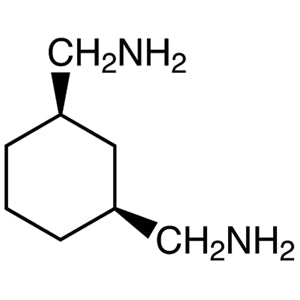
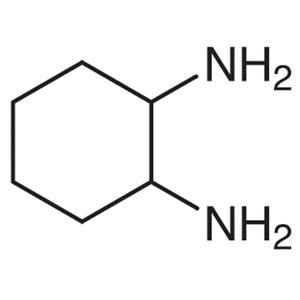
1,4-Bis(aminomethyl)cyclohexane (cis- and trans- mixture) is a chemical compound widely used in scientific and industrial applications. This material is a key precursor in the synthesis of polymers and complex compounds, playing a vital role in materials science research. Its unique structure allows for versatile chemical reactions, making it an essential reagent in laboratory settings. In the context of polymer chemistry, it serves as a monomer for the production of thermoplastic and elastomeric materials. Its reactivity and structural flexibility contribute to its importance in various chemical processes.
The compound's cyclic structure enables the formation of complex chemical bonds, including amine linkages, which are crucial in polymerization and molecular modification reactions. Its stability under specific conditions ensures reliable performance in laboratory experiments, where accuracy and consistency are paramount. The availability of the cis- and trans- isomer mixture provides researchers with the flexibility to tailor chemical reactions for specific applications. This makes it a preferred choice for those working in advanced chemical synthesis and polymer development.
In Indonesian laboratories, 1,4-Bis(aminomethyl)cyclohexane is commonly used in material research, organic chemistry, and polymer technology. Local researchers and industries rely on this compound for the development of new products, fundamental research, and quality testing of materials. Its broad range of applications underscores its significance as a versatile reagent in both academic and industrial settings.
TCI brochures (PDF)
- Raw Materials for Polyimide Synthesis 2026-05-11 · p. 3
- Biomaterials Research Reagents 2025-02-19 · p. 17
- Monomers 2025-05-28 · p. 29
Related TCI products
- TCI B3852 56602-77-8 Bis(aminomethyl)norbornane (mixture of isomers)
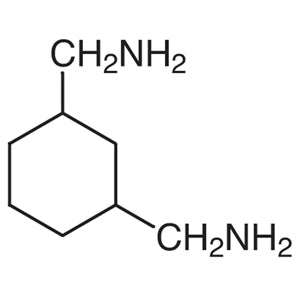
- TCI B1005 2579-20-6 1,3-Bis(aminomethyl)cyclohexane (cis- and trans- mixture)
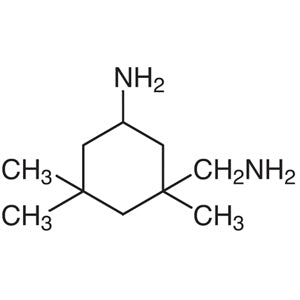
- TCI I0228 2855-13-2 Isophoronediamine (cis- and trans- mixture)
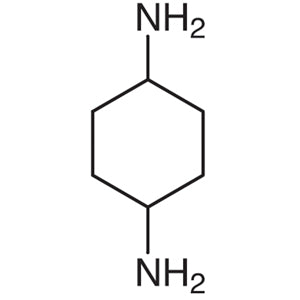
- TCI C0814 3114-70-3 1,4-Cyclohexanediamine (cis- and trans- mixture)
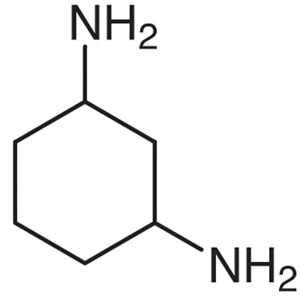
- TCI C0813 3385-21-5 1,3-Cyclohexanediamine (cis- and trans- mixture)
- TCI B4176 10340-00-8 cis-1,3-Bis(aminomethyl)cyclohexane
- Polymer synthesis and modification where reactive functional groups are needed for cross-linking and chain extension.
- Organic chemistry research involving amine-based reactions and the formation of complex molecular structures.
- Development of thermoplastic and elastomeric materials due to its role as a monomer in polymer chains.
- Chemical modification of existing polymers to enhance properties such as flexibility, strength, and thermal stability.
- Quality control and testing of polymer-based products to ensure consistency and performance in industrial applications.
| Brand | TCI |
|---|---|
| CAS number | 2549-93-1 |
| Molecular formula | — |
| Purity | — |
| Category | Materials Science > Polymer/Macromolecule Reagents > Monomers |
| Pack sizes | Available in standard laboratory quantities as per supplier specifications |
| Physical form | Liquid |
| Storage | Store in a cool, dry place away from direct sunlight and incompatible materials |
This compound should be stored in a cool, dry environment to maintain its chemical stability and prevent degradation. It is recommended to use airtight containers made of materials compatible with its chemical nature, such as glass or high-density polyethylene. Due to its reactivity, it should be kept away from strong oxidizing agents, acids, and bases. Proper labeling and storage in a designated chemical storage area are essential for safety. Laboratory personnel should wear appropriate personal protective equipment, including gloves and safety goggles, when handling this material to minimize exposure risks. Regular inspection of storage conditions and container integrity is advised to ensure safe and effective use.
—
Product Categories
- Polymer/Macromolecule ReagentsMonomersDiamine Monomers
- Polymer/Macromolecule ReagentsPolyimide Raw MaterialsDiamines [Polyimide Raw Materials]
- Biomaterials/Biocompatible Materials Research ReagentsMonomers and Macromonomers [Biomaterials/Biocompatible Materials Research Reagents]Diamine Monomers [Biomaterials/Biocompatible Materials Research Reagents]
Produk Terkait
-
Bis(aminomethyl)norbornane(mixtureofisomers) TCI B3852
Regular price From Rp 1.033.200,00Regular priceRp 738.150,00Sale price From Rp 1.033.200,00 -
1,3-Bis(aminomethyl)cyclohexane(cis-andtrans-mixture) TCI B1005
Regular price From Rp 557.550,00Regular priceRp 405.300,00Sale price From Rp 557.550,00 -
Isophoronediamine(cis-andtrans-mixture) TCI I0228
Regular price From Rp 477.750,00Regular priceRp 333.900,00Sale price From Rp 477.750,00 -
1,4-Cyclohexanediamine(cis-andtrans-mixture) TCI C0814
Regular price From Rp 1.618.050,00Regular priceRp 1.146.600,00Sale price From Rp 1.618.050,00 -
1,3-Cyclohexanediamine(cis-andtrans-mixture) TCI C0813
Regular price From Rp 2.677.500,00Regular priceRp 1.887.900,00Sale price From Rp 2.677.500,00 -
cis-1,3-Bis(aminomethyl)cyclohexane TCI B4176
Regular price From Rp 5.485.200,00Regular priceRp 3.851.400,00Sale price From Rp 5.485.200,00 -
1,2-Cyclohexanediamine(cis-andtrans-mixture) TCI D0277
Regular price From Rp 848.400,00Regular priceRp 609.000,00Sale price From Rp 848.400,00 -
1,1-Bis(4-aminophenyl)cyclohexane TCI B2076
Regular price From Rp 4.001.550,00Regular priceRp 2.814.000,00Sale price From Rp 4.001.550,00