1,1-Bis(4-aminophenyl)cyclohexane is a chemical compound widely used as a foundational material in the synthesis of polymers and complex organic compounds. This compound serves as a key reagent in laboratory settings, particularly in polymerization processes, where it acts as a monomer. Its unique molecular structure, consisting of two amino phenyl groups connected via a cyclohexane ring, provides it with high reactivity and versatility in chemical reactions. This makes it an essential component for researchers aiming to develop new materials with specific mechanical and chemical properties.
The compound's high reactivity and complex molecular structure make it a preferred choice in both academic and industrial research. Its ability to participate in chain-linking reactions and form new chemical bonds allows it to be utilized in a variety of synthetic pathways. The presence of amino groups enhances its functionality, enabling it to interact with multiple functional groups in organic chemistry. These characteristics make it a valuable tool for chemists working on advanced material development and polymer science.
In Indonesian laboratories, 1,1-Bis(4-aminophenyl)cyclohexane is commonly used in research related to polymers, composite materials, and organic compounds. Due to its reliability and performance in chemical reactions, it is often selected for experiments requiring precision and accuracy. Its role in creating high-performance materials makes it an essential reagent for scientific innovation in the region.
TCI brochures (PDF)
- Raw Materials for Polyimide Synthesis 2026-05-11 · p. 5
- Monomers 2025-05-28 · p. 29
Related TCI products
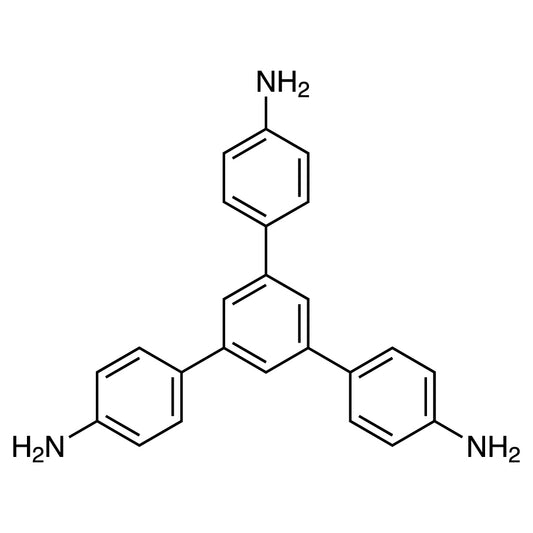
- TCI T2728 118727-34-7 1,3,5-Tris(4-aminophenyl)benzene
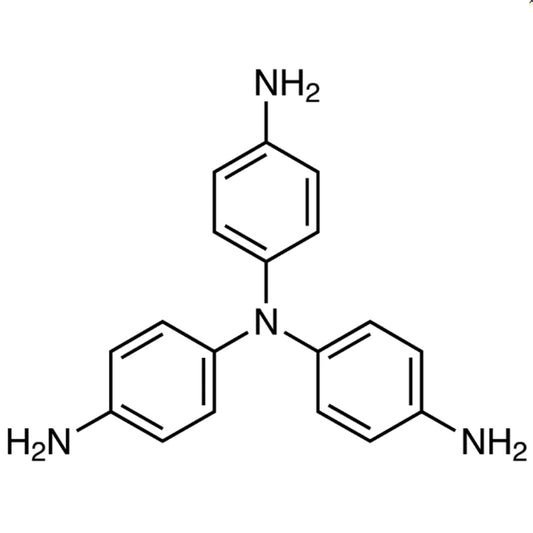
- TCI T2332 5981-09-9 Tris(4-aminophenyl)amine
- TCI B3853 2687-27-6 1,3-Bis[2-(4-aminophenyl)-2-propyl]benzene
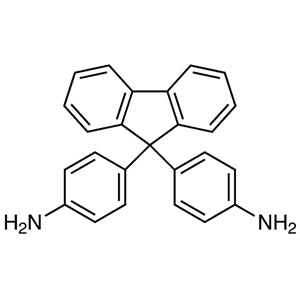
- TCI B2654 15499-84-0 9,9-Bis(4-aminophenyl)fluorene (purified by sublimation)
- TCI B1562 2716-10-1 alpha,alpha'-Bis(4-aminophenyl)-1,4-diisopropylbenzene
- TCI B1549 15499-84-0 9,9-Bis(4-aminophenyl)fluorene
- Polymer synthesis and development where high reactivity and structural versatility are required.
- Organic chemistry research involving chain-linking and bond formation reactions.
- Composite material fabrication to achieve specific mechanical and chemical properties.
- Advanced material development for applications in industrial and academic settings.
- Chemical reaction studies that require functional group interactions and molecular modifications.
| Brand | TCI |
|---|---|
| CAS number | 3282-99-3 |
| Molecular formula | — |
| Purity | — |
| Category | Materials Science > Polymer/Macromolecule Reagents > Monomers |
| Pack sizes | Available in various quantities as per standard laboratory supply |
| Physical form | Solid, crystalline or powder depending on the batch |
| Storage | Store in a cool, dry place away from light and moisture |
This compound should be stored in a cool, dry environment, away from direct light and moisture to maintain its chemical integrity. It is recommended to use airtight containers made of materials that are chemically inert, such as glass or high-density polyethylene, to prevent contamination and degradation. In laboratory settings, proper personal protective equipment, including gloves and safety goggles, should be worn when handling this material. It is important to ensure good ventilation in the workspace to minimize exposure to vapors. Due to its reactivity, it should be handled with care and stored separately from incompatible substances to prevent unintended chemical reactions.
—
Produk Terkait
-
1,3,5-Tris(4-aminophenyl)benzene TCI T2728
Regular price From Rp 6.465.900,00Regular priceRp 4.537.050,00Sale price From Rp 6.465.900,00 -
Tris(4-aminophenyl)amine TCI T2332
Regular price From Rp 3.127.950,00Regular priceRp 2.202.900,00Sale price From Rp 3.127.950,00 -
1,3-Bis[2-(4-aminophenyl)-2-propyl]benzene TCI B3853
Regular price Rp 1.192.800,00Regular priceRp 849.450,00Sale price Rp 1.192.800,00 -
9,9-Bis(4-aminophenyl)fluorene(purifiedbysublimation) TCI B2654
Regular price Rp 2.650.200,00Regular priceRp 1.869.000,00Sale price Rp 2.650.200,00 -
alpha,alpha'-Bis(4-aminophenyl)-1,4-diisopropylbenzene TCI B1562
Regular price From Rp 1.326.150,00Regular priceRp 942.900,00Sale price From Rp 1.326.150,00 -
9,9-Bis(4-aminophenyl)fluorene TCI B1549
Regular price From Rp 3.365.250,00Regular priceRp 2.368.800,00Sale price From Rp 3.365.250,00 -
2,2-Bis(4-aminophenyl)hexafluoropropane TCI B1400
Regular price From Rp 1.563.450,00Regular priceRp 1.108.800,00Sale price From Rp 1.563.450,00 -
2-(3-Aminophenyl)-1H-benzo[d]imidazol-5-amine TCI D6250
Regular price From Rp 2.279.550,00Regular priceRp 1.609.650,00Sale price From Rp 2.279.550,00