Alpha,alpha'-Bis(4-aminophenyl)-1,4-diisopropylbenzene is a chemical compound widely used in materials science and polymer chemistry. This material serves as a key monomer in the synthesis of polymers with specialized properties, such as enhanced mechanical strength and thermal stability. In the laboratory, it functions as a fundamental building block for creating complex polymer structures, which are essential for various industrial applications. Its unique molecular structure enables efficient polymerization reactions, making it a valuable resource for researchers working on advanced material development.
The compound's chemical properties and reactivity make it a preferred choice for polymer and macromolecular research. Its molecular design, featuring amino groups at both ends, facilitates strong intermolecular interactions, which are crucial for forming stable and functional polymers. These characteristics allow it to be used in the development of high-performance materials with tailored properties. Its versatility in chemical reactions and compatibility with various polymerization techniques further enhance its appeal in both academic and industrial research settings.
In Indonesian laboratories, this compound is commonly used for research and development of new materials, particularly in high-tech and chemical industries. Local researchers often rely on it for experiments requiring polymers with specific functional properties. Its role in advancing material science makes it a sought-after reagent for scientific innovation and industrial applications in Indonesia.
TCI brochures (PDF)
- Raw Materials for Polyimide Synthesis 2026-05-11 · p. 5
- Monomers 2025-05-28 · p. 29
Related TCI products
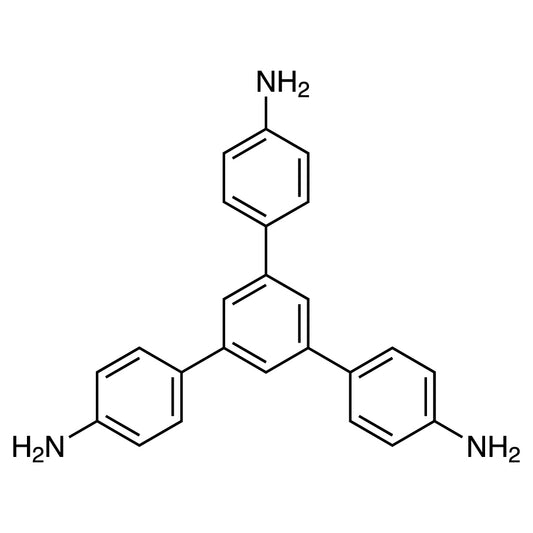
- TCI T2728 118727-34-7 1,3,5-Tris(4-aminophenyl)benzene
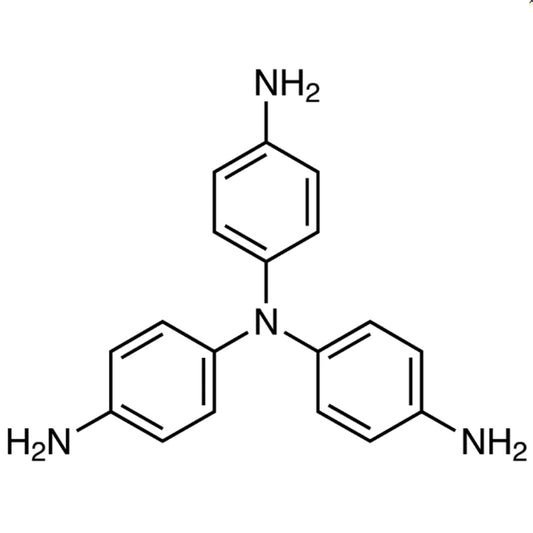
- TCI T2332 5981-09-9 Tris(4-aminophenyl)amine
- TCI B3853 2687-27-6 1,3-Bis[2-(4-aminophenyl)-2-propyl]benzene
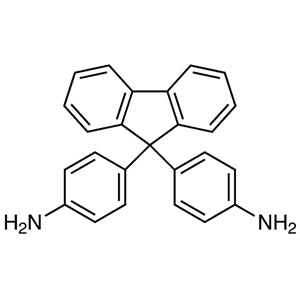
- TCI B2654 15499-84-0 9,9-Bis(4-aminophenyl)fluorene (purified by sublimation)
- TCI B2076 3282-99-3 1,1-Bis(4-aminophenyl)cyclohexane
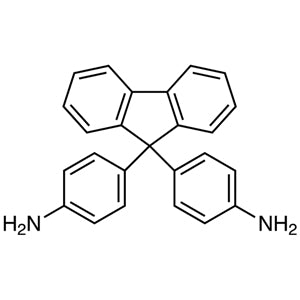
- TCI B1549 15499-84-0 9,9-Bis(4-aminophenyl)fluorene
- Polymer synthesis for advanced materials used in electronic devices due to its ability to form stable and conductive polymers.
- Development of high-performance composites in construction industries because of its mechanical strength and thermal stability.
- Research in macromolecular chemistry for creating novel materials with tailored chemical and physical properties.
- Production of specialized coatings and adhesives in industrial settings due to its reactivity and compatibility with various polymerization methods.
- Investigation of new chemical structures in academic research for expanding the range of available polymer materials.
| Brand | TCI |
|---|---|
| CAS number | 2716-10-1 |
| Molecular formula | — |
| Purity | — |
| Category | Materials Science > Polymer/Macromolecule Reagents > Monomers |
| Pack sizes | 25g, 100g, 500g |
| Physical form | Solid powder |
| Storage | Store in a cool, dry place away from direct sunlight |
This compound should be stored in a cool, dry environment, away from direct sunlight and sources of heat. It is recommended to use airtight containers to prevent moisture absorption and contamination. Due to its chemical nature, it should be handled with appropriate personal protective equipment, such as gloves and safety goggles, to ensure laboratory safety. Avoid exposure to incompatible substances, and ensure proper ventilation in the workspace. The material is not classified as hazardous under standard safety classifications, but standard laboratory safety protocols should be followed during handling and use.
—
Produk Terkait
-
1,3,5-Tris(4-aminophenyl)benzene TCI T2728
Regular price From Rp 6.465.900,00Regular priceRp 4.537.050,00Sale price From Rp 6.465.900,00 -
Tris(4-aminophenyl)amine TCI T2332
Regular price From Rp 3.127.950,00Regular priceRp 2.202.900,00Sale price From Rp 3.127.950,00 -
1,3-Bis[2-(4-aminophenyl)-2-propyl]benzene TCI B3853
Regular price Rp 1.192.800,00Regular priceRp 849.450,00Sale price Rp 1.192.800,00 -
9,9-Bis(4-aminophenyl)fluorene(purifiedbysublimation) TCI B2654
Regular price Rp 2.650.200,00Regular priceRp 1.869.000,00Sale price Rp 2.650.200,00 -
1,1-Bis(4-aminophenyl)cyclohexane TCI B2076
Regular price From Rp 4.001.550,00Regular priceRp 2.814.000,00Sale price From Rp 4.001.550,00 -
9,9-Bis(4-aminophenyl)fluorene TCI B1549
Regular price From Rp 3.365.250,00Regular priceRp 2.368.800,00Sale price From Rp 3.365.250,00 -
2-(3-Aminophenyl)-1H-benzo[d]imidazol-5-amine TCI D6250
Regular price From Rp 2.279.550,00Regular priceRp 1.609.650,00Sale price From Rp 2.279.550,00 -
2,2-Bis(4-aminophenyl)hexafluoropropane TCI B1400
Regular price From Rp 1.563.450,00Regular priceRp 1.108.800,00Sale price From Rp 1.563.450,00